bug in vs bug out

Bugging In Vs Bugging Out: How To Decide In An Emergency

bug in vs bug out

Bugging out is undoubtedly one of the most popular topics in survival literature, as well as in online discussion forums.

Assembling a bug out bag is something akin to a rite of passage among preppers, and we love to critique each other’s kits.

We talk endlessly about bug out locations (BOLs) and bug out vehicles (BOVs).  Yet, for all of that discussion, one rather critical part of the plan often lacks attention.

We talk a lot about HOW to bug out, but we often forget that sometimes bugging in is the required course of action.

Weighing Your Options

First of all, I firmly believe that bugging out should be considered your last option rather than your primary plan of action in most disaster scenarios.

For most of us, home is where we have the bulk of our supplies and hitting the trail with even a fraction of what we have stockpiled would be an arduous effort, to say the least.

Sure, we can fit all sorts of supplies in our vehicle but what if motorized travel isn’t a viable option? 

Depending upon the nature of the crisis, streets could be impassable due to debris or even manned roadblocks.

That said, even though it isn’t the best option in many cases, bugging out is still an important part of your overall disaster planning.

bug in plan
Would you have made the right choice?

Deciding When To Bug Out

Deciding when to bug out will largely be a judgment call, of course.

There are many factors that may come into play, and we certainly can’t plan ahead for all of them. 

However, there are a few key indicators, call them red flags if you’d like, that should get you thinking that it might be time to beat feet and head for a more secure location, at least for the immediate future.

Civil unrest in the immediate area

Particularly if you live in an urban or suburban area, this is a big clue that things are headed south and you might not want to stick around.

As I’ve often said and written, frequently the biggest threat in a crisis is other people.

If you are made aware of looting and riots happening in your immediate area, you may want to load up the family truck and head out of town for a bit.

Now, a word of caution, here.

I cannot stress enough the importance of obtaining reliable information on what’s going on around you.

It is one thing if your neighbor tells you they just got back from the grocery store where he saw massive crowds stripping the shelves bare. 

Another thing entirely if he tells you his sister said her best friend’s cousin was told by a random guy on the street three cities over that there were rumors of rioting happening.

This one reason why a working radio is a critical element of your survival gear. Depending upon the nature of the disaster, going online with a phone, tablet, or laptop might not be a viable option. A crank powered radio, ideally one that can tune in shortwave transmissions, might be the only way you can gather information about the world at large. 

Bear in mind, though, recent history has shown that reporters quite often get as much wrong as they get things right.

bug in plan
The Eton FRX2 is an excellent emergency radio

Stores aren’t getting restocked

The common statistic tossed about is that the average grocery store only has enough stock on hand to last three days at normal buying volume.

That’s actually rather misleading as it depends upon the items in question. Food items will go quickly. Toiletries, maybe not so much. 

Either way, if the grocery store has to shutter their doors because they’ve run out of stock on most things, people are going to get rather antsy.

bugging in

We live in an age of immediate gratification. We’ve become accustomed to satisfying our wants without thinking much of it. In fact, people get very upset quickly if the store doesn’t have the item they traveled there to purchase.

“What do you mean you sold out of The Walking Dead, Season 87?!”

They’ll demand to see a manager, who is just as powerless as the store clerk, and pitch a holy fit because the store dared to sell their entire stock of the item without so much as a thought for this important-in-their-own-mind customer.

Now, imagine it isn’t a DVD set, but food.  And rather than just being offended, the customer is starving… and has three kids at home who are just as hungry.

Yeah, you probably don’t want to hang around to see how that plays out.

Emergency services are overwhelmed

As we’ve seen happen time and again in major disasters, emergency services such as fire, police, and rescue can become overwhelmed.

Understand, I have the highest respect for those brave men and women who, when a crisis hits, run toward rather than away from danger. But, they are only human, and there are only so many of them to go around. 

They can’t be everywhere at once, right?

Because of the limited resources, and no matter how large the department is, there are a finite number of emergency responders available at any given time, what’s called triage is going to take place. 

Basically, decisions will have to be made about which emergencies are more important than others.  Of course, dispatchers do that every day. A massive pileup on the highway is going to take precedence over a lost dog. 

However, in the wake of a major disaster, there will most certainly be lives lost simply because of a lack of emergency personnel available.

Making The Call To Bug In Or Bug Out

The most important thing to remember is to trust your instincts.

If your gut is telling you it is time to get out of Dodge, listen to it.

Our subconscious minds often come to solid conclusions well before our active minds can muddle through all of the information. Bugging out can put you and your family in significant danger, whether from the actual crisis at hand or the people reacting to it in a less than an ideal manner. But, the danger of staying at home might be greater.

How to Prepare for Bugging In

To make sure you’re prepared for a situation that requires bugging in, read The Ultimate Guide to Bugging In: Preparing Your Home for a Disaster.

About The Author

This article was written by Jim Cobb who runs SurvivalWeekly.com.

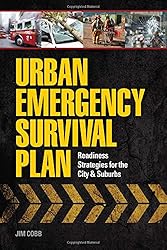
Jim is the author of several books on preparedness and has most recently written “Urban Emergency Survival Plan: Readiness Strategies for the City and Suburbs,” which is a comprehensive look at disaster planning for urban and suburban dwellers.  Find out more about this great resource here:

Read More

alcohol burner

Choosing An Off-Grid Stove + How To Make Alcohol Fuel

alcohol burner

Some well-seasoned, cast iron cookware and a carefully constructed fire offer just about everything a chef could want. However, you’re not going to lug cast iron pots and pans around to make a camp kitchen when you are bugging out. For solo, long distance, treks into the wilderness, smaller, portable stoves are more appropriate. In this article we’ll discuss lightweight, reliable cooking stoves, small enough to fit into a bugout bag. We’ll also highlight options that utilize clean burning and renewable fuels and even show you how to make your own alcohol-stove fuel at the end of the article with a moonshine still.

General Stove Types

There are at least half a dozen fuel sources and hundreds of stoves and gizmos available to choose from when selecting portable cooking equipment. In general, backpacking stoves are either heated with liquid or gas fuel. While solid fuel is much less common, there are a few options in that category as well. Liquid fuel stoves in the United States are generally designed to burn white gas (Coleman fuel).

alcohol burner
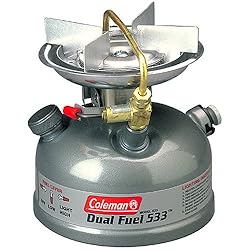
A basic Coleman Fuel Stove

Internationally, liquid fuel stoves are adjustable so that they can burn kerosene and other fuels as well. Gas stoves almost always use isobutene. Most portable solid fuel stoves are designed to burn prepackaged pellets, but a few models are set up to burn wood (in the form of small twigs).

The nice thing about white gas and isobutene stoves is that they’re very easy to use and they provide plenty of heat. In short, they make cooking on the go very convenient. However, the downside is that all of the most popular liquid and gas stoves utilize petroleum products as the fuel source. Solid fuel stoves provide less heat but still offer convenience. Though, pellets designed for the solid fuel stoves generally utilize petroleum products and binders as well. The problem with petroleum based fuels is that they will quickly become a finite resource in the event of a SHTF scenario. Also, the process of producing such fuels isn’t very environmentally friendly.

By our account, there are only two extremely lightweight, extremely portable backpacking stove options that utilize environmentally friendly and renewable fuel: solid fuel stoves designed to efficiently burn wood, and alcohol burner stoves.

alcohol burner

Portable Wood Stoves

Portable wood stove operation is very easy. Find some dry twigs, break them down to the appropriate size, and feed them into the bottom of the burner. It requires some scavenging and the fire must be constantly tended to because it will be very small and wood needs to be constantly fed into the burner. However, the fuel source is free, renewable, environmentally friendly, and generally easily obtainable. One of our favorite portable wood stove options, which we have reviewed in the past is the Emberlit Wood Burning Portable Stove.

alcohol burner
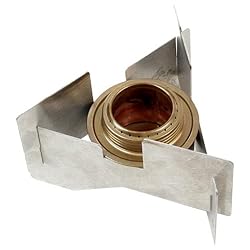
The portable, alcohol burning Westwind Stove will fit in any pack

 Portable Alcohol Burner Stoves

Ultra-simple alcohol burner stoves are another one of our favorite mobile cooking options. The two biggest advantages of alcohol stoves are as follows.

  1. The fuel does not need to be pressurized to burn and the stoves themselves have no moving parts. As a result they’re extremely reliable.
  2. You can make your own renewable fuel for an alcohol burner stove. We’ll show you how below!
  3. Bonus: Operating an alcohol burner stove is as simple as it gets. Simply set up the stand, place the fuel canister inside, take the cap off the canister, and light.
alcohol burner
A combination alcohol/wood stove, the Solo Stove

Combination Wood / Alcohol Stoves

While completing research for this article we found this awesome dual fuel wood / alcohol stove. You can use alcohol canisters (if you have them) to start a fire and cook food or heat food nearly effortlessly. If your fuel alcohol supply becomes exhausted and you don’t have the time or provisions to make more, you can use the stove as an efficient wood burner.

How to Make Fuel For Your Alcohol Burner Stove

The good folks over at Clawhammer Supply provided the following simple procedure for making a batch of fuel alcohol for alcohol burner stoves.  A still is required which can either be made (can be DANGEROUS!) or purchased in 1 gallon, 5 gallon, or 10 gallon models as a part of your prepping.

The following recipe is for a 10 gallon batch of fuel alcohol mash:

Yield:

2.5 gallons of 150 proof alcohol.

Note: If you are using the 1 Gallon Still we are giving away below, cut this recipe down to 1/10th to adjust for its smaller size.

Ingredients:

  • 30lbs white sugar (cheapest you can find)
  • 8 gallons water (tap water works just fine)
  • Distiller’s Yeast (capable of producing at least 20% ABV)

Procedure:

  1. Mix sugar and water.
  2. Heat mixture to 70 degrees F.
  3. Add turbo yeast (follow directions on package to determine how much to add)
  4. Transfer to fermentation bucket with an airlock.
  5. Allow to ferment and settle for 1 week.
  6. Double distill in a 10 gallon column still equipped with copper packing (for reflux).
alcohol burner
A Classic Copper Moonshine Still

Distilling Notes:

Alcohol over 100 proof (50% concentration) is flammable, but its flammability varies depending on atmospheric pressure and temperature. As such, we recommend distilling your fuel to at least 150 proof for use in a fuel alcohol stove. A proof of 175 works the best. Once your fuel alcohol has been created you can store it in a glass carboy or you can pre-load it into fuel alcohol canisters, for easy get-away, should you need to grab your bugout bag and hit the road in a hurry.

What else can I use this alcohol for?

You can also use the recipe above to make fuel for small engines (such as a chainsaw) and even motorcycles or cars. The only difference is the proof. FYI: Proof is a number that tells you how strong alcohol is. To find proof, double the percentage of alcohol. For example, if you have a solution that is 50% alcohol, it is 100 proof. 100% alcohol is 200 proof. It also works in reverse. An 80 proof solution of alcohol is 40% pure alcohol. If you’re planning on using this fuel in a small engine, it will need to be distilled until it is roughly 195 proof and a desiccant will need to be added to remove the last bit of water in the fuel, raising the proof to 200.

Be aware that federal and state laws prohibit the production of alcohol for consumption (moonshine, whiskey, etc…). However, a federal permit for fuel alcohol is available. It’s free and is easy to obtain right here. Also, each state has its own set of laws on the topic of distilling and you may be required to obtain a state permit for fuel alcohol production, in addition to the federal permit. Be sure to research the distillation regulations in your state before purchasing a still or making alcohol to verify that you’re in compliance with the law.

Read More

prepping

How To Prep Like A Spartan

prepping

The Spartans were renowned throughout the ancient world for their military prowess and disciplined lifestyle.  They did not win every battle, but they did beat back larger forces to defend their homelands time and time again.

This ability came down to their dedication to preparedness, their whole society was geared towards it. Spartan men and women were trained from a young age to respect the community as a whole and dedicate themselves towards its preservation.  This included training in warfare, foraging, adaptation, and conditioning oneself to hardship.  They were in effect a nation of preppers!  No wonder they were respected by their fellow Greeks!

Today we idolize the Spartans for their strength and discipline in books, movies, slogans, and more.  But what can we learn from their culture of preparedness?

Learning To Survive At An Early Age

At age 7 Spartan children left their families to join the Agoge.  This was a training program for both boys and girls that tested their strength and wills as well as taught them the skills they needed to serve Sparta as they came of age.  The Agoge was renowned throughout the ancient world and powerful families from friendly nations vied to secure a place for their own children for 1-2 year stints.

family preparedness

Male Spartans had to endure thorough physical training to prepare them for war campaigns and the hardships of living in the field.  Looking at the Agoge program that every boy Spartan had to pass through gives us some great insights into their mindset of preparedness.  There are a lot of elements within it that we can draw upon when looking at how we prepare today as well as how we instill this mindset into our children.

Hardship was the norm

An especially important element of Agoge training was being taught to endure pain and hardship.  Students were often made to suffer hunger, thirst, cold, fatigue and lack of sleep.  Spartan boys were made to walk long distances without shoes, bath at the cold waters of the river Eurotas and wear the same piece of clothing year round.  This was meant to condition them to the realities of wartime and is a valuable example for us today.

When prepping, being conditioned to hardship is a valuable asset.  If you have to be on the move day after day evacuating from a disaster or terrorist act you will you be slowed down because you are cold, hungry, or your feet hurt?  Are you ready for the hardship imposed by the removal of everything that is comfortable in your life?  In order to be truly prepared we have to ready ourselves for such deprivation.

Flexibility and using the environment around them was expected

To be a Spartan boy going through the Agoge was to always be tired and hungry.  In addition to the harsh physical training, they were constantly being underfed.  To get the nutrition they needed the boys were encouraged by their teachers to forage from the world around them and steal from the kitchens.  However, if they were caught stealing – even though it was encouraged – they were severely beaten as a punishment for failure.

For modern day preppers this shows how important it was seen to be able to feed yourself while on the move.  Would you be able to feed yourself in the absence of a grocery store?  Do you think you could liberate food from a watchful source without being caught if your life depended on it?

prepping

No rest for the weary

Even if they were able to fill their bellies, they still had an uncomfortable night ahead of them.  This is because in their barracks, Spartan boys were not even allowed to have blankets to keep them warm at night.  They slept on top of straw and reeds, which they gathered without knives from riverbanks, strengthening (and scarring) their hands in the process.

While this requirement would toughen up their limbs it would also show the value of using the environment around you to make what you needed.  For us today we can look to our shelter building skills to emulate the Spartans.  Are you able to build a shelter by hand in the wilderness?  Keeping warm and dry after a day of hard walking gives you the opportunity to recuperate so you can be mobile again the next day.  Shelter building with scavenged materials is an essential skill that all preppers should master.

Females Spartans were held to high standards as well

Female Spartans were trained in a variety of subjects both mental and physical:

  • Athletics – running, dance, gymnastics
  • Writing
  • Poetry
  • War Education

This program was aimed at building female Spartans into good citizens able to serve the state.  Additionally their training prepared them for the mental hardship of being separated from their fathers, brothers, and children while they were off on campaigns.

Physical Fitness Was A Big Part

If you are ever caught in a situation where you have to bug out you will surely be put to the test physically.  Just having your bug out bag packed and ready to go will not be enough, you need to actually be able to carry it until you reach safety.

spartans3

Spartan Training

The Spartans put a huge emphasis on physical fitness in both in the Agoge training and throughout their entire culture.  Both men and women were expected to maintain their fitness during their entire lives.

This emphasis helped define the Spartan soldier and enabled them to march for longer and fight harder, even against overwhelming odds.  The Spartans won a great many of the ancient Olympic Games due to this commitment to physical fitness.

Students in the Agoge were constantly encouraged to compete against one another to weed out weaker members and push everyone to constantly improve.  Female students would even be encouraged by their instructors to observe and mock the competitors to drive them even harder at their tasks.  Agoge students were expected to gain proficiency at:

  • Distance running
  • Gymnastics
  • Jumping
  • Javelin
  • Discus
  • Wrestling
  • Combat

How Can We Train Ourselves?

So, how can we use this as inspiration for our own prepping?  As with any challenge we need to train harder than we expect to have to endure when the test comes.  This may mean taking your bug out bag for a walk on weekends to condition yourself to carrying it.  If that proves difficult try just going for a hike without it until you can build up your strength to carry the load.  My old mixed martial arts coach used to say, “sweat in the gym so you don’t bleed in the street” which captures this mindset perfectly.

prepping

A Lifetime of Dedication

For Spartans, their dedication led to a lifetime of service.  All males who passed through the Agoge lived in state owned barracks and continued to serve in the army until age 60.  They continued their own training and once experienced, the training of the next generation for basically their entire lives.  From age 7 to age 60, ALL Spartan males would relentlessly dedicate themselves to the prosperity and preparedness of their nation.

Modern Day

Today as a nation we are obviously very far from this single minded focus.  But, on an individual level can we seek to emulate this dedication?  Would you start training your children at age 7 to serve the interests of your family day in and day out until age 60?  Can we instill the proper mindset and pass essential skills and knowledge on to them in the face of our own distractible and fragmented culture?  I know I will be trying to do so with my own children, it seems to be an immensely worthwhile investment.  I will try to lead by example and show them the way.

spartan prepping

Our Own Preparedness Mindset

Looking at these examples we can clearly see why the Spartans were respected among the ancient world and are still looked up to today.  Their level of dedication and preparedness was truly impressive.  The rigorous training they practiced and widespread commitment would be impossible to replicate for most modern day Americans.

It is however this mindset that preppers seek to emulate.  In the modern world we can still train our bodies and minds to endure hardship, overcome mental and physical obstacles, and pass these values on to the next generation.  Dedicate yourself to this as the Spartans did and you will be able to face any challenges that get in your way.

Your Thoughts?

Do you have a way of preparing that would make the Spartans proud?  How do you prepare yourself physically and mentally to face hardships?  Let us know in the Comments Section below, thanks!

Read More

pandemic survival

Pandemic Survival: Prepping For COVID-19, Ebola, H1N1, SARS & More

pandemic survivalWith coronavirus spreading around the world, it’s understandable that people are searching for ways to protect themselves and prepare for the different possible outcomes of the spread.

The knowledge you acquire to protect yourself and loved ones in a pandemic survival situation has never been more valuable.

In this article, I am going to show you what preventative measures to take to reduce your risk of exposure before, during, and after a pandemic. We are also going to take a look at some of the Personal Protective Equipment (PPE) available to keep the chances of transmitting an illness as minimal as possible including kits like these:

Freedom Hill Pandemic PPE KitEbola Virus Preparedness and Travel KitPersonal Ebola Preparedness Kit


Understanding How Pandemics Are Transmitted

Knowing how a pandemic is spread is the first key step in planning to protect yourself from getting sick. Pandemics are generally passed on in 3 ways – through the air, through physical contact, and through contaminated food or water. Let’s take a look at these 3 methods and the illnesses that are transmitted through them.

Transmission Through The Air

Many bacterial and viral infections are transmitted through the air. This generally happens when a sick person coughs or sneezes, which releases the microbes into mucus or saliva droplets into the air. If a healthy person breathes in these particles, in they can become infected. Here are some of the most common illnesses that can be transmitted through the air in this manner:

  • Bacterial Meningitis
  • Chickenpox
  • Common cold
  • Influenza
  • Mumps
  • Strep throat
  • Tuberculosis
  • Measles
  • Rubella
  • Whooping cough

Protecting Yourself From Air Transmitted Infection

  • Wear a surgical mask – Note this does not filter the air, it is designed to protect splatter or spray from coughs and sneezes from entering your mouth and nose. To filter air one would need a respirator. There is also evidence that wearing a mask prevents you from unknowingly spreading disease via droplets if you are presymptomatic or asymptomatic.
  • Wash your hands if you come into contact with someone who has been coughing or sneezing
  • Make sure any rooms you share with a person who is ill are well ventilated
  • If you are caring for a family member that has contracted one of the illnesses mentioned above, encourage them to wear a mask and to wash their hands as often as possible
  • Note that according to the Center For Disease Control (CDC), Ebola CANNOT be transmitted through the air.

pandemic survival

Transmission Through Touch

The second common transmission method is through physical contact with the bodily fluids of an infected person including:

  • Mucus
  • Saliva
  • Blood
  • Feces
  • Semen
  • Breast milk

Transmission may occur from both direct contact (touching mucus, blood, etc directly) or indirect sources (touching a surface, doorknob, or shaking hands with someone who has the mucus/blood/etc on their hands). Once you have made contact the pathogen can enter your body through broken skin or through your nose, eyes, or mouth. Here are some of the most widely known illnesses that are passed on via touch:

  • Ebola
  • Rhinovirus (common cold)
  • Hepatitis
  • HIV
  • Influenza

Protecting Yourself From Touch Transmitted Infection

  • Wash your hands frequently, especially if you come into contact with a sick person
  • Wipe down surfaces that have been contacted by a sick person with an antibacterial cleanser or bleach solution
  • Do not handle items that have come in contact with a sick person (clothing, bedsheets, medical equipment)
  • Wear gloves or other PPE if you think there is a high risk of encountering sick individuals or if caring for an ill family member

Transmission Through Contaminated Food Or Drinking Water

There are 2 main pandemics that are typically transmitted through drinking water:

  • Typhoid
  • Cholera

Both of these have been nearly eliminated from the western world by improved sanitation conditions and antibiotics but still regularly occur in less developed countries. In the event of a major disaster, there is the chance of these plagues returning again until our society is able to get back on our feet.

These are caused by microorganisms that thrive in unsanitary water and food. Modern water treatment techniques and food handling methods are effective at eliminating both types of bacteria.

Protecting Yourself From Food & Water Transmitted Infection

  • Practice hand hygiene after going to the bathroom and before preparing food
  • Boil water that you think may be contaminated or treat it chemically or with ultraviolet light
  • Cook food thoroughly before eating
  • Make sure your waste is being kept far away from your water source if you are setting up a camp

Prepping For Pandemic Survival

Now that we know what we are up against let’s take a look at what steps we can take to prepare and protect ourselves. We are going to look at the 3 stages of a pandemic – before, during, and after – and see what we can do to reduce our chances of exposure during each.

prepping for ebola

What to do before a pandemic

If a pandemic has reached towns in your area or a location where people in your community frequently travel to, it is a good time to start making preparations to limit your exposure to any potential carriers. You do not need to put your life on hold, but raising your level of vigilance will not hurt.

Wash hands your hands religiously

This is something we are going to see again and again through this article and throughout medical literature.  Your hands are one of the most common ways that a pathogen enters your body so it is extra important to cleanse them frequently when a pandemic is on the rise. Try to instill the importance of this in your children as well if they are old enough to understand its importance.

Be aware of symptoms

Before a pandemic strikes is the best time to educate yourself on the symptoms that are caused by the illness. This will allow you to identify whether or not the people you encounter are affected. It also allows you to get medical attention to any family member who falls ill as soon as possible.

While it is good to know general symptoms for many illnesses, it is also wise to educate yourself on the specific symptoms of the particular pandemic that you see coming. If you are prepping for Ebola, you should be aware that Ebola’s symptoms are:

  • Nausea & vomiting
  • Fever
  • Unexpected bruising
  • Diarrhea (possibly bloody)
  • Redness in the eyes
  • Raised rashes
  • Chest pains and coughing
  • Stomach pain
  • Severe weight loss
  • Bleeding, usually from the eyes or other orifices (ears, nose and rectum)

prepping for ebola

Seek medical help immediately if you show ANY symptoms

You may see that a pandemic is approaching but not realize it has arrived until it is too late. Because of this, it is vitally important to seek professional medical help as soon as possible if you or a family member begins showing any symptoms of illness.

Get vaccinated if possible

If a vaccine has been developed for an illness that is spreading rapidly it is wise to take it as soon as possible. Not every illness mentioned above has a vaccine unfortunately and it will not help against illnesses transmitted by bacteria. But, if a vaccine is available this is really the only way to ensure that you are safe against infection.

Start planning for disruptions

If a pandemic becomes widespread there will be disruptions in everyday life.  Some of these may be imposed to prevent transmission of the pandemic and some may be by choice to reduce your own risk. Some things to consider when planning include:

  • Schools may be suspended – plan childcare if you are going to still be required to go to work
  • Transportation may be disrupted – you may need to find alternate ways to get to your workplace. Avoiding public transportation is a good idea anyways during a pandemic, plan accordingly.
  • Discuss plans with work – talk to your boss about working arrangements during a pandemic. They may be planning to close the office or have employees work from home. You may need to work from home yourself to take care of a sick family member. Discuss these possibilities so you know what your options are.
  • Stock up on food and water – Having what you need at home means fewer trips to the store and less chance of exposure. Stock up on non-perishable items and clean water before panic hits and the shelves are empty.

pandemic survival

What to do during a pandemic

The steps to take during a pandemic survival situation are primarily focused on avoiding exposure and keeping safe until it passes. With careful planning, good hygiene discipline, and a bit of luck we can maximize our chances of passing through a pandemic unharmed.

Avoid crowds at all costs

The more people you come into contact with, the higher your chances of exposure. During a pandemic crowds should be avoided at all costs. This includes avoiding:

  • Areas where people congregate
  • Public transportation – if you HAVE to use it avoid rush hour
  • Sporting events
  • Concerts
  • Stores
  • Schools

If you do need to go out try to stay at least 1 meter away from other people.

Wash your hands

Again, washing your hands is the easiest way to avoid getting sick. Wash your hands whenever you arrive at a destination, after you encounter a crowd, and especially if you come into contact with a person whom you suspect to be sick.

Wear Personal Protective Equipment (PPE)

If you do have to pass through an area where there is a crowd or it is likely that there have been sick people around, you may want to wear PPE to minimize the chances of transmission. This is also important if you are called upon to care for a sick family member. What you wear will depend on the nature of the pandemic as well as how you come into contact with these elements. We will cover PPE in detail below but for now, keep in mind that it is an option.

Have Your Stay At Home Plan Ready

Depending on the nature of the pandemic, it may be best to stay at home with your family instead of bugging out. Make sure you have a plan in place to accommodate this that includes food, water, and communicating with friends, family, and neighbors in the outside world.

  • If you are a single parent, coordinate with a caretaker to look after your children if their daycare center is closed
  • Make arrangements to work from home if possible
  • If you live alone or are caring for an elderly or disabled person make arrangements with another caregiver in the event that you yourself get ill
  • Make sure the phone numbers for your doctor, local hospital, neighbors, and family are posted prominently in the home
  • Avoid face to face meetings if possible, rely on phone and email to communicate
  • Postpone non-critical travel and gatherings

What to do after a pandemic

If you are fortunate enough to survive a pandemic you will be left with putting the pieces of the community and your own life back together. There may still be pockets of infection present, here is how we can avoid getting sick from them:

  • Avoid hospitals and medical equipment where pandemic victims have been treated
  • Do not touch the clothes, belongings, or bodies of those who were infected, wear your PPE if this is absolutely necessary
  • Contact local authorities to have the deceased disposed of properly
  • Remain vigilant when coming into contact with others, keep an eye out for lingering symptoms of the pandemic
  • Avoid coming in contact with objects or surfaces that may be contaminated when visiting a relative who may be recovering
  • Get vaccinated if a vaccine has been developed

pandemic survival

How Personal Protective Equipment Can Protect You

One of the best ways we can reduce our chances of becoming infected by a pandemic is to wear Personal Protective Equipment or PPE whenever we need to come in contact with those who are infected. This PPE is similar to what we imagine a doctor wearing in a hospital and is designed to protect the most common entry points of bacteria or a virus into the body as well as minimize our chances of infecting others. If you are prepping for an ebola outbreak or any other pandemic, the PPE that I am going to discuss here is designed to protect your:

  • Hands
  • Eyes
  • Nose
  • Mouth
  • Exposed skin
  • Clothes

PPE For Your Hands

Dynarex Black Nitrile Exam GlovesKimberly-Clark Nitrile Powder Free Exam GlovesDynarex Synthetic Vinyl Powder Free Glove


Gloves are the most commonly used PPE to protect your hands from contacting an infected person or surface. These are a highly effective barrier against infection and should be worn whenever you are in an area where sick people have been as well as if you are caring for an infected person.

  • Gloves are typically made from vinyl, latex, or nitrile
  • They come in sterile and non-sterile (but still clean) varieties
  • If you working in an area with rough surfaces consider wearing two pairs of gloves, remove and replace both layers if one suffers a tear or becomes heavily contaminated
  • Even if you are wearing gloves be conscious of what you are touching. If you inadvertently scratch an itch or rub an eye with an infected glove this has a very high chance of transmitting the illness to you.
  • Also avoid touching things like doors and light switches with contaminated gloves to avoid cross contamination
  • Make sure your gloves fit snugly and allow you to use your hands as needed

PPE For Your Eyes

Uvex Stealth OTG Safety GogglesPyramex Safety Goggles Chemical Splash Anti-Fog Lens3M TEKK Protection Splash/Impact Goggle


PPE designed to protect your eyes will consist of goggles that should fit snugly around your eyes. This will prevent mucus, blood, and saliva from a cough, sneeze, or other ejection from entering your body through your eyes.

  • If you are going to be wearing goggles for an extended period consider applying anti-fog solution before putting them on
  • Personal eyeglasses are better than nothing but do not provide the same level of protection as a set of goggles
  • If you touch a contaminated surface with your hands or gloves be very careful not to rub your eyes or touch the inside of your goggles

PPE For Your Nose & Mouth

3M Full Facepiece Reusable Respirator 3M Particulate Respirator and Surgical MaskMSA Safety Works Multi-Purpose Respirator


There are two types of PPE for your nose and mouth. The more common one is a surgical mask. This is a semi-spherical shaped mask that is fastened around the back of your head by either tying it in place or with elastic straps. The mask should also pinch snugly around the bridge of your nose for a good fit.

  • Masks are generally rated based on how small a particle they will prevent from passing through, N95 is the most commonly used rating.
  • Note that a surgical mask WILL NOT filter the air. It is designed to stop fluids from splattering at your nose and mouth and to keep your own sneezes and coughs contained.
  • If you are worried about airborne pathogens you will need a respirator to keep you safe. This also fits snugly on the nose and mouth but actively filters the air you breathe. Respirators are generally more expensive than surgical masks but provide this extra level of protection.
  • Again, if you touch a contaminated surface with your hands be sure not to touch your face or the inside of your mask or respirator when adjusting or removing it

PPE For Exposed Skin & Clothing

Medline Basic isolation gownMedline Industries Closed Back Coated Polypropylene Isolation GownsDuPont Disposable Elastic Wrist, Bootie & Hood White Tyvek Coverall Suit


If you are going to be traveling through a crowd or have frequent exposure to people infected with the pandemic you will want to protect any exposed skin and prevent your clothes from becoming contaminated.

Wearing a gown or apron is the appropriate PPE for this purpose. These typically are worn by doctors performing surgery or in other environments where blood, saliva, or mucus spray is likely.

  • Gowns cover arms and torso and fasten in the back with ties.
  • Not all gown materials are fluid resistance. If you expect heavy soiling make sure you have a gown that is fluid resistant or fluid proof.
  • Gowns should be donned before gloves and the wrist of the glove should overlap the gown sleeve

pandemic survival

Personal Protective Equipment Tips

  • Make sure your PPE fits snugly. It will not serve you well if it gets caught and tears as you move or inhibits your intended actions.
  • Have extra PPE on hand so you can replace damaged or contaminated items
  • Consider the type of exposure that you are most likely to face. Are you likely to face spraying body fluids, airborne contaminants or large numbers of infected people? Are you just trying to keep yourself safe during your commute? Will you be caring for a sick relative? Be sure to choose gear that is appropriate to your needs.
  • Make sure you put your PPE on before you are exposed to infected people, even before you leave your home if possible.
  • When done, remove PPE carefully to prevent cross-contamination. Do not touch the insides of masks, goggles, or gowns with contaminated gloves.
  • A full set of PPE is generally put on in a specific sequence to maximize protection:
  1. Put the gown on first
  2. Mask or respirator goes on second
  3. Goggles go on next
  4. Gloves go on last
  5. Make sure everything is adjusted and snug fitting before you touch any contaminated surfaces to avoid having to make adjustments with contaminated gloves
  • After removing PPE be sure to wash your hands before doing anything else

Prepping For The Next Pandemic

Partnering these tips with properly used PPE should give you the best chance possible of making it through a pandemic unscathed, whether you are prepping for coronavirus or the next pandemic. Remember to use caution and common sense when considering traveling, congregating, or otherwise interacting with others and be sure to practice good hygiene to prevent a pandemic from spreading.

Please also note that I am not a doctor and this article is absolutely no substitute for sound medical advice. The majority of the information found here is publicly available from the CDC, Wikipedia, and other online sources. If you or someone you know is showing any symptoms of infection seek medical attention as soon as possible.

Your Thoughts?

Do you have advice for protecting your family during a pandemic survival scenario? Do you have PPE that you would recommend? Let us know in the Comments Section below, thanks!

Read More

bugging out with elderly

Bugging Out With Limited Mobility: Elderly or Disabled

bugging out with elderly

It’s fairly easy to find advice for bugging out with ‘people in good health,’ but what if you, or someone you love, are not in reasonable health? How can you ensure all your family members – not just the healthy ones – are prepared to bug out?

This concern was recently raised by Kimberly, a reader of this site, who emailed me asking how she and her husband could adapt their bug out plan as they age to ensure their deteriorating health doesn’t limit their evacuation options.

Kimberly’s already on the right track – considering potential problems before they happen is fundamental to preparedness. The best tools against survival challenges are knowledge and proper planning. Thinking about plausible future scenarios and how they could potentially impact her bug out plan puts Kimberly ahead of the game.

Let’s take her the rest of the way by examining ways we can modify our bug out plan to accommodate someone with limited mobility, whether they are elderly or disabled.

Keep in mind that this post can apply to any less-abled person in your crew, not strictly people with age-related mobility issues. The following suggestions can be used to accommodate a disaster plan for an elderly relative, an injured or sick person, an infant, or an otherwise disabled person.

bugging out with old people

Let’s look at two possible scenarios:

  1. Bugging Out With Limited Mobility Family Members
  2. Making Your Own Plan If You Have Limited Mobility

Bugging Out With Limited Mobility Family Members

The first step is to realistically evaluate their ability to move over long distances.

Make sure you’re aware of exactly how much movement they’re capable of – can they walk for a full day, half a day, two hours, or less? Some people, specifically infants and people in wheelchairs, will need your help to be mobile, while others could improve their speed with the help of aids such as walking sticks.

If current limitations could be overcome through improved fitness or lifestyle changes (e.g. better eating, quitting smoking), encourage your family member to start making those changes now.

bugging out with elderly

Based on the results of your assessment, the next step is to choose the best option for your situation:

1. For people with highly limited or no mobility: Shelter in place (bug in instead of bugging out)

Your first consideration will be where to shelter – will you stay in the person’s home or move them to another location?

Wherever you choose, make sure you consider the following:

  • If you will be assisting them, consider using their home as your bug out location
  • Write a list of all the items you will need in case of emergency (e.g. food, dry goods, tools, water) and make sure there are adequate stockpiles at your shelter location
  • Thoroughly assess the location for possible threats – is it in a flood plain, tornado corridor, or earthquake fault zone? Understanding the type of emergency situations you could potentially be facing will help you better prepare.
  • If you don’t live with the person or may be out of the house when disaster strikes, consider what obstacles may interfere with your ability to reach the shelter – are there roads between you and them that may be blocked, impassible, or clogged with traffic?
  • Ensure the location can accommodate everyone in your bug out team with sleeping areas and sufficient stores of food, water, and hygiene items.

See also: The Ultimate Guide to Bugging In

2. For people with a medium level of mobility: Shelter in place or limit your bug out

Even if you are planning to bug out with a person of moderate mobility abilities, the best option may still be to shelter in place. If you live in an area with rough terrain or frequent bad weather, consider sheltering in place and follow the guidelines above.

Limited bug out

If you believe there’s a reasonable expectation that your limited mobility member will be able to walk for half a day or more, you can plan a limited bug out that will accommodate their needs.

If it’s possible to use a car to cover some ground, plan to drive as far as possible and walk from there. When incorporating a car into your survival plan, be sure to consider the following:

  • Make sure you have the right vehicle to bug out in as well as a specific vehicular bug out kit packed in addition to your personal backpacks
  • Include alternative locations in your bug out plan in the event you can’t get to your car or travel in the direction you had originally planned

Packing for a limited mobility person can be challenging as they may only be able to carry a light BOB, or more realistically, none at all. If you’ll be traveling with a group, distribute gear needed for your limited mobility member amongst other members so as not to burden one person, maximizing your group’s ability to travel.

Ensure you pack items that will make camp as comfortable as possible for them.  The more comfortable the person is, the better able they will be to recover and travel further the next day. Consider packing a larger bed roll than you would typically bring or perhaps a lightweight folding stool or backpacking hammock for rest breaks.

bug out route

For people with fair mobility: Bug out with some adjustments

A person with fair mobility should be able to travel a decent distance, albeit at a slower pace or with more frequent rest stops than a healthier person.  However, consideration should still be made for easing the impact of hard travel.

A bug out vehicle would still be great in this scenario if that option is available to you. If not, and your group must carry their gear, be sure to limit the amount carried by someone with only fair mobility to ensure the burden won’t impact their ability to travel.

While it is always important to be supportive and focus on the abilities – not disabilities – of your bug out team, try and keep expectations realistic.

People, especially those with little backpacking or survival experience, can sometimes become overly enthusiastic of their own abilities.  It may be a long journey and everyone will need to keep their strength up.

Despite the confidence some of your members may have in their endurance abilities, make sure to use your best judgement and plan to enforce periodic breaks if need be.

Making Your Own Plan If You Have Limited Mobility

Now let’s take a look at the opposite scenario: you are now the individual with the physical limitation that a bug out plan must be accommodated to.

If you have family members or friends to rely on, share the tips above with them to ensure you’re all prepared should you need to bug out. However, if you don’t have the good fortune of having someone close by you can depend on, you will need to build your own disaster plan to accommodate your needs.

Your first step in developing a functional plan is to perform a realistic assessment of your own abilities. If you are on your own or bugging out with another person of limited mobility, the best option will most often be to shelter in place, also known as bugging in.

The following are ways you can prepare your home or chosen shelter to accommodate your physical limitations in case of disaster:

  • Ensure your home is adequately stocked with supplies you will need in case of emergency such as food, water, tools, medications, etc.
  • Secure a means to communicate with the outside world should cell phones and landlines become unusable, such as a HAM radio
  • Learn basic survival skills and practice them as much as possible to maximize your odds of thriving without support
  • Do whatever you can to increase your ability to be self-sufficient, such as growing a garden or learning new skills
  • If possible, dig a well to ensure access to a reliable water supply (keep in mind you will need a manual pump or electric backup for this option)
  • Bugging out in a vehicle should be considered only as a last resort; if your car fails and your physical limitations prevent you from traveling by foot, you could be stranded without help
  • If you are considering bugging out in a vehicle, make sure you have a vehicle BOB packed and anything you may need to help you travel by foot once you reach your destination (cane, wheelchair, walker, crutches, etc.)

See also: The Ultimate Guide to Bugging In

Conclusion

The best offence is always a strong defence; using these tips to modify your bug out plan to accommodate for current or future limitations will make you that much more prepared when disaster strikes.

As I mentioned in the beginning, this article was inspired by a real-life problem faced by one of our readers. If you have any questions keeping you up at night about survival, preparedness planning, survival skills, or the best gear to choose, please drop me a line at info@thebugoutbagguide.com. You never know, it just might save your life!

Your Thoughts?

Have you been planning on supporting a limited mobility person in your bug out plan?  Are you planning to overcome any limitations you have yourself?

Let us know how in the Comments Section below, thanks!

Read More