Nitecore Mega Review – 2 Flashlights + A Titanium Tactical Pen

nitecore flashlight review In this review article, I’ll give you the rundown on a trio of tools from Nitecore including the general-use EA21 flashlight and the EDC-focused MT06 flashlight and NTP10 Titanium Pen.

I’ve had these tools for several weeks now, and have had plenty of opportunities to put them through their paces. The MT06 EDC light and NTP10 tactical pen have been riding with me daily as part of my EDC gear. Meanwhile, the EA21 has served me well on home duty and on a few camping trips.

Read on to see how I tested them and what I thought!

nitecore-review-flashlight-intro
Top to bottom: NPT10 Titanium Tactical Pen, MT06 EDC Light, and EA21 Flashlight

EA21 Nitecore Flashlight Review:

The EA21 has proven to be a very useful, versatile light. As mentioned, I’ve used it primarily as a general-purpose light for both around the house chores and camp duty. Before we get to the real dirt, let’s hit some quick points:

  • All the output options you could ask for: 5 brightness settings ranging between 1 and 360 lumens plus Strobe, Beacon, and SOS modes.
  • Handy 5” x 1” size makes for easy storage in a bag, cargo pocket, or glove box.
  • Drop-proof LED for those all-too-common impacts.
  • Built to withstand dunking in a deep creek with IPX-8 water submersion resistance.
  • Light, sub-4oz weight including 2x AA batteries.
  • Multi-position metal clip to suit every carry option.
  • Includes a carry pouch, spare o-rings for backups or maintenance, and a lanyard attachment option.
nitecore-review-flashlight-11
Nitecore Review: EA21 Flashlight comes with multi-position clip, lanyard, spare o-rings, and carry pouch that clips easily to a belt or MOLLE webbing.

So Many Options . . .

I’m not ashamed to admit that after pulling this light out of the box I had to look over the instruction booklet to figure out how to use all its modes. After getting used to it, I’ve found I really like the functionality of the unique dual button setup, which became intuitive after a short learning curve.

I can easily go into Turbo mode (a blinding 360 lumens) or Ultra-low mode (1 lumen) or just turn the unit on and off without cycling through all the other brightness and strobe settings. If you need them, however, these emergency modes are quickly accessible. The buttons also provide a nifty locking function that keeps the light from being accidentally turned on when it’s packed in your bag.

Battery Smart

A neat function that I haven’t seen often is the inclusion of a battery power indicator. A simple battery uninstall/reinstall procedure will key a secondary red LED light to let you know how much life the installed batteries have left.

On that note, the EA21 has got enough smarts programmed in it to automatically adjust brightness after twenty minutes on the high setting to keep from killing the batteries or overheating. As an aside, that red LED is also available as a secondary illumination option for low light needs such as map reading and other situations where you want to preserve your night vision.

nitecore-review-flashlight-9
Nitecore Review: Compact EA21 flashlight fits well in a pack or cargo pocket. Dual button control is very useful once you get the hang of it.

My Testing

In my real world use of the EA21 I got to search around for my breaker panel after a power surge at my home. A week or so later I had some furry night creature digging around in my campsite. When the little critter got close to blindness after I shined the full Turbo setting on him, he went scurrying on his way. I was able to follow him with the light while he ran across a field and disappeared into some trees a hundred or so yards away.

One thing to note is that as with most intensely bright LED lights, the EA21 gets pretty hot after about ten minutes on the high output setting. I’d be hesitant to stick it right back into a pack or touch the business end of it with my bare hand after extended use. It’s also a little big to be carried in a jeans pocket. I would say that the Nitecore EA21 is best suited to keep in a pack, vehicle, black out kit, or medium to large sized EDC bag.

nitecore-review-flashlight-10
Nitecore Review: The EA21 has a multi-position metal clip for several different carrying options.

My Thoughts on the Nitecore EA21

The Nitecore EA21 is a great general purpose flashlight with some useful extra features for those who demand more than a basic light. The handy size, battery familiarity (who doesn’t have extra AAs?), and plentiful modes allow for excellent usability in lots of settings.

The extremely bright Turbo mode can certainly disorient would-be attackers, while the Ultra-low mode can be used without giving away your position in sensitive settings. As an addition to a BOB (in the locked-off setting, of course), on car trips, or as an at-home night security tool, the EA21 is great choice (CLICK HERE to see the EA21 on Amazon).

Nitecore-Flashlight-Review-EA21
Click on the image to see the best price for the EA21 and user reviews on Amazon

NTP10 Nitecore Titanium Pen Review

This part of our Nitecore review isn’t for a flashlight; it’s for their Titanium tactical pen. In the world of tactical pens (see our guide on tactical pens HERE!), there’s a full range from simply obscene to obscenely cool. The Nitecore NTP10 definitely fits in the latter category. Here come the bullet points:

  • Built from CNC milled titanium, the body of this pen is indestructible.
  • Designed as a standard-sized pen at 4.25”, but a crazy light 18 grams.
  • Equipped with a Fisher Space Pen cartridge for smooth writing anywhere.
  • The cutout body makes for a superior positive grip during writing or defense use.
  • Extra strong replaceable tungsten tip for busting windows or bad guys.
  • Included storage/gift case to keep a low profile or impress friends.
    nitecore-review-flashlight-4
    Nitecore Review: The NTP10 has a lightweight yet indestructible titanium body.

Writes and Fights

In the month that I’ve been carrying around this titanium pen I’ve used it to write notes, sign forms, and punch massive dents in seasoned old pallet wood (no bad guys could be found to test the tungsten tip out).

nitecore-review-flashlight-2
Nitecore Review: Testing the NTP10 on an unsuspecting pallet. Flat top design works well for applying force.

I’ve also received several compliments on it; the NTP10 looks really cool with its spiral cut styling and matte titanium finish. Besides looking good, those spiral cutouts provide excellent grip for the occasional smashing the pen is designed to endure.

nitecore-review-flashlight-6
Nitecore Review: Spiral cut of the NTP10 Tactical Pen adds grip and style points.

In use, the NTP10 is smooth and functional. The Fisher Space Pen ink cartridge works every bit as well in your exciting cubicle as it does in the dull confines of outer space for which it was designed. The pen itself is quite comfortable in the hand whether in writing mode or held ready for battle.

nitecore-review-flashlight-5
Nitecore Review: NTP10’s Fisher Space Pen cartridge is pressurized for smooth writing, even when upside down.

My Thoughts on the Nitecore NTP10

The NTP10 is as functional as it is cool. The only drawback I found during my evaluation was regarding its super sharp window-breaking carbide tip. It’s a dead giveaway to airport security screeners; getting onto a plane with this pen might be a difficult proposition. That same tip can also damage pants pockets or cloth bags if not properly secured.

nitecore-review-flashlight
Nitecore Review: NTP10 Tactical Pen has a sharp Tungsten tip for breaching and combat.

I’d suggest keeping it clipped into a jacket pocket or proper pen slot in a bag. Alternatively it can be stored in its included aluminum case; though that significantly reduces its readiness factor. Also, it’s a nice size (about the size of a standard Bic pen), but might be a bit small for those with very large hands or while wearing gloves.

In short, the NTP10 is a really cool, unique, and functional piece. If you’re looking for a unique daily carry item with multiple uses, this titanium tactical pen should be an intriguing option.  For more information on the NTP10 you can CLICK HERE to check it out on Amazon.

Nitecore-Flashlight-Review-NTP10
Click on the image to see the best price for the NTP10 and user reviews on Amazon

MT06 Nitecore Flashlight Review

I have been very pleased with the MT06 over the past month or so of carrying it. I’ve kept it in my every day carry bag, and it has shined in every test. First, here are some highlights:

  • Two simple no-hassle brightness settings: 165 lumens and 32 lumens.
  • Extremely light at just 1.58 oz. with AAA batteries.
  • The 5” x 0.5” size is perfect for clipping into a pocket or small EDC bag.
  • Powerful 92m max beam distance for those long shots.
  • Proprietary LED is resistant to impacts from waist-high drops onto pavement.
  • Water won’t be a concern due to an IPX-8 water submersible rating.
    nitecore-review-flashlight-7
    Nitecore Review: The MT06 is built tough from aerospace grade aluminum alloy.

Form & Function

One of the big advantages of the MT06 in my view is that it doesn’t have that suspicious tactical look to it. There’s no “skull smasher” crown and no crazy knurling. This light is designed to be carried anywhere with a low profile and simply meet a utilitarian need for a dependable quality light.

A bit thicker than an average pen, the size is just right for clipping into a pocket or EDC pouch. Its standard rear-mounted button makes for easy on/off toggling with one hand.

Best EDC Bag

Everyday Use

The two light modes come in pretty handy. Navigating through a dark car lot at night I was thankful to have the 165 lumen high mode. Then when I had to search around for the keys that my sweaty hands had just dropped between the seat and the console, the low 32 lumen setting was bright enough without causing a blinding reflection.

nitecore-review-flashlight-8
Nitecore Review: MT06 Flashlight delivers high quality light with a low profile for every day carry.

Like the EA21, if you leave this light on high mode for too long it will switch to the lower setting automatically to maximize battery life and minimize heat. High mode can be easily reactivated by clicking it back on.

My Thoughts on the Nitecore MT06

While it’s refreshing to have a good EDC light that doesn’t look like it belongs mounted on a SWAT weapon, Nitecore might also have done well to incorporate some form of EA21-style lock setting on the MT06. With the easy-to-tap rear button there’s a small chance of the light being turned on if it’s left to bounce around in a bag.

Otherwise, this little light is an awesome companion to the rest of your EDC gear. The MT06 packs convenience, performance, and easy utility into a modestly priced (see the best price for the MT06 HERE on Amazon) flashlight.

Nitecore-Flashlight-Review-MT06
Click on the image to see the best price for the MT06 and user reviews on Amazon

Final Thoughts

Really, all three of the tools in our Nitecore review were useful and practical. The two lights are incredibly efficient; just a few years ago flashlights like these would have cost a fortune.

All three items seem to be of very high quality.  I had no problems with them, and can’t see them failing or falling apart in hard use. Each tool had its job to do, and each fit the bill. In spite of the minor drawbacks for each I can definitely see all three of these pieces serving me well for years to come.  If you want more in formation about these 3 tools you can see them each on Amazon by clicking the links here:

Nitecore EA21Nitecore NTP10Nitecore MT06

nitecore-review-flashlight-3
All 3 of the Nitecore reviewed products are compact and durable.

About Nitecore

Nitecore has been around since 2004 and is a well-respected brand in EDC and preparedness circles. A member of Portable Lights American Trade Organization (PLATO), each of Nitecore’s offerings are independently tested and rated (For the unaware, PLATO is the organization responsible for the handy lumen/runtime/beam properties charts on the packaging of all those fancy flashlights you’re always playing with at REI.). Since their introduction, Nitecore lights have gained favor with outdoor enthusiasts, members of the military, and others looking for high quality handheld lighting solutions.

Your Thoughts?

Have you used the EA21, NTP10, or MT06? Do you have another Nitecore flashlight that you like? Want to see another Nitecore flashlight review? Let us know in the Comments Section below, thanks!

Read More

prepper gifts

Prepper Gift Guide – Get That Special Prepper In Your Life What They REALLY Want

prepper gifts

Thanksgiving has arrived and I hope you had a great one filled with family, good times, and football.  After the big meal, while everyone is still in a daze, is when the adults in my family usually do our Secret Santa drawing.  It got me thinking that the holidays are fast approaching!

I am fortunate enough to have most everything that I need and I generally ask that a donation be made in my name.  However, there are some cool, useful things out there that would be good to have that maybe I just haven’t been able to convince myself to splurge on yet.

Maybe Santa (or his helper, Secret Santa) is listening, so I thought I would compile this list of awesome survival gear that would fill a stocking, or bug out bag (you do hang your BOBs on the mantle…right?  If you do, send me a picture!).  Feel free to forward this along to whoever is doing your holiday shopping as a nudge in the right direction!

Gift IdeaWhat Is It?Why It Is AwesomeCost
5.11 Rush 72 Back Pack


High Quality Backpack5.11 makes some of the best backpacks on the market and the Rush 72 is an excellent example of the toughness and versatility of their gear. The Rush 72 is MOLLE and Hydration Bladder compatible and provides easy organization options with its 2 main compartments and 2 secondary pockets. This bag is coated with a proprietary water repellent material to keep your equipment dry when you need it. $$$
Fenix PD35 Tactical Flashlight


Ultra-bright LED FlashlightThe PD35 can pump out a booming 850 lumens, more than enough for any practical purpose short of doing shadow puppets on the moon. We had picked it as our Best Overall EDC Flashlight in our EDC Flashlight guide (See it here) due to this as well as its good value (less than $80), light weight, 6 operation modes, and versatile battery options. A solid addition to any EDC kit nightstand, glove compartment, or get home bag.$$
CRKT Kangee

Survival TomahawkWe picked the CRKT Kangee as our Best Overall Tomahawk in our Survival Tomahawk Guide (Read Here) and we still ove it! The Kangee sports a full tang construction, fantastic balance in the hand, multiple grip positions, and a sharpened beard and spine on the axe head for maximum versatility. It is an excellent tool for camp or your BOB.$$
Sawyer Mini Water Filtration System

Compact Water FilterThe Sawyer is the quite compeitor to the more popular LifeStraw. It is favored by many preppers because it can filter up to 100,000 Gallons of water (vs the LifeStraw's 250) and can be integrated into a hydration bladder (Camelbak, etc). Even with these superior qualities the Sawyer weighs the same as the LifeStraw but is less expensive. An awesome water filter for a BOB, EDC, Get Home, or Bug In Kit!$
KA-BAR BK 22

Fixed Blade KnifeThe BK 22 is a fantastic all -around knife. It performs equally well whether you are batoning chopping, slicing, carving, or cleaning game. The BK 22 has a full tang design and nearly indestructible Grivory grips for superior reliability. We chose the BK 22 as our Best Overall Knife in our Fixed Blade Knife Guide (Read Here) due to its versatility, durability, and quality of construction.$$
Rescue Essentials Medical Pack Insert
Emergency First Aid KitThis is a fully stocked first aid kit aimed at general and trauma related injuries that are likely to occur in a survival situation. It is great solution for a bug out bag, vehicle kit, get home bag, or home first aid kit.
It includes a chest seal, combat tourniquet, Israeli bandages, medic shears, burn dressing, and much, much more.
$$$
Emerson Commander Folding Knife

Folding KnifeEmerson Knives are not the cheapest but this very well could be the LAST knife you ever need to buy. It is the kind of tool you would expect to pass on to the next generation after it has served you well. The Commander is made with a quality-first approach and sports the unique "Emerson Wave" feature that makes you able to flip it open faster than any other knife I have seen - including spring-assisted competitors.$$$
Maxpedition Fatboy Versipack
Every Day Carry BagThis is a tactical-style hip bag for a medium-sized every day carry kit. The Fatboy has smart organization options in its multiple zippered pouches and ample room for a tablet, camera, or other tools in its roomy main compartment. This is the top of the line for this style bag and will last you for years to come.$$
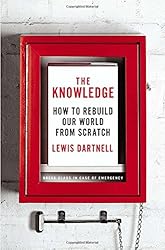
The Knowledge: How To Rebuild Our World From Scratch
The Ultimate Prepper BookWe recently reviewed The Knowledge and found that it was an amazing resource for preparedness minded people. It takes a look at the skills and technologies we would need to re-learn, re-discover, and master to start rebuilding our society after a total collapse. It provides both detailed instructions for the most important of these and historical examples of where this knowledge has been used to advance humanity to our current levels. A must have for any prepper's library.$
OuttaGear 4.0 Emergency Kit Bag

Comprehensive Pre Made Bug Out BagThis is a high-quality "done for you" bug out bag option. It is a good choice if you have someone you care about that you want to quickly get prepared or if you just don't have time to build a well made BOB for yourself. If it is out of your budget you can also look at the TUUSK bag ( Here)that I personally designed, which is focused on urban survival but can easily be tailored to any situation.$$$$

Read More

The Knowledge prepper Books Review

The Knowledge: Prepper Book Review

The Knowledge prepper Books Review

We’ve all seen post-apocalyptic movies or TV shows that feature heroic survivors scrounging for food and, more likely than not, fighting off some sort of un-dead enemy. It all looks so…achievable, doesn’t it? In the movies, someone always manages to build a fire and find drinking water; no one ever dies of dehydration or from an infected wound. The question is, if civilization were to collapse, could we rebuild life as we know it?

According to The Knowledge: How to Rebuild Our World From Scratch by Dr. Lewis Dartnell, the answer is no. In this eye-opening survivalist guide, the author argues that if civilization should fall and necessities such as food and clothing no longer ‘magically’ appear for us on store shelves, then humanity would crumble. With all the advances and conveniences we’ve created, we’ve forgotten how to meet our basic needs if this crutch was taken away. In order to survive in a post-civilized scenario, we would need to relearn many of the core skills our ancestors used to advance civilization in the first place.

Why It Needs to be on Your Nightstand

The book is written from the perspective that if the world were to suffer a major catastrophe, it would be next to impossible for the ‘survivors’ of whatever calamity befell our civilization to retrace the steps of recent generations. Readers will learn the skills essential to rebuild our world in the immediate aftermath beyond just basic survival. By growing and mastering these skills, readers can move on to more complex tasks and learn how to improve their lives should the unthinkable happen.

Can’t we just use all the same stuff we enjoy today?

Consider this: many of the advances we enjoy today were created during the Industrial Revolution, fueled primarily by fossil fuels. At that time, these fuels were easily accessible and abundant, but now can only be mined or drilled using energy intensive and increasingly advanced methods. Oil, for instance, is currently fracked out of the ground using cutting-edge technology; a group of post-apocalyptic survivors wouldn’t stand a chance of pumping oil from a fracking well, let alone distilling it into fuel or plastic.

The Knowledge prepper Books Review

Given that we won’t be able to exactly replicate what our ancestors did, we need to devise ways of leapfrogging many of the steps they took as well as alternative solutions to problems solved during a different time.

A Quickstart Guide To Rebooting Civilization

In The Knowledge, Dartnell argues that “the aim for an accelerated reboot of civilization is to jump directly to a level that saves centuries of incremental development, but that can still be achieved with rudimentary materials and techniques – the sweet spot intermediate technology.” The book will teach you the skills needed to reimagine and recreate many vital technologies, including the following:

  • Melting down and reshaping plastics to make containers and other durable, reusable materials
  • Making steel via the Bessemer Process, instead of forging the way medieval blacksmiths did
  • Damming up a stream to create a millpond for a waterwheel – a technique not used until 600 AD, nearly 1,000 years after the widespread adoption of waterwheels
  • Leveraging chemistry to create a great deal of materials for building and creating, including basic chemistry to more efficiently make paper, soap, and fuels

How do I know this sort of thing is even possible?

Sound incredible? The Knowledge provides plenty of examples of times throughout history when civilizations successfully redeveloped technologies to survive. For instance, the City of Gorazde repurposed a roman-era waterwheel technology to generate electricity in the 1990s.  This was during the Bosnian War when the city was cut off from the grid during a three-year siege by the Serbian army. A few years earlier, Europeans were able to repurposed more than 1 million cars to run on wood, coal and methane gas during WWII.

The Knowledge prepper Books Review
An old wood-powered car. Think you could get it back up and running?

What You’ll Learn About Rebuilding Civilization

The Knowledge provides an in-depth review on the key tenets of civilization and the skills needed to rebuild from scratch. If you were in a post-apocalyptic situation right now, would you be able to weave cloth from plant material? Preserve your food? Put wind and water energy to work? Find your way using only the stars as a guide?

If you answered “no” to any of these questions, you need to read this book. In addition to learning the skills needed for those key tasks, you’ll also learn the following:

  • What makes soil rich, the best fertilizers to use, and the best crops to cultivate based on ease of growing and nutritional value
  • How to turn crops such as cereals into consumables like bread and beer
  • How to preserve your food using traditional methods
  • How to spin yarn and thread from plant and animal materials to weave cloth
  • How to harvest the raw materials for more complex necessities such as soap, fuel and preservatives
  • How to scavenge for basic materials to build tools (such as a blacksmith’s) that will allow you to build more complex tools (such as a lathe or drill press)
  • How to create medicines needed for infectious diseases, childbirth, and more
  • How to perform basic medical exams and diagnosis without MRIs, X-rays, etc.
  • How to manage transportation in a post-fossil fuel world, e.g. wood-powered cars, animal power, wind for sailing
  • How to develop basic communication tools such as quills, inks and paper, as well as more complex medias such as the printing press, telegraph and radio
  • How to use basic chemistry to make explosives for mining and salvage work
  • How to use the stars for navigations as well as primitive tools such as sundials and astrolabes

The Knowledge prepper Books Review

The Ultimate Prepper Book?

If you’re looking to develop your self-sufficiency toolset, this book is a must-have. When disaster strikes, the greatest resources you can have is knowledge. The Knowledge gives you a holistic view of what skills you’ll need so you can prioritize your learning and development. There are also practical examples of how to use those skills to build the necessities of life from readily available materials.

The essential knowledge provided in this book will give survivors the tools to build a strong foundation for the future generations that come after, so that they can do more than survive – they can thrive.  If you are interested in vastly increasing your own preparedness or learning more about The Knowledge, you can read what other people are saying here.

The Knowledge prepper Books Review

About The Author, Dr. Lewis Dartnell

Dr. Lewis Dartnell is a professor of astrobiology at the University of Leicester in the UK. He is a UK Space Agency Research Fellow, STFC Science in Society Fellow, and the Senior Editor of the journal Astrobiology. He has committed countless hours to his exhaustive research of the technologies and skills needed to rebuild our world, and the detailed thoroughness of his book demonstrates this.  In addition to all this Lewis has somehow has time to keep up a preparedness related blog at The-Knowledge.org.

I recently reached out to Dr. Dartnell to speak with him about his book and ask the questions both myself and readers of The Bug Out Bag Guide had after reading The Knowledge. His rationale for writing the book in his own words is as follows:

What I tried to do with the book is push much farther beyond what most prepper books deal with – not focusing on the run-up to a disaster or the immediate aftermath, but looking years or generations down the line as to how you would actually need to know to reconstruct a new civilization (not necessarily rebuilding our world) from the ground up and ensure it remains vibrant and progresses. The idea behind the book is what would be the crucial knowledge you’d want to be able to hand to a group of post-apocalyptic survivors if society were ever to collapse (be it from pandemic outbreak, asteroid impact, or whatever) to help them rebuild as quickly as possible – a quick-start guide for civilization itself.

Q&A with Dr. Dartnell

Question #1

There are so many prepper books available, why should this one be on your must-read list?

Answer:

I have very deliberately written The Knowledge to pick up where other prepper books leave off. You can certainly stock-pile canned food, bottled water, and other consumables, and this would fare you and your family well for riding out a disaster. But then what? What do you do once your reserves have run out? What would you actually need to know to produce everything you need for yourself, and to start recovering a society from the bottom-up? The Knowledge is a thought experiment on how you could orchestrate the reconstruction of a technologically-capable society in the aftermath of a global catastrophe. I take a post-apocalyptic world as the starting point, and ask what is the critical scientific and technological knowledge you’d need in order to reboot civilisation after an apocalypse, how to avert another Dark Ages, and how you might even accelerate that reboot second time around… The one thing I hope people take away after reading The Knowledge is to understand a little more about the behind-the-scenes fundamentals of how the life-support system of our modern civilisation works, and appreciate the everyday things we just take for granted today.

Question #2 – Note This was the winner for best question!

Given a small amount of time and money, what five skills would you recommend a person learn to be ready for any eventuality? In order of importance, please.

Answer:

Well, at the end of the day, developing any new skill to a meaningful level of proficiency takes time – there are no short-cuts, particularly if you want to be prepared for any eventuality. But as long as your community of survivors has a diverse set of skills represented amongst them, and can work together effectively, you’ll have a much better chance of thriving. Throughout the chapters of the book I talk about the most crucial domains of knowledge and capability, why they were crucial in our own historical development and therefore why they will be needed if we ever have to reboot civilisation from scratch. This, of course, includes areas like agriculture and knowing how to grow enough food to sustain your community, and to keep your land productive and fertile over the generations. Knowing which natural fibres you can harvest and spin into thread, and then weave into clothes on a loom is also important. But history teaches us that building a capable society needs much more than just basic survival skills like these. The knowledge of how to extract crucial raw ingredients from the world around you and transform them into the most useful substances and materials. How to you create soda, needed for everything from soap to glass and paper? How do you get metals out of their rocky ores, to make all the tools and building materials that you need? And being able to use tools is also critical, as well as knowing how to maintain and repair them. I explain in The Knowledge why the lathe is so fundamental, and how it has the astounding ability to reproduce itself. All you need to make all of the components of a new lathe is a lathe, and if you know how, you can even use a half-finished lathe to complete its own construction. All of these crucial capabilities were developed slowly over time, and what I’ve tried to achieve in The Knowledge is provide enough of an outline that these could be redeveloped rapidly during a post-apocalyptic recovery. Well, as far as is possible in one single book, of course!

Question #3

What do you think the hardest thing to master or salvage would be?

Answer:

If our civilisation ever did collapse and a community of survivors had to start again, rebuilding a progressive and technologically capable society, I think one of the most difficult fields to recover will be medicine. Although there are some herbal remedies that can be extracted relatively simply from natural sources, the vast majority of pharmaceuticals in use today are purified or modified by advanced organic chemistry, and that is going to take a lot of time for a society to redevelop. For centuries of history, doctors found themselves in the frustrating position of being able to diagnose the ailment or injury inflicting a patient but being essentially powerless to do anything about it; without antibiotics to treat infection or without anaesthetics and analgesics to allow surgery. I explain in The Knowledge the fundamentals of these things – how to chemically synthesise nitrous oxide or how you could re-isolate penicillium mold,for example. But in the aftermath of a global catastrophe the survivors would find their health-care capabilities knocked back to basics for quite a while once all the pre-existing drugs and medicines have degraded away (which I also discuss in The Knowledge)

Question #4

What key skillsets would you want to teach the next generation so they could build on whatever knowledge or technology you yourself were able to salvage or re-learn?

Answer:

Of course there’s only so much information you could fit into a single book, or indeed a whole library of tomes. So the key skill for a society rebuilding after an apocalypse would be knowing how to fill-in the gaps – how to rediscover all of the other knowledge that you weren’t able to explicitly preserve or salvage. And so just with the last two or three centuries of our history, by far the most successful system for generating understanding will be science. The scientific method is essentially knowledge-generation machinery – a process you go through to understand the world around you and be confident that your explanation is the best one.  As long as the survivors can maintain an inquisitive and rational mind-set then civilisation has a chance of recovering rapidly and not getting caught in another Dark Ages of superstition and ignorance.

Question #5

What is the single most important issue with regards to hygiene? They are so many things to consider, from hand washing to location of a latrine, and how to do these things with very limited resources (like water).

Answer:

I would argue that one of the most important nuggets of modern understanding that should be preserved if all else is lost, is the notion of germ theory. This is the idea that the reason people fall sick and pass their disease on to other people is not because of bad odours or the whims of fractious gods, but that there are things so tiny they are invisible to our eyes, but which get inside our bodies and make us ill. The most easily prevented diseases are spread by what doctors delightfully term ‘fecal-oral transfer’. Health education studies in the developing world have found that nearly half of all gastro-intestinal and respiratory infections can be avoided simply by regularly washing your hands. Although the importance of germs and hygiene seem obvious today, in our own history this wasn’t appreciated until surprisingly recently. As late as the 1850s, people in London, the capital city of the greatest empire on the planet at the time, were pouring their waste into the river Thames, and 20 yards downstream someone else was dipping in a bucket and drinking it. So if you did have to reboot civilisation, imagine the centuries of pestilence that you could leap-frog over with the fundamentals of germ theory. With this understanding, it is immediately obvious why you need to keeping washing your hands, treat carefully your sewage in large settlements, and use antiseptics and aseptic techniques to stop infection of an injury or after surgery. So in The Knowledge, I explain how to make your own soap for personal hygiene, how to produce ethanol as a disinfectant, why privy pits should always be dug at least 20 metres downhill from your source of drinking water, and how to construct a rudimentary microscope to demonstrate for yourself the existence of these invisibly small bacteria and protozoa.

Thank You!

Thanks again to Dr Lewis Dartnell for taking the time to answer our questions, if you want to find out more about the book, you can check out The Knowledge here:

Read More

best hunting knife

How To Find The Best Hunting Knife For Your Kit

best hunting knife

You’ve been on the road for more than a month. Your initial supplies have run out and you have no choice but to rely on your skill as a hunter. Whether you trap, use a bow, slingshot, gun or just your wits, once your target is down you will need to skin and dress it (cut the meat and prepare it for cooking), and the most important piece of equipment you will be needing is a good hunting knife.

A hunting knife is crucial if you want to:

  • Keep safe. A skinning environment is slippery and wet. A dull blade and slippery handle are sure to cause injury during the skinning process, and in a survival situation an injury could seriously lower your chances
  • Remove the animal skin in one piece for further use
  • Dress the meat in the most efficient manner. You busted your ass to down that animal. You need every scrap you can get.

The difference between a hunting knife and a survival knife

You have that giant survival knife strapped to your waist. Do you really need a dedicated hunting knife?

The answer is a resounding yes. Due to the difference in use, hunting knives differ greatly from survival knives:

  • Tasks: A survival knife will be used for many rough and difficult tasks – chopping wood, breaking glass windows and self defense to name a few. Hunting knives on the other hand are used for the more delicate task of cutting up an animal. Think axe vs. scalpel.
  • Blade Size: Survival tasks demand a large, sturdy blade. When hunting in a survival scenarios you will most likely be acquiring smaller sized animals, which means a smaller blade needed. To illustrate this point – imagine trying to dress a squirrel with a Rambo style blade. Suitable only for those who love fur on their steak.
  • Blade Shape: Survival knives need to have a sharp, pointed blade in order to pierce your enemy in self defense. Hunting knives need to have a rounded blade shape that easily glides between the skin and the flesh.

The 4 elements that make a great hunting knife

So now that we understand the necessity for a good hunting knife, these are the four aspects you need to check out when choosing a hunting knife

  1. Blade type
  2. Blade size
  3. Blade material
  4. Grip material and design

1. Hunting Knife Blade Type

When it comes to survival, you will prefer a clip point, spear point or needle point blade for easy piercing. Hunters on the other hand look for a blade that allows them to remove the skin off an animal without damaging the hide or the flesh. The best blade all-rounder for this kind of work is the drop point blade. Drop point blades have a belly at the end of the blade that rounds up towards the point. This belly makes skinning an easy task and you have little chance of piercing the skin.

best hunting knife blade type

A second decision you need to make regarding blade type is choosing a fixed blade vs. a folding blade. Folding blades, like your common pocket knives, fold into the handle, saving precious space in your bug out bag. The downside is that these knives are relatively more prone to break at the hinge, leaving you without a knife. Full tang fixed blade hunting knives are virtually indestructible, usually supplied with a protective sheath. The knife takes up more space but will last longer.

2. Blade Size

Before you choose a blade size you must first try and plan ahead – what will your target game look like? Will you be out in bear and moose country or will you be hiding in the city where the odd bird and rodent will make up your family dinner?

For medium to large game a blade that is 4 inches and longer will do the trick. For smaller game choose a blade of 2.5 to 4 inches in length.

3. Blade Material

There are many types of hunting blade materials but most fall into two categories: Carbon Steel and Stainless Steel.

best hunting knife blade material

Stainless Steel pros and cons

A misconception about stainless steel is that it never rusts. This is wrong. Stainless steel will rust eventually, but the chemical makeup of these blades ensures that they will rust slowly. The downside of this feature is that stainless steel as a blade material is soft, causing these knives to lose their edge sooner. It is not uncommon for experienced hunters to sharpen their stainless steel knives more than once during one animal dressing.

Stainless steel comes in a wide variety of composites, from the 440A stainless steel which rusts very slowly but is relatively soft, to the expensive VG10 which is considered a super-steel, rusting relatively slowly and holding a scary edge. Look out for the Sandvik 12C27, a Swedish stainless steel that is a great all rounder offering good corrosion resistance, easy sharpening and great edge retention.

Carbon Steel pros and cons

Carbon steel knife blades are harder than stainless steel, which means that they will keep their edge for a much longer period of time. If you are going to be out of civilization for a long time, this would be the best knife material to chose.

The main drawback to carbon steel knives is their poor resistance to corrosion. Unless they are well treated after each use, these knives will rust in a wet environment. Cleaning the knife after each use maintains the blade material and you get a sharp, durable blade that will be great outside.

Of the many types of carbon steel blades, look out for the 1095 steel. It holds a scary sharp edge and is easy to sharpen.

4. Grip Material and Design

Back in the day knife grips were made with bone, cord or wood. Many old school hunters (myself included!) prefer the classic look of an old school handle, but these are not the strongest materials in the market. In survival environments you need a grip that is break proof, slip proof and comfortable. Today we have a variety of brilliantly engineered materials that make great grips. The most popular handle materials include G-10 (impervious to most elements like water, oils and acids), Carbon Fiber (ultra lightweight and extremely strong) and Zytel (strong and light, it offers great surface grip).

best hunting knife handle material

Recommended Models

The hunting knife market is constantly expanding with new models emerging on a weekly basis.

To whittle down the myriad of knives, materials and models, here are our bottom-line recommended knives for a survival scenario:

  1. Small to medium game, folding knife: There are two knives that are perfect for small game survival hunting. The Benchmade Mini Barrage is an axis-locking, assisted opening folding knife that is handy as a self defense weapon while its wide blade works well as a good skinner.
    A second option in this category would be the classic Buck 110. A folding carbon steel knife, this is a knife that is manufactured in the USA and it comes with a lifetime guarantee which tells a lot about the quality. It is sharp and unbreakable, but quite heavy in your hand. The Buck 110 is an all time classic, leading the bestseller lists for generations.
  2. Small to medium game, fixed blade: If you’re short on budget, the Morakniv Companion is a surprisingly efficient and sturdy knife that will hold its edge well. If you can stretch your budget a little, the Scandinavian Fallkniven H1 is the king of hunting knives, a purchase you and your children will never regret.
  3. Large game hunting knives: When it comes to large blades, the king of hunters is the Ka-Bar BK2 Companion, with its 5.25 inch blade. The thick blade means that the knife can double as a survival knife in a pinch, and the greatly designed handle ensures a good skinning experience. This is a great knife for large game hunting.
Hunting KnifeBlade MaterialCostFeaturesSize
Small to medium folder:
Benchmade Mini Barrage

154CM Stainless Steel$$$Axis lock for confidence while skinning, spring assisted opening for quick deploymentBlade: 2.91"
Overall: 6.91"
Small to medium folder:
Buck 110

420HC steel$Classic design used by generations of hunters, made in USABlade: 3.75"
Overall:8.625"
Small to medium fixed blade:
Morakniv Companion

Carbon Steel$Fantastic quality for value, textured, rubberized handle for a sure gripBlade: 4.1"
Overall: 8.6"
Small to medium fixed blade:
Fallkniven H1

VG-10$$$Among the highest quality knives out there. VG-10 steel is corrosion resistant and holds a superb edgeBlade: 4"
Overall: 8.375"
Large game, fixed blade:
Ka-Bar BK2 Companion

1095 Cro-Van Steel$$Can double as a survival or bushcraft knife while still being able to handle butchering and skinning tasks.Blade: 5.5"
10.5"

About the Author:

Greg Gurland is an avid hunter and knife freak. His website HunterBlades.com is dedicated to finding the best hunting knives for each hunter’s specific needs. For more information, feel free to drop him a line at greg@hunterblades.com

Read More

best slingshot

The Best Slingshot For Survival Situations

best slingshot

If you hear the word ‘slingshot’ and images of a mischievous Bart Simpson come to mind, you’re not alone. Although sling-type devices have been around since biblical times (remember how David slayed Goliath?), modern slingshots are engineered like never before and are considered legitimate weapons.

Out of the various slingshots that we’ve reviewed, we recommend The Scout Hunting Slingshot as the best well-rounded slingshot for survival situations.

In this article, we are going to take a look at what survival situations a slingshot can be an essential tool as well as what qualities to look for when choosing the best slingshot for your bug out bag.

Should I Add a Slingshot to My Bug Out Bag?

Lightweight and versatile, slingshots make an excellent addition to any bug out bag, and the best part is you don’t need to pack ammo!

Whether bugging out in the wilderness or an urban environment, projectiles for your slingshot can easily be scavenged. Not only will you not be weighed down by packing extra ammo in your bug out bag, but you won’t need to worry about running out.

When bugging out in the wilderness, nearly any rock will serve as usable ammo; however, riverbeds are probably your best bet for finding smooth stones that will fly well.

If you find yourself in an urban survival situation, there are plenty of sources for ammo including building debris and concrete, or, if you’re lucky enough to come across one, items from abandoned hardware or sporting goods stores.

However, if you do have space to spare, then packing some steel slingshot ammo isn’t a bad idea.

Slingshot Uses in Survival Scenarios

The two best most applicable uses for a slingshot are hunting and self-defense; making it a versatile survival tool.

Slingshot as a Hunting Weapon

For those who have never hunted with a slingshot, it may seem like a laughable concept, but rest assured that a good slingshot is capable of killing most small game (squirrels, rabbits, birds, etc.) from 30 feet away.

The following are some advantages of using a slingshot to hunt small game:

  • Gives you a small profile and makes it harder for animals to spot danger
  • Makes it easier to maneuver through brush to improve your shot or conceal yourself
  • Its completely silent – won’t give away your location to other animals or unfriendly humans nearby

The slingshot is a great choice for feeding yourself on small game but what about larger game, or fish? A good slingshot can take care of them too.

If your group is large enough that a couple squirrels simply won’t suffice, you can easily modify your slingshot to shoot arrows and take down bigger game.

You can also catch fish through slingshot fishing – a modified form of bow fishing that usually requires adding a reel to the slingshot, especially if you intend to fight the fish. Here is a how-to video if you are interested in learning more about slingshot fishing:

Slingshot as a Self-Defense Weapon

Don’t discount the power of slingshots in conflict (remember David and Goliath?) – they can be excellent survival weapons against both aggressive animals and humans.

Some of the advantages of using a slingshot as a survival weapon include:

  • Its small size, which makes it easy to conceal until you need it
  • Even just brandishing it and showing an attacker you are not unarmed can be enough to show you aren’t an easy target
  • Ammo can be easily acquired in the field making it a great choice for long-term survival
  • No need to worry about keeping it dry
  • Silent firing – you can stealthily take down targets without alerting any collaborators

best slingshot

If you’re still on the fence about whether or not a slingshot can be an effective self-defense weapon, consider that in recent history it has been used by various irregular forces including the Irish Republican Army and Ukrainian Anti-government protesters – this certainly demonstrates the slingshot’s effectiveness in modern conflicts.

The Best Survival Slingshot: The Scout Hunting Slingshot

You will want your slingshot to be accurate, powerful, and durable.

The Scout Hunting Slingshot delivers on all three of these requirements.

The Scout’s heavy duty flat bands allow for accurate, high-velocity shooting when stalking prey. Paired with some scavenged ammo, or 3/8″ steel slingshot ammo, The Scout Hunting Slingshot is a force to be reckoned with.

It is 100% American made and utilizes a classic design upgraded with indestructible, modern materials. For example, its glass filled nylon construction provides an extremely durable frame while remaining lightweight.

The Scout is designed with an ambidextrous grip that fits just right for any sized hand.

The Scout Hunting Slingshot a great choice if you are looking for a reliable way to feed yourself with small game or birds while on the trail. Naturally, The Scout can also be used as an effective self-defense weapon.

Its sub-$50 price point delivers great value and makes it a smart addition to any survival kit.

Want to see The Scout in action? Check out this video that demonstrates just how accurate it is…

Features to Look for in a Slingshot

If you’re experienced with a slingshot, then you know what a valuable survival weapon it can be. What you may not know is that not all slingshots are created equal; there are distinct features that make some more suited to a survival situation.

Let’s take a look at the different considerations to make when choosing a slingshot:

  1. Frame Material
  2. Band type
  3. Other Features

Frame Material

Generally, slingshots are made from three materials: metal, wood, and plastic. For your reference, I’ve listed the benefits and drawbacks as well as key considerations of each material to help you choose the best slingshot for your needs.

Metal

  • Metal slingshots are light and strong
  • They will generally be the most expensive but are far sturdier and last longer than wood or plastic
  • For a BOB, an aluminum or steel slingshot with a plastic or ergonomic foam handle is the ideal choice

Wood

  • A wooden slingshot is the most classic design
  • They are generally engineered with a simple Y-shape and a rubber band attached to each fork

Plastic

  • Different plastics can have very different qualities
  • Plastic slingshots are often more economical
  • Modern plastics such as glass filled nylon can be an incredible choice for durability and weight

Band Type

The two types of bands you will see in modern slingshots are flat bands and rubber tubing.

The determination of which is best for your survival needs really depends on what you intend to use the slingshot for – tubing may be better for hunting due to its durability, while flat bands provide better accuracy and would serve better as a self-defense weapon.

The benefits of each are as follows:

Rubber Tubes

  • Tubes tend to last longer; they would be the better choice if you are planning to use a hunting slingshot to feed yourself over an extended period of time
  • There are many types of slingshot tubes to suit any desired draw weight, check out the guide below:

best slingshot tubes

Flat Bands

  • Flat bands are easier to draw and typically produce a faster projectile speed; if you won’t be firing a lot but want better accuracy when you do, this may be a better choice
  • Flat bands would be a good self-defense option when making an evacuation that may require you to deter aggressive people
  • Flat bands tend to be faster and more accurate than tubing due to their rapid “snapback speed” – the rate at which the projectile is propelled forward

Both tubing and flat bands are relatively cheap –  if you are seriously considering a slingshot as a survival weapon, it may be worth experimenting with a few different types to find the best fit for you.

Other Features

The best slingshots have several features that differentiate them from the mediocre ones.

Some features are relevant for a survival or hunting slingshot, others less so, let’s take a look at the best slingshot features:

Grip

  • No matter what the use, having a comfortable grip is an essential feature for any slingshot
  • A grip will let you fire more shots and increase accuracy by reducing hand and wrist fatigue
  • When choosing the best slingshot, look for one with a contoured handle that fits your hand naturally

Sight

  • A sight helps to improve the accuracy of your shots
  • This is a great feature for someone with little experience as it can reduce the amount of time you need to dedicate to improving accuracy. However, don’t assume that just because you have a sight you will instantly become an accurate shot – practice still makes perfect!
  • If you will be aiming at lots of small targets, such as small game, a sight is a key feature
  • If you expect to be aiming at large targets, such as humans, at shorter distances for self-defense, a sight becomes less necessary
  • Most of the best hunting slingshots will come with a sight attached

Hollow Handle

  • Many slingshots come with a screw-cap hollow handle that can be used to store almost anything, from spare rubbers to ammunition
  • You can also use a hollow handle to store survival gear, similar to the hollow handle of a survival knife
  • While not a necessary feature, a hollow handle can be quite useful if you think carefully about what could be packed in there (fishing kit, items to make fire, button compass, etc.)

The Best Slingshot For You

When it comes to choosing the “best slingshot,” we really like The Scout Hunting Slingshot, but it comes down to your own personal preference.

After reading this guide, now that you’re more informed on the various nuances in various slingshots, you’re able to make an educated decision.

Final Thoughts

A slingshot is a versatile tool that can be used by both male and female preppers, from teenagers to seniors; slingshots are especially advantageous for preppers who aren’t comfortable with firearms or don’t have the size and strength to wield a hand-to-hand weapon.

However, like anything in life practice makes perfect. It does take some time to become accurate, but time is really your only investment as ammo – rocks, spare nuts or bolts, nails, etc. – is free!

Remember, practice is essential for proficiency!

While its simplicity is part of its appeal, the slingshot is a skill-based instrument that requires practice in order to get good. So take your time, practice all you need and develop your skills on this unassuming “toy” that could very well play an integral role in your survival.

Even if you decide a slingshot is just not the right fit for your bug out bag and survival plan, I would still suggest grabbing one as they are a lot of fun to play around with.

What do you think?

Do have a slingshot in your bug out bag? Is there a particular slingshot that you love? What do you think are the best slingshot features for a survival situation? Let us know in the Comments Section below, thanks!

Read More