Family Bug Out Bag

How To Make Your Family Bug Out Bag

Family Bug Out Bag

If you are a parent or plan on bugging out with family members that have children there are some important factors to consider when preparing for your potential evacuation.  This includes carefully packing a family bug out bag and making your family bug out plan compatible with the limitations presented by having young ones with your bug out group.  Here we will take a look at bugging out with infants, young children, and tween/teens to help you determine what to pack in your family bug out bag and how to best prepare your family unit to survive when the unforeseen strikes.

What Makes A Great Family Bug Out Bag?

A family bug out bag can differ from a typical solo BOB in a few important ways.  Although it has the same primary purpose of being a mobile kit to help you survive, it must be tailored to meet the needs of multiple people of various ages and skillsets.  Here are some items to add into your family bug out bag based on the ages of the children you will be evacuating with:

Family Bug Out Bag: Infants and Toddlers (Age 0-5)

Combination child carrier and pack

This will enable you to carry both your child and survival gear .  It is ideal to utilize one of these combination packs as an option for your family bug out bag if you have a toddler or infant that you are going to bug out with.  Having a combination child carrier/pack will enable you to carry everything comfortably and allow you to move further faster.

Osprey Packs PocoKelty Pathfinder 3.0Kelty Transit 3.0Vaude Wallaby 12L Pack


Diapers

This is obvious for anyone who has been a parent but it might be something that is overlooked when packing your firestarters, paracord, and other survival gear.  Reusable diapers are probably a better option.  Besides the fact that they are multiuse with some basic treatment, they are also multipurpose and can be put to many other tasks beyond their primary objective.

Medicine syringe/Eyedropper

This goes along with any medication you may be giving your child.  It may be as simple as a reflux medication but you do not want to have to improvise a delivery method while on the move.  Medicine syringes are lightweight and take up very little room.  If your infant may need to ingest any medication be sure to pack one.

Formula

You may pack rations or be able to forage and hunt for yourself but what about the little one?  Even if the mother is currently breastfeeding it is wise to pack some powdered formula.  This will enable another person to feed the child if the mother is separated or otherwise unable to do so.

Pacifier

If your child takes a pacifier having one packed in your family bug out bag will make sure it comes with you as you evacuate.  A pacifier may help your child sleep and will give you an option for keeping them quiet when maintaining a low volume is imperative.

Extra Clothing

As a rule of thumb pack your family bug out bag with 2 more sets of clothing for your child than you pack for yourself.  This will enable you to better regulate their temperature by using the principle of layering and give you options in the event of a diaper accident.

Waterproof Bodysuit

This is essential foul weather gear for your infant or toddler.  Keeping them warm and dry will go a long way in reducing parental stress and keeping morale high.  There are many options out there for this, make sure if you already have one that it is packed in your family bug out bag, not hanging in the closet.  Also be sure that if it has been a while since you last performed a review of your family bug out bag that this item (and any other clothing) still fits your growing child.

Pre-sterile bottles

These are bottles that are sold in sterile packaging.  It will save you from having to boil a bottle before feeding your child while on the move.  Be sure to keep track of expiration dates on any sterile items as a part of your regular bug out bag reviews.

Sterilization agent

This is generally sold in a concentrated powder or liquid form that is diluted with water.  If you have to use any bottle multiple times you will eventually need to sterilize them.  A few drops of sterilizing agent mixed with water in a nalgene or other wide mouthed water bottle can be used to sterilize bottles or other small items.

Bug Out Planning for Infants and Toddlers

It is essential to realize that you are going to need to carry your child for the overwhelming majority of your bug out.  Besides the physical limitations of toddlers and infants they may be emotionally or mentally traumatized by the event that caused the bug out and new surroundings.  This will lead them to be more needy and want to be in frequent reassuring contact with their parent.  As you will already be carrying your family bug out bag, the additional weight of your child has to be incorporated into your bug out planning.  It is necessary but it will ultimately slow you down and cause you to burn more calories.  Plan your energy intake and rest stops to account for this.

Noise reduction is an important aspect of operational security.  This clashes with the need for most young children to yell or cry to express their needs.  This means you need a strategy in place to keep your child quiet if a critical situation arises.  It may be as simple as giving them a pacifier or as advanced as giving them a dose of antihistamine or other substance that may make them drowsy (Talk to a doctor if you are considering this latter strategy!!!!).  Plan and prepare to avoid problems when you are on the road.

Family Bug Out Bag

Family Bug Out Bag: School Aged Kids (Age 5-10)

Non-battery powered toys

Keeping your school aged child’s hands and mind occupied will go a long way in making the situation more bearable for both you and them.  Plan on packing at least one non-battery powered toy in your family bug out bag to keep your child entertained when you set up camp for the night.  Ideally this item will have many uses and ways to interact with it.  Think simple, and light and a single toy, not something with many pieces like legos.  It is good to have your child pick this item and put it in the family bug out bag themselves as it will help them understand that it is a special toy they are setting aside as part of the family’s preparedness planning.

Comfort item

Kids this age know enough to pick up on the cues around them to know something is wrong.  Pack a familiar item for them in your family bug out bag to comfort themselves with.  This may be a favorite toy, blanket, or stuffed animal.  Having something they are used to interacting with will make the bug out situation less overwhelming for them and reduce parental stress.

Child’s Bug Out Bag

School aged kids will be able to carry their own backpack with a few supplies to take a small amount of the load off the parents.  You may be able to pack some of their clothes or other lightweight items in their pack or split up some of the group’s basic essentials such as rations or other survival items amongst the gear they are carrying.  Be careful not to overload the child, 5 lbs worth of gear is a good guideline.  If you load them down and tire them out quickly you are going to have to carry them AND the gear.

Bug Out Planning for School Aged Kids

A child at this age can begin to contribute towards the family’s prepping.  They will be able to undertake many tasks while under adult supervision such as collecting firewood, setting up camp, foraging, and many more.  This is also a good age to instill the prepping mindset in kids.  Have them tag along as you build your bug out plan and pack your family bug out bag to get their minds working.

Starting to learn basic survival skills is an excellent way to involve kids as well.  Train them in basic first aid to start off with.  This means they will be able to provide some assistance if the parent gets hurt.

It is wise to put photos of the family in the pockets of school aged children.  In the event you are separated, they will be able to show these to authorities or other people they encounter to help find you again.

At this age kids also begin to spend time away from their parents at school.  Because of this it is important to drill into them where to meet if a disaster occurs.  As we cover in our How To Make A Bug Out Plan Article, this may be a specific office or classroom but what is important is they know what to do when the bug out plan is initiated.

Lastly although school age kids can show some initiative and take on some responsibilities it is important to recognize that at some point in your bugging out the parent will most likely have to carry them.  This may be due to exhaustion or just facing difficult terrain.  Regardless of why you need to be prepared to do this and have a family bug out bag packed in a manner that does not prohibit carrying your child.

Family Bug Out Bag

Family Bug Out Bag: Tween and Teens (Age 10-18)

Teen/Tween Bug Out Bag

Kids in this age group should be able to carry at minimum all their own personal gear that makes up your family bug out bag.  This may be their spare clothes, rain gear, and any tools that are specifically for their use such as a hunting or self defense item.  Get your teen or tween a backpack made to fit their smaller frame.  Make sure it is a quality bag that is able to be carried comfortably and cinched tight to their bodies, not a cheap school book bag.  We provide tips on how to pick the best backpack in our article here.

Hunting Tools

Teens and Tweens are old enough to be taught at minimum proper weapon safety, care, and use.  Note that this does not have to be a firearm, if you are uncomfortable with giving a minor a gun you can still teach them to fend for themselves with a slingshot or bow and arrow.  Have them practice accuracy and stalking as a part of your regular preparedness exercises so they are ready to catch dinner when you are bugging out.

Knife

A knife is one of those basic tools with nearly limitless applications.  A kid in this age group should be taught how to safely carry, use, sharpen, and care for a knife.  Pack a knife for your teen in your family bug out bag or have them carry it with them in their pack.  There are numerous tasks that a teen can carry out using this to assist the welfare of the bug out group as a whole.

Bug Out Planning for Teens and Tweens

As teens are entering the first stages of adulthood this is a great time to start giving them some responsibility.  They should be able to understand the seriousness of a bug out situation and grasp that all bug out group members need to pitch in and help.  As you prepare at home challenge them to make decisions in a controlled environment. Doing this will teach them to take responsibility for the well being of the family.  Teens are also able to learn more advanced skills such as:

Kids in this age group are able to take on more autonomous tasks to be carried out when on the move and when setting up a camp.  Teach them to take ownership over basic tasks such as gathering firewood, finding and treating water, and foraging for food.

Teens are also able to understand that a bug out situation can be very dangerous and that they may need to defend themselves or their family members.  If you are comfortable and knowledgeable in self defense or weapons training it would be wise to pass this information on to older teens in a responsible manner.

Family Bug Out Bag

Family Bug Out Bag Conclusion

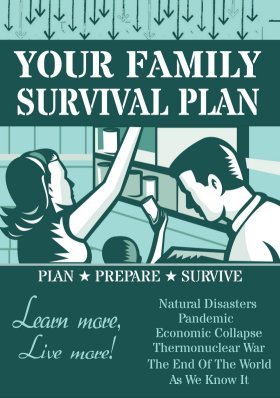
Bugging out with children of any age adds challenges to an already difficult situation.  However as you can see with some simple planning you can overcome these difficulties and help your family evacuate safely.  Think critically about what items to add to your family bug out bag to make things easier on both the child and the parent.  Also include your kids in your preparedness training and bug out planning so they know what is going on when the time comes.  If you are interested in more details on making a Family Bug Out Plan, I recommend checking out this comprehensive ebook:
Family plan

Your Thoughts?

Do you have any items that you would add to your family bug out bag?  Is there any special planning that you would do to make sure your family can bug out safely together?  Please let us know in the Comments Section below.

Read More

Emerson Mini CQC-15 Review

We recently took a look at the Emerson Mini CQC-15 as a part of our guide on How To Choose The Best EDC Knife. We were so impressed by it that we ended up recommending it as the Best Overall EDC Knife.

Here we will take a closer look at its  features and qualities with our in-depth Emerson Mini CQC-15 Review.

Emerson Mini CQC-15 Review

First Impressions

Right out of the box we could tell that the Emerson Mini CQC-15 is a high quality knife.  It feels solid in the hand and the 154CM stainless steel blade comes from the knifemaker very sharp.  The overall build quality is outstanding.

One thing that catches the eye right away is the patented “Emerson Wave” feature.  This is a cleverly designed lever on the back of the blade that catches your pants pocket as you draw the knife out to automatically open the blade.  If you have seen a video of this working (below) you may think this is a spring-assisted open knife.  In fact, it is not.  It is a normal, manual open folder but the Emerson Wave feature makes the blade pop open in a flash as the knife is drawn out of the pocket.  It is a very cool, useful feature that separates the Emerson Mini CQC-15 from its competitors in the tactical folder field.

Blade

The blade on the Emerson Mini CQC-15 is made of premium quality 154CM stainless steel that provides a great balance of edge retention and ease of sharpening.  The model we tested had a partial serration with a tanto tip and a recurve to the belly of the blade.  The back of the blade is a consistent thickness from base to tip and has robust jimping on the back of the Emerson Wave feature that provides for a confident grip.  In a brilliant nod to every day use the blade is beveled on only one side to make field sharpening a breeze.  You could grind the Emerson Mini CQC-15 against a flat rock and have it back to usable sharpness in no time without worrying about keeping the perfect angle to your grind.

Emerson Mini CQC-15 Review

Grip

The model of Emerson Mini CQC-15 we tested had a nicely textured G10 handle with titanium liners to save weight.  The grip is well designed with a curved choil exactly where your fingers would grip the handle.  We were able to maintain a confident grip both barehanded and with a pair of work gloves on.  The jimping on the back of the Mini CQC-15 and Emerson Wave feature add to this sense of security providing highly effective control under even adverse conditions.

Open Mechanism

As mentioned above the instantaneous opening out of the pocket really pushes the Emerson Mini CQC-15 ahead of its competitors.  After using it for the first time we were left asking why EVERY knife doesn’t have this feature.  The Emerson Mini CQC-15 also sports a left and right hand thumb stud perpendicular to the blade for ambidextrous opening.  Using the thumb stud with a quick flick of the wrist engaged the blade with a satisfying click.

Emerson Mini CQC-15 Review
The Emerson Mini CQC-15 is a great addition to any kit

Clip Attachment

The Emerson Mini CQC-15 has a firm pocket clip for securing the blade to a pants pocket, belt, or webbing.  It is worth noting that the knife must be oriented in a specific way in order for the Emerson Wave feature to be able to engage the pants pocket.  Because of this the pocket clip is not able to be switched to carry on the left hand side or in blade point-down orientation.  Modification is available from the manufacturer for you lefties out there to enable the Emerson Wave to be engaged in a left-pocket deployment.  The Emerson Mini CQC-15 also features a large lanyard hole at the base of the grip for securing it to your gear or person.  This is highly useful if you are planning on using this knife at heights or as a secondary blade attached to a pack with some paracord.

Lock

The Emerson Mini CQC-15 utilizes a titanium linerlock that automatically engages upon opening the knife.  This provides a very tight lock with no wiggle to the blade when deployed.  There has been some talk among users of the Emerson Mini CQC-15 that the titanium linerlock against the steel blade can actually be too tight making it harder than other knives to close.  This is a bonus of you want a reliable locking mechanism that is not going to close on your hand but can be a challenge if you want to be able to quickly close the blade.  It can be remedied by breaking in the knife through use over time and accelerated by rubbing graphite on the face of the linerlock that mates with the blade.

Emerson Mini CQC-15 Review

Emerson Mini CQC-15: The Verdict

The Emerson Mini CQC-15 is an awesome tactical folder that is well built and feels great in the hand.  The blade is made of high quality steel that will hold its edge well.  The Emerson Wave opening feature is both innovative and practical and provides for a reliable, instantaneous opening for when rapid deployment matters.  The only downsides we could find were the easily overcome tightness of the lock and cost.  However if quality and practicality are paramount to you, look no further than the Emerson Mini CQC-15.  It is a great addition to any EDC list, bug out bag, or camping kit.

Emerson Mini CQC-15 Review

Your Thoughts On Our Emerson Mini CQC-15 Review?

Have you ever used an Emerson Mini CQC-15?  Is there anything that you think we should mention in our Emerson Mini CQC-15 Review?  Please let us know what you think in the Comments Section below, thanks!

Read More

Best EDC Bag

How To Choose The Best EDC Bag

Best EDC Bag

Choosing the best EDC bag to contain your every day carry items is an important part optimizing your day-to-day preparedness.

There are many brands, styles, features, and sizes of bags out there, and in this article, we will help you identify what to look for as well as what to avoid when selecting the right bag for your EDC kit.

Step 1: Choose Your EDC Items

Before choosing an EDC bag, we need to go over exactly what gear we plan to carry.

Whether you are new to the idea of Every Day Carry or someone who has been carrying a kit around for years, take this as an opportunity to reassess your EDC needs.

We cover this process in depth in our How To Make An EDC List article but we will recap here for your convenience.

Let’s perform our EDC list review by asking ourselves following questions.

1. What items do you NEED to carry with you to accomplish your basic daily routine?

These are the basic items that you can’t leave your house without. These items usually include a wallet, keys, and cell phone. You may require more than this based on where you live or what you do professionally.

Keep this list as minimal as possible, it will be the core of your EDC kit, and we will add on from here.

2. What are the threats, risks, and common problems that you are likely to face on a day-to-day basis?

We covered how to perform a risk assessment in the article we mentioned above (here), but the basics of this are to take a look at your environment and identify what potentially negative events are most likely to occur.

Part of knowing this is to understand what has happened historically in your area as well as paying attention to evolving risks around you.

Once you have a list of medium to high probability risks, add to this the commonly occurring problems in your daily life.

  • Do you need to frequently open boxes or packages? Would carrying a knife help you with that?
  • Is it common for you to be in dark areas or to be out late at night?

Maybe it would be a good idea to start carrying an EDC flashlight (Check out our article here on the best EDC flashlights).

What we are looking to address here are items that address common problems and high probability risks.

Think critically about these two elements and be shrewd about what you plan on packing.

3. What could you carry that would be universally useful in many situations?

This follows the philosophy of carrying multipurpose survival items.

What items could you carry that have many uses?

Items like duct tape, paracord, and a multitool fit perfectly into this category. Is there anything that you can add to your every day carry bag that fits this profile?

4. What items do you want to carry to assist with a low probability/high impact situation you may have to face?

These items are ones that are nice to have but not things that you hope to have to use except in less common circumstances.

They may include emergency tools such as a seatbelt cutter/window breaker for escaping vehicles, a spare handcuff key, or a pry tool for forcing doors open.

Do you have to walk through a rough neighborhood on your way home from work every? Maybe carrying pepper spray would be prudent?

Consider low-probability events with a high, negative impact that you could greatly improve your survivability by having a simple tool.

Best Bug Out Bag

Carefully consider the questions above when crafting your EDC list.

Keep in mind that you are not striving to solve every problem or cover every possibility with your EDC kit, for that you will want a full Bug Out Bag.

Keep your EDC kit as simple and effective as possible.

If your intention is to carry these items with you EVERY DAY, you do not want a bloated list of gear that you carry around and never use.

Step 2: How Big Should Your EDC Bag Be?

After determining your ideal every day carry list, figuring out the best EDC bag size to contain it is relatively straightforward.

I suggest finding the smallest bag that can fit all your items, once discounting any items that you may decide to carry in your pockets.

Start by measuring the largest item. Its size will be the minimum dimensions of your EDC bag. Also, consider if you will be adding any items to your EDC kit on an occasional basis such as rain gear, water bottles, food, documents, or anything else you will be carrying as the need arises.

You will want extra space or the option of modular additions through a MOLLE system or other method to fit these occasional items. EDC bags come in many styles and sizes, from a small organizer pouch that can fit into a cargo pocket up to 30-liter backpacks. Anything larger than this is moving into Get Home or Bug Out Bag territory.

If you require a bag larger than 30L, you either have some BIG EDC items to carry or may want to re-examine your EDC list.

Step 3: Choosing the Best EDC Bag Type for You

There are many types of bags used for Every Day Carry purposes.

Here is a list of the most common EDC bag types:

EDC Organizer Pouch

An EDC Organizer Pouch is the smallest style of EDC bag. This is for people who have too many items to simply carry in their pants pockets but not enough to require a pack.

It’s hard to go wrong with the OneTigris Compact MOLLE EDC pouch.

EDC organizer pouches typically:

  • Are 1 liter or less in volume
  • Have many interior pockets, hooks, and webbing for organizing EDC gear
  • Have MOLLE attachment points for integration into larger kits
  • Fit in a cargo pocket or are worn on a belt

Common EDC items that are stored in an EDC organizer pouch include:

We recommend: The OneTigris Compact MOLLE EDC Pouch

EDC Lumbar Pack

EDC Lumbar Packs are larger than organizer pouches but smaller than a sling bag or backpack. This is useful if you plan on carrying larger items or a greater quantity of smaller items.

Because this style of bag does not strap around the shoulders and arms it may be the best EDC bag option for someone who needs a full range of motion.

Best EDC Bag
The Maxpedition Proteus Versipack is compact and has a well thought out layout. Click the image above for more info.

EDC Lumbar Packs typically:

  • Are 5-10 liters in volume
  • Are worn around the waist but also have a carry handle if you need to carry them by hand
  • Have MOLLE webbing both to attach them to larger bags or to attach smaller pouches to the lumbar pack
  • Have multiple compartments which will each contain various webbings, pouches, and hooks for organizing your EDC gear

Items typically carried in an EDC Lumbar Pack include anything that is mentioned above in EDC Organizer Pouch list plus:

We recommend: The Maxpedition Proteus Versipack

EDC Sling Bag

An EDC Sling Bag is typically used to carry heavier items than a lumbar pack due to its over-the-shoulder design. They are made to be comfortably carried further with a heavier load and can be the best EDC bag choice for someone who has many items to haul on a day to day basis.

Best EDC Bag
This Tactical Hip Bag is excellent for medium sized EDC Kits. Click on the image for more info.

EDC Sling Bags typically:

  • Are 10-20 liters in volume
  • Have MOLLE integration
  • Allow left or right side carry
  • Are easier to secure tightly to the body than a lumbar pack
  • Have many pockets and compartments that allow for easy organization of every day carry gear

In addition to the items listed to be carried in an organizer pouch and lumbar pack, items that can be carried in an EDC Sling Bag include:

  • Extra ammunition
  • Small Laptop
  • Mid-sized Medkit
  • Prepackaged Meals
  • Paracord
  • Fire Starting Kit
  • Pry Tool

We recommend: The Red Rock Outdoor Gear Hipster Sling Bag

EDC Backpack

An EDC backpack is perfect for someone who likes to pack lots of “just in case” gear. It is the obvious choice for anyone who has large sized every day carry items or a long EDC list based on their EDC needs.

The RUSH12 is a popular backpack that has plenty of compartments, a hydration pocket, and MOLLE integration.

EDC backpacks typically:

  • Are 20-30 liters in volume
  • Have MOLLE integration
  • Include hydration bladder systems
  • Have fewer pockets but more modular customization possibilities for external pouches

In addition to the items listed for the 3 bags already covered, every day carry items carried in EDC Backpacks include:

  • Folding Saw or Hatchet
  • Hydration Bladder
  • Change of Clothes
  • Full Sized Laptop
  • Full Medkit
  • Mini survival kit

We recommend: The RUSH12 Backpack by 5.11

Step 4: Features You Need and Features to Avoid in an EDC Bag

We suggest carrying the smallest bag that suits your every day carry needs.

Fortunately, many of the best EDC bags come with customization options to add or remove space as you need it via modular MOLLE pouches so your EDC bag can evolve with your requirements.

Regardless of what bag style you choose here is a list of features to seek out and avoid when finding the best EDC bag for your needs.

Essential Features

High-quality craftsmanship

If you are planning on carrying the best EDC bag EVERY DAY you do not want something cheap that is going to fall apart on you. Invest in a quality bag from a brand that has a good reputation and it will pay dividends.

MOLLE integration

MOLLE integration is a valuable feature to have in any tactical or preparedness bag as its widespread use allows for limitless customization options. Having it as a part of your EDC kit, regardless of the bag size and style that you choose will allow flexible adaptation as your EDC needs evolve.

Hydration system

This applies to sling bags and backpacks. Having a hydration system built into the bag will save space and reduce the need to carry a separate water bottle. Hydration is essential if you have to cover large distances with your EDC bag.

Adjustable fit

Every body is different. Buying a bag that is meant to fit all people is a recipe for frustration and discomfort. Your EDC bag needs to fit your body shape securely and not restrict your movement.

This means having multiple adjustment straps and clips at the following points at a minimum:

  • Shoulders
  • Hips
  • Sternum

Being able to adjust the fit of the bag at these 3 points will ensure that you have a securely fitting bag that you can wear all day, every day if need be.

Ability to run with the bag

This goes hand in hand with having a well-fitted bag. You never know when you need to run with your bag, you may need to catch a bus or evade detection from unfriendly people.

Either way, having a bag that both stays in place and does not jumble your EDC items around is an important feature to look for when choosing the right EDC bag for your situation.

Organization pouches within the bag

A good indication that you have a high-quality EDC bag instead of a more general consumer style bag is that it has well laid out, accessible, and practical organization features built into the bag.

This helps you find your EDC items when you need them and allows you to organize them in the manner that is most logical to your EDC needs.

Most quality EDC bags come with a variety of webbing, pouches, velcro, zippers, sleeves, and compartments that allow for efficient storage of your items.

Tough, corrosion resistant zippers

The zipper is a weak point in any bag. Being that you will use them thousands of times over the life of the bag it is important that your EDC bag has quality zippers that will not get stuck or break on you.

Additionally, it is better to have zippers and pulls that are made from a strong plastic, aluminum, or other rust-free material.

If you are carrying this bag every day it will at many times be exposed to the elements. Over time this will cause corrosion and failure in cheap zippers. Zippers are where cheap manufacturers will look to cut corners.

The best EDC bag makers on the market know that a quality zipper can mean the difference between a reliable bag and a piece of junk.

Features to avoid

As important as the above mentioned Essential Features are to include it is also necessary to be aware of features to avoid when finding the best EDC bag for you.

One large compartment

If you are going to carry your carefully selected EDC gear in a bag that has one large compartment you might as well just tote around a burlap sack. It will be cheaper and accomplish the same thing – jumbling your gear so you can’t find what you need in an emergency and making for an uncomfortable carry.

Choose a bag with multiple compartments and organizational options within the bag to optimize the accessibility of your EDC items and better manage the load.

Elastic straps

This is a way that cheap bag makers cut costs. Instead of making strong, padded, adjustable straps they will use elastic ones that make the bag a one-size-fits-none. Additionally, the elasticity of these will wear out over time making the bag hang lower than desired.

If a bag uses elastic straps to attach it to your body avoid it at all costs. Look for robust shoulder and hip straps with adjustable buckles for comfortable, long lasting fit.

Huge bags

Once again, even the best EDC bag is not intended to cover every possible circumstance. This is what your bug out bag is for. Carefully assess your every day carry needs and try these tips to minimize what gear you will be carrying:

  • Review your EDC list of items and see what you actually use on a day to day basis and what you can cut out.
  • Utilize multipurpose items to save space and weight
  • Try to find lightweight options for the items that you do carry that are constructed in materials such as titanium, micarta, carbon fiber, and plastics
  • If an item comes in multiple sizes choose the smaller version – small medkit versus full sized or folding knife versus fixed blade

Finding The Best EDC Bag For You

As you can see, the journey of finding the best EDC bag to meet your every day carry needs is a highly personal choice.

You will have to balance the threats you are likely to face with what you are able and willing to carry with you every step of the way. Once you have come to a decision of what your EDC kit will be it is best to find a high-quality bag that is comfortable and small enough to not encumber you if you need to move quickly.

Having a smaller, lighter kit with useful, practical items is more desirable than having a huge bag full of items you are unlikely to ever use.

Plan you kit thoughtfully and choose the best EDC bag you can to meet YOUR needs.

Remember, chance favors the well prepared.

If you want to read more on putting together your EDC kit, check out our related articles on:

Want Even MORE Info On Building Your EDC Kit?

If you are looking for even more information on how to build your ultimate EDC kit you can check out my book, The Every Day Carry Guide. It is a comprehensive manual that will teach you:

  • How to be prepared at all times – no matter where you are
  • How to build your first EDC kit from scratch
  • How to refine an existing kit to make it more effective
  • How to pick the best gear to realistically make you more prepared
  • How to assess threats and risks in your everyday life

EDC-Book-w-Button

Where to Go From Here: Pack Your Bug Out Bag

Once you’ve developed your EDC kit, if you haven’t done so yet, you should consider preparing a bug out bag.

We are the most comprehensive source for bugging out and take pride in our helpful Bug Out Bag List to help you pack!

Your Thoughts?

What do you think the best EDC bag is? Are there any features that you think are essential for EDC bags?

Please let us know in the Comments Section below, thanks!

Read More

Best EDC Knife

The Best EDC Knife – How To Pick The Best Knife for Your EDC Kit

Best EDC Knife

Most people agree that an EDC kit isn’t complete without a knife. There are tons of knives out there which can make the experience of finding the right one for you an overwhelming experience but this guide aims to help you find perfect knife for your EDC kit.

A knife is one of those tools that serves many purposes. It can be used to open things, slice food or cordage, for self-defense, to carve wood, to skin game and filet fish, and to accomplish a multitude of other tasks.

Having a good EDC knife will make many every day tasks easier and will give you an advantage in nearly any survival situation.

Best EDC Knife
The Original EDC Knife

Our Picks for Best EDC Knife

Best Overall EDC Knife: Kershaw Tanto Serrated Blur Knife

kershaw-blur-tanto

The Kershaw Tanto Serrated Blur Knife is our favorite choice for an all-purpose EDC knife. This Made in USA knife is built to last and is super sharp right out of the box.

It is extremely well-made and designed with military service, police force, and firefighters in mind. The handle is durable and lightweight, with a great texture to allow for a firm grip. SpeedSafe assisted opening system for smooth, one-handed opening

It’s partially serrated blade gives you added flexibility making it a versatile item in your EDC arsenal.

This is a fantastic knife that will serve its owner for many years to come.

Best Compact EDC Knife: Boker Plus Subcom Pocket Knife

boker-plus-subcom

The Boker Plus Subcom Pocket Knife is a little gem that is perfect for people that want their EDC items to be as small and low profile as possible.

It can easily clip onto a belt or even be used as a money clip. This knife is a great choice when concealability and having an unobtrusive EDC arsenal are your priorities.

Boker Knives come with a lifetime warranty.


Best Plus-Sized EDC Knife: Spyderco Endura 4

spyderco-endura-4

Even though the Spyderco Endura 4 is at the larger end of the spectrum for EDC knives, it is still quite compact and surprisingly lightweight.

As you’ll see from the customer reviews, this knife has a very loyal EDC user base.

This knife is an excellent choice for EDC if size isn’t your main driving factor.

How To Choose The Best EDC Knife for You

As with looking at a knife for any task there are a few basic qualities you should look at when making your choice.

Fixed vs Folding

This is likely the first decision to make when choosing your EDC knife. Most people opt for a folding knife as they tend to be smaller and can easily fit in a pocket or clip onto a belt.

Any fixed blade knife will need a sheath to cover the blade and would need to be worn on a belt or on a cord as a “neck knife.”

As with many elements of finding a good EDC knife it comes down to preference and what environment you typically find yourself in. If you are in an urban environment a folding EDC knife will be a better option as it will be unobtrusive and lighter to carry. Being discreet is often important in urban areas making a small folding knife a common choice for city dwellers.

If you tend to live in a rural location a fixed blade knife is easier to justify as you may find yourself skinning game and cutting rope more often. Additionally, outside of big cities wearing a fixed blade knife has less of a cultural taboo. Regardless of this many rural EDCers tend to choose a folding knife for their EDC kit due to size and weight advantages of this option.

Size and Weight

A good EDC knife will be able to fit in a pocket and will integrate strong, lightweight materials such as G10 or Micarta. It is important to recognize the “Every Day” aspect of an EDC knife when considering size and weight. No one wants to be carrying around an anchor in their pocket all the time. Choose an EDC pocket knife that is under 5 ounces (~150 grams) and less than 5 inches (~13 cm) in length for an easy, comfortable carry.

Edge Type

There are many types of blade styles available for folding EDC knives designed to fit a multitude of needs. The most 3 commonly available are:

  • Full Ground Edge – This is a blade that has a straight or curved edge. Full ground edge blades are generally better for pushing cuts (shaving, skinning an apple or animal), scraping, precision work, poking, skewering, and stabbing.
  • Full Serration – Serrated blades are generally better at slicing cuts through tough materials such as plastic, wood, rope, leather, or drywall. Serrated knives are generally poor at stabbing in a self-defense context as the serrations tend to get stuck on clothing or bones.
  • Partial Serration – This is a blade that is serrated on the part nearest the handle and a straight ground edge nearest the tip. This type of blade seeks to deliver the advantages of both of the types of blades mentioned above in a single piece for the user making them a popular choice for EDC.
Best EDC Folding Knife
Full Ground Edge Vs Partial Serration

Opening Mechanism

Knife makers have innovated in many ways to create opening mechanisms to suit any need.  There is a lot of variety out there from assisted open knives to thumb studs and cutouts, to flipping nubs and many, many more. Regardless of what type of opening mechanism you choose for your EDC knife it should have the following qualities:

  • Reliable – You want your knife to open on the first try when you need it.  If you have to cut through a rope to save a life, or fight off a dangerous animal, you can’t call a “time out” to open up your knife.  Make sure you can open it instantly EVERY TIME.
  • One-handed – You never know what circumstance you may need to open your knife in or if you will be holding on to something essential in the other.  Make sure you EDC knife opening mechanism can be operated one handed.
  • Left or Right Hand Opening – Make sure your knife opening mechanism can be utilized with either hand.  Some cheap knives come with a thumb stud only on one side.  Great if you have the option to open your EDC knife with you right hand.  Not so great if you are holding on to something essential with that hand or if it is injured.  Hedge your bets and go with an ambidextrous opening mechanism.
  • Assisted vs Manual Opening – Deciding whether your best EDC knife should have an assisted or manual open will come down to personal choice. It is a nice feature but is illegal in many jurisdictions. To meet the needs of knife owners, knife makers have responded with ever-improving manual opening methods that are lightning fast.

Locking Mechanism

No matter what you choose as the best EDC folding knife for your situation, they all have one thing in common: a rock-solid locking mechanism.  Having an excellent lock on your folding knife will make it nearly on par with a fixed blade knife for reliability.  Some of the better folding knives out there even have a secondary locking mechanism, making it virtually impossible for the blade to close on your hand while in use.  The 3 most common locking mechanisms for EDC folding knives are:

  • Liner Lock
  • Lock Back
  • Lever Lock

Regardless of which of these options you choose to go with make sure it is reliable for your knife.  Many cheap manufacturers will skimp on this feature, endangering their users and making an unreliable tool. A quality knife will have a quality locking mechanism, look for and EDC blade with a secondary option for extra safety.

Grip Style and Material

The grip for your EDC folding knife can be broken into two categories, style and materials. The style is how the knife is designed which will ideally allow it to fit well in your hand and allow for a secure grip in adverse conditions (wet, cold, etc). The materials are what the grip is made of. There are a variety of materials that are commonly used to make the grip of a folding knife, choosing one that suits your purposes is an important step in deciding what the best EDC knife is for you.

EDC Knife Grip Style

A well designed knife will fit easily in your hand.  It should have a concavity for your hand to hold on to, a good sized choil to hold your fingers in place and well thought out jimping on the backside to provide grip for your thumb when in use.

Best EDC Knife

EDC Knife Grip Material

There are a vide variety of materials used to make knife grips, here are some of the most common:

  • G10 – An epoxy and fiberglass resin that is extremely strong and relatively lightweight
  • Micarta – A combination of cloth (generally linen or canvas) and resin.  Also very strong and lightweight
  • Titanium – Extremely strong and lightweight material, nearly impervious to rust.
  • Carbon Fiber – Very light weight material but also very brittle.  Generally more showy and expensive than the other options.
  • Zytel – A lightweight and nearly indestructible plastic.

Best EDC Knife

Cost

Knives are one of the many items where you get what you pay for. While there are many good EDC knives out there that can be picked up for less than $50, the BEST EDC knives will generally cost more than this. For something you are going to be carrying with you EVERY DAY, it is worth paying a bit more to choose a high quality EDC knife that will last the test of time.

Additionally, a quality pocket knife is less likely to bind at the hinge or pivot point or have a lock mechanism failure, letting you down when you need it most.

A good knife will take care of its owner, require less maintenance, and if taken care of becomes a hand-me-down for future generations, hopefully with a few good stories to go along with it.

Look at your EDC knife as an investment.

Choosing the Best EDC Knife For YOU

As you can see choosing the best EDC knife to meet your needs is a highly personal choice.

The reward is that once you have looked at the points that we discussed, size, weight, opening mechanism, lock type, grip material and style, and cost you will be able to make a rational decision on the absolute BEST EDC Knife to add to your kit.

The EDC knives that we listed above are the ones that generally work well in EDC kits. Here they are again:

Want Even MORE Info On Building Your EDC Kit?

For more EDC related guides, please check out the following articles: How To Make Your EDC List, How To Choose The Best EDC Bag, and Picking The Best EDC Flashlight.

If you are looking for even more information on how to build your ultimate EDC kit you can check out my book, The Every Day Carry Guide. It is a comprehensive manual that will teach you:

  • How to be prepared at all times – no matter where you are
  • How to build your first EDC kit from scratch
  • How to refine an existing kit to make it more effective
  • How to pick the best gear to realistically make you more prepared
  • How to assess threats and risks in your every day life

EDC-Book-w-Button

Your Thoughts?

Do you have an EDC knife that you love? Do you look at any additional qualities when finding the best EDC knife to meet your EDC needs? Please let us know in the comments section below.

Read More

Bug Out First Aid Kit

Bug Out First Aid Kit Ideas and Checklist

Bug Out First Aid KitA bug out first aid kit is one of the most important essential items to consider for your BOB or evacuation kit.

Having a well-stocked first aid kit will help you overcome injuries to keep you moving to safety when time is critical. As it is prohibitive to carry an entire hospital’s worth of emergency medical supplies it’s important to assess what injuries are most likely to occur and how you can effectively treat them while executing your bug out plan.

We suggest focusing on two areas when building your bug out first aid kit: Trauma and Mobility.

Assessing Your Bug Out First Aid Needs

As we discussed in our Every Day Carry Guide it is important to properly assess the threats you will likely be facing when considering developing a bug out plan or assessing what gear to include in your preparations. When it comes to First Aid, we will look at medium to high probability threats that have medium to high impact to address what we need in our bug out first aid kit.

Trauma Injuries

While it is highly likely that you may scrape your knee or cut your hands while in a bug out situation these minor injuries probably will not affect your ability to effectively move to safety. They are high likelihood/low impact problems. When planning a bug out first aid kit we will want to address medical emergencies that are of higher impact such as trauma injuries. These will be lower probability but far higher consequence than a knee scrape or simple cut and may be debilitating or life-threatening.

Traumatic injuries can include:

  • Burns
  • Vehicle collisions
  • Broken bones
  • Arterial bleeding
  • Falls from heights
  • Gunshot wounds
  • Knife Wounds
  • Blunt impact injuries

Treating trauma injuries should be a focal point of your bug out first aid kit. This will allow you to address the worst of problems and keep you alive and moving when time is critical.

Mobility Injuries

A mobility injury is anything that prevents you from moving efficiently or at your intended pace. They have a wide range in terms of severity. In the risk assessment scale are generally medium probability and high impact. The manner in which one is affected by a mobility injury is that they will lose their ability to move to safety, which is a major problem in a bug out situation.

Mobility injuries include:

  • Blisters
  • Ankle sprains
  • Knee injuries
  • Torn ligaments
  • Frostbitten extremities
  • Broken bones

As you can see there is a wide range of mobility injuries. While some of them may not be life threatening by themselves they can lead an injured person to be unable to evacuate a dangerous area which can lead to further injury or death. Being able to effectively treat mobility injuries with your bug out first aid kit will help you deal with this type of injury and keep you moving when it counts.

Your First Aid Kit: Buy or Build?

When adding a first aid kit to your bug out bag you are faced with two paths of how to get this done. You can either buy a premade first aid kit from a sporting goods store or online or you can purchase the items you want individually for a custom kit. Both choices have their various advantages and disadvantages and ultimately you have to decide what is best for you.

Premade First Aid Kits

Premade kits are the easier choice as they will come prepacked in a neat bag that can simply be added to your BOB. The items are picked for you and this is a plug and play option. However, as with premade bug out bags, premade first aid kits are generally costlier than DIY kits and the quality of medical supplies within them can range greatly.

If you choose to go this route be sure to get a quality kit as you generally get what you pay for and First Aid is not an area to skimp on.

A popular option is to buy a premade First Aid kit and then add a few extra items that don’t usually come with premade First Aid kits, such as a tourniquet or moleskins, which allows you take advantage of someone else doing the grunt work of finding basic items while tailoring the bag to suit your own needs and requirements.

There are good quality premade bug out first aid kits out there and we will recommend a few here for your reference:

Building your own Custom First Aid Kit

Although building your own bug out first aid kit can be time consuming, there are a few advantages to this approach:

  1. Get exactly the items you want – don’t pay for useless things that don’t solve the problems you anticipate
  2. You control the quality of items – no cheap medical supplies that will let you down when you need them
  3. Cost is generally lower – shop around for the best price for the survival first aid items that you need
  4. Get the bag that you want – select a container for your medical supplies based on your own criteria for size, features, and quality

Bug Out Bag First Aid Kit

There are a seemingly endless number of first aid items to choose from out there. Let’s take a look at some of the most important items to have in a first aid kit designed for disaster management.

Trauma First Aid Items

Blood clotting agent

This is a substance designed to encourage clotting within a wound to stop bleeding. They were designed by the military to treat shrapnel and gunshot wounds and have recently been made available for civilian purchase. A blood clotting agent, such as WoundSeal Powder, can be effective for stopping life-threatening blood loss that may occur in a bug out situation.

Burn salve

Burns can come from many threats in a bug out situation. A burn salve, such as J.R. Watkins Medicated First Aid Salve, provides relief from heat-related injuries, discourages infection, and promotes healing. Burn salves are generally small and lightweight, fitting easily in a bug out first aid kit.

Tourniquet

A tourniquet, such as the SWAT-T Tourniquet, is a last line of defense against blood loss. Using one after other first aid methods (pressure, elevation, clotting agents, etc) have been applied will usually stop bleeding but it can do so to a degree that the limb is sacrificed. Additionally, they can only be used on arms and legs and are useless for abdominal or head wounds. The blood clotting agents are a better choice but it can mean the difference between life and death in the right situation to have a tourniquet in your bug out first aid kit.

Heavy Gauze

This is used to apply pressure to wounds, absorb blood, and prevent infection. It is a basic first aid item that belongs in any trauma first aid kit. Plan on packing multiple rolls in a well-stocked bug out first aid kit. Check out Gerber’s Heavyweight Gauze Prefolds.

Skin Closure Kit

Some people recommend a suture kit to close large wounds/cuts but if you don’t have any medical training you will likely cause more harm than good. Instead, pack some 3M Steri Strip Skin Closures for an effective and safe way to close wounds.

Chest Seal

This is designed to create an airtight seal on chest wounds to prevent lung collapse. It is typically used to treat penetrating chest wounds caused by gunshots, stabbing, or shrapnel.  They are sold in pairs to cover the possibility of needing to seal both an entry and exit wound in the torso. The HALO Chest Seal is a highly-praised option.

Trauma Pad

A trauma pad is a large, sterile dressing used to treat large sized wounds. They are frequently impregnated with clotting agents to minimize blood loss. This is ideal for treating trauma injuries in a pre-hospital situation.

Mobility First Aid Items

Moleskin

Taking care of your feet is one of the most important maintenance tasks involved in a bug out situation. If you have to suddenly hike for miles on end to reach your bug out destination, you are likely to develop blisters on the way. Moleskin is designed to provide cushioning around these sore spots to prevent chafing and allow you to keep moving to safety. The good choice for a First Aid kit is Dr. Scholl’s Moleskin Roll.

Triangle Bandages

The Swiss Army knife of first aid kits. Triangle bandages, such as Dynarex Triangle Bandages, can be used for many medical purposes including packing wounds, keep ice packs in place, applying pressure to lacerations, make a sling for an injured limb, and tying on splints.

Splint

Although a splint can be fashioned out of scavenged materials it is good practice to have a good one, like the SAM Splint, in your bug out first aid kit in the event that you do not have time to go looking for splinting materials.

Ace Bandage

These are good for wrapping rolled ankles or twisted knees to provide the support you need to keep moving to safety. They can also be used for wound dressing and bandage application in a pinch. Consider Ace Elastic Bandage with Clips for an easy-to-use ace bandage.

General First Aid Items

Choosing a Bag for Your First Aid Kit

When picking a bag for your bug out first aid kit you will want one that meets your individual needs and has the features you require to be compact, functional, and accessible.

Another important factor to consider is size. Depending on if this is an Individual First Aid Kit (IFAK) or if you are responsible for your whole family, the amount of supplies you need will vary, therefore you need to choose an appropriately sized bag.

The Maxpedition FR-1 Pouch is a compact bag that can carry a deceptively large amount of supplies. You can’t go wrong with this bag.

Closing Thoughts

As you can see there are many options for planning an effective bug out first aid kit. With some simple organization you can either build your own from the ground up, buy a premade medical kit, or combine the two approaches to maximize effort expended and customization options for this essential survival item. Once you have a bug out first aid kit be sure to review it as a part of your periodic BOB Reviews to make sure the items within are still usable.

Do you have an item that you would add to your bug out first aid kit?  Do you have first aid skills or advice that you would like to share?  Let us know in the Comments section below.

Read More