best bug out vehicle checklist

Best Bug Out Vehicle Checklist

best bug out vehicle checklist

If you are one of the millions of people who own a vehicle you should seriously consider integrating it into your bug out plan.

However, this can be more complicated than simply throwing your bug out bag in your car and hitting the gas.

  • How can the particular advantages of a vehicle evacuation be maximized?
  • How can we eliminate any negatives?
  • What is the best bug out vehicle checklist to maintain?
  • What is the best bug out vehicle for YOUR survival situation?

We will walk through each of these points and demonstrate how to effectively incorporate a bug out vehicle into your bug out plan.

Bug Out Vehicle Advantages

1.  Greater travel radius

A vehicle will allow you to travel further faster.  This should be explored as part of bug out planning.  Is there a better location further away?  Just because you can travel further doesn’t mean you have to.  Take the best bug out location option, not the furthest.  If you can defend a closer location better or cache more supplies there, consider these factors.

2.  Carry more supplies

A vehicle can carry more supplies and survival tools than a person can lug.  This is great as a properly planned bug out vehicle checklist can make your ride a mobile bug out location.  However, it is important to avoid the temptation of packing EVERYTHING.  The goal is to find a balance.  Bring survival gear that will extend your independence and raise your odds of survival, not everything imaginable.  As always, focus on multi-use items.  Additionally, you should not consider even the best bug out vehicle to be a mobile bug out bag.  You should always have a full bug out bag packed and at hand in the vehicle in the event that you have to ditch it quickly.

3.  Additional shelter

Your vehicle can shelter you from rain and wind even if you are out of gas.  If it is running it can also provide heat or cooling as needed.  This makes it a powerful ally.  If a storm is hitting you can simply take cover in your vehicle rather than having to set up a survival shelter.  It can also be slept in with no additional modifications.  If you are in a pinch you can even cook on the hot engine with proper preparation (how to video below).  This will greatly raise morale and increase your odds of surviving.


Bug Out Vehicle Disadvantages

1.  Can create dependence

Planning to have the best bug out vehicle for your survival situation is fantastic but you should not consider it as an answer to all potential problems.  You still need to plan your bug out assuming that you are going to have to ditch your car, and all the niceties it brings at some point.  You may run out of gas or run into an impassable road.  Either way if you planned on driving the entire way to your bug out location you are going to need to improvise.  Even with the best bug out vehicle you will need to hone those survival skills and plan on hiking to your destination in order to guard against uncertainty.

2.  Not as versatile as traveling on foot

Foot travel is more energy intensive than driving but it is also more versatile.  Imagine you have your bug out vehicle checklist planned and packed and when SHTF you go on your merry way to find that everyone else has the same plan.  You are now faced with miles and miles of traffic.  Is this still the fastest way to bug out?  What if rubble and debris cuts off a vital road?  When planning your bug out route consider if going on foot is a more direct means of travel as you can cut through terrain rather than having to stick to a road or trail.

3.  Additional complications

Traveling by vehicle provides serious advantages as we mentioned above.  However even the best bug out vehicle also adds additional complications and costs in volume, weight, and money into your bug out plan.  Consider this addition as a whole when assessing what is the best bug out vehicle for your survival situation.

Best bug out vehicle

The Best Bug Out Vehicle

The ideal bug out vehicle would have the following qualities to maximize the advantages of a vehicular bug out while minimizing the challenges present:

4WD

A no-brainer when picking a bug out vehicle.  This will vastly increase your options when bugging out.  A non-4WD car will quickly break down if forced to drive off road.  Having a 4WD bug out vehicle will enable you to pass over far more terrain and reach safety faster.

Modular interior

Unless you are planning on bugging out in an RV you will want to modify the interior of the vehicle to be more suitable for survival.  This may mean taking out seating to allow more storage or making it convertible for sleeping in.  It is important to note that although you will want to customize the interior of the vehicle you want to do as little tinkering with the engine and drivetrain as possible.  Customization in these areas make repairs and sourcing replacement parts far more difficult.  Reliability is key with a bug out vehicle, having stock parts that you may be able to scavenge is an essential element of this.

Diesel engine

A diesel engine has many advantages over a gas model.  They are generally more fuel efficient for one.  Additionally, they allow far greater fuel flexibility, being able to run on home heating oil, kerosene, and some jet fuels.  This significantly increases scavenge potential while on the road.  Diesel fuel also has a far greater storage lifetime than gasoline.  With the addition of commercially available fuel stabilizers diesel fuel will last more than 10x longer than gasoline.

Good gas mileage

Having a gas guzzler for your bug out vehicle is a good way to shoot yourself in the foot.  Gas will surely be in short supply and you may not even have the time or opportunity to scavenge additional supplies while on the move.  Look for a vehicle that is rated for at least 23-27 MPG to ensure gas efficiency will not be a problem while making your evacuation.  Higher MPG would be better but may be hard to find for a vehicle that has good storage capacity.  Check out this site for a list of all car models with mpg ratings.

Easy to repair

Reliability is key with when trying to find the best bug out vehicle.  Having stock parts that you may be able to scavenge is an essential element of this.  Choosing a vehicle that is widely used and has commonly available parts is ideal.

Trailer hitch

This opens up options for including a bug out trailer as a part of your bug out plan.  A trailer allows more cargo space overall without sacrificing passenger seats, which is great if you have a family travelling with you.  Additionally, a trailer can be ditched once the supplies within have been used up to improve gas mileage.

Brush guard

This should be partnered with any vehicle you intend to take off-road.  It will save your front end and radiator from damage and also improves your ability to ram trees in the way or doors that need opening.

Manual transmission preferred

This isn’t required but it sure helps.  Manual transmissions increase reliability, improve gas mileage and are easier to fix and replace than an automatic transmission.  They also allow you to push start a car if an ignition is burned out or you lose your keys.

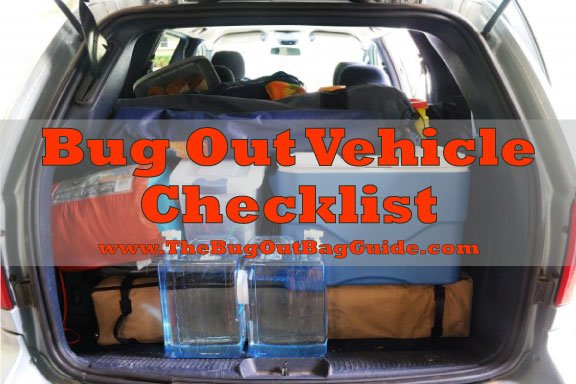
Bug out vehicle checklist

So what additional items would you want on your bug out vehicle checklist to increase your odds of success?  Note that this is in addition to your bug out bag, which you will be bringing as well!!!  Here is a list of items that will maximize the advantages present in a vehicular bug out situation:

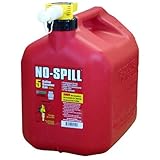
  • Extra fuel containers

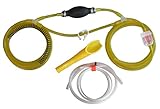
  • Siphon Pump

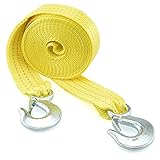
  • Tow Straps

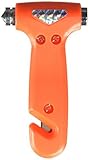
  • Seatbelt Cutter/Window Breaker (see our comprehensive guide on these by clicking HERE) 
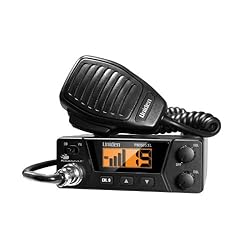
  • CB radio

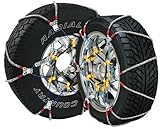
  • Tire chains

  • Jumper Starter

POD-X1-img-small


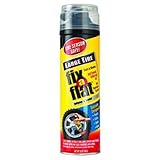
  • Can of Fix-A-Flat

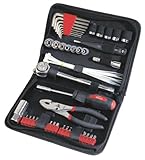
  • Basic tool kit – Pliers, wrench, screwdrivers, duct tape, stanley knife, cable ties
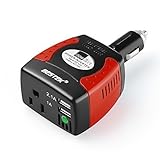
  • Power inverter – To charge any electronics you may have on the go
  • Winch

  • Extra oil

  • Spare keys

  • Spare tire – not a doughnut!

What else can I do to make my bug out vehicle great?

  • Beyond stocking up your bug out vehicle checklist be sure to service it regularly.  There is no point in having the best bug out vehicle in the world if it is unreliable or won’t run when you need it!

  • Make sure you have a reliable Jump Starter!  This is easy and can save your life!  This is the one I strongly recommend.
  • Practice driving your intended bug out route to see if your car is up to the task.  This will also help you identify any difficulties along the way and point out any modifications you may need to make to either the car or your bug out plan.

  • If you choose to use a manual transmission vehicle make sure all the adults in your bug out party know how to drive it.  As with any aspect of your bug out plan, redundancy is key.

  • Add vehicle inspection and testing to your regular bug out plan reviews to make sure your bug out vehicle still fits into your strategy.

Conclusion

As you can see, there are a lot of options for finding the best bug out vehicle for your survival situation.  Understanding them and what works best is an important step towards adding a car or truck to your bug out plan.  Adding a bug out vehicle checklist to your bug out bag essentials will additionally help you maximize the advantages of bugging out in a vehicle.

It is important however to not depend on any one thing in your bug out plan for your survival, including a car or other means of transport.  Keep flexible and be ready to continue your bug out on foot if need be.  Please also check out our printable Bug Out Vehicle Checklist Graphic below which you can download and print to have with you when you are preparing your bug out vehicle:

Best Bug Out Vehicle Checklist

Your Thoughts?

Do you have any items you would add to this bug out vehicle checklist?  What do you think would make the best bug out vehicle?  Please let us know in the Comments Section below.  If you thought this post was helpful please Like, +1, or Tweet it using the social media buttons at the top of the page, thanks!

Read More

survival pocket knives

Survival Pocket Knives – Our Top 10

survival pocket knives

Survival pocket knives can have many uses in a Bug Out Bag, survival kit, or as every day carry items. They are great tools that combine the nearly limitless utility of a knife with compact size and lower weight. Some people may choose to carry a survival pocket knife as a back up to a larger blade while others may choose to keep one as their main knife. Either way, having one can be a great addition to any kit.  Here we will look at a few survival pocket knives and explain what makes one great for your survival situation.

We will examine features, utility, and size, as well as take a closer look at a few that we chose as Our Picks for best in class.

Our Top 10 Survival Pocket Knives

We have created this helpful comparison chart of the best survival pocket knives out there.  Click on the images below to go to the Amazon page for more information on each of these knives.

KnifeLengthWeightSeatbelt
Cutter
Glass
Breaker
Gut
Hook
Smith & Wesson Border Guard 2 Rescue Knife

10"8.8ozYesYesNo
Gerber E-Z Out Jr Knife

5.5"1.7ozNoNoNo
SOG Specialty Knives & Tools Escape Knife
Survival Pocket Knives
8.2"4.8ozYesYesNo
Wartech 8" Assisted Open Folding Tactical Survival Pocket Knife

8"~8ozYesYesNo
CRKT Graham Folding Razel Knife

~8"6.1ozNoNoNo
CRKT M-21

6.6"4.8ozNoNoNo
GERBER Paraframe II Tanto Knife

9.5"4.3ozNoNoNo
Spyderco Tenacious G

7.76"4.8ozNoNoNo
Buck Knives Folding Omni Hunter Knife

9"4.6ozNoNoYes
CRKT Kommer Free Range Hunter
Folding Lockback

8.9"4.4ozNoNoYes

What Are Qualities of GREAT Survival Pocket Knives?

When I am researching survival pocket knives to add to my kit I search for the following qualities:

Compact and lightweight

I am most likely going to be carrying my survival pocket knife a lot.  It will be an alternative to carrying one of my larger knives and I will want to maximize the advantages present in this type of knife.  There is no point carrying around a pocket knife that is as heavy and takes up as much space as a fixed blade knife.  Because of this I look for folding survival pocket knives that are made of lighter materials such as strong plastics or have a skeleton design to save weight.  I also will want a knife that is 5 inches or less when folded so I can fit in in a pocket or on a belt.

One handed opening

This is a big one for me, I do not want a knife that I may need to use in a hurry in a survival situation that has a NASA-level of complexity for opening it up.

I want to be able to open the blade one handed with either hand.  The knife making industry has recognized the utility of this type of feature and has attempted to answer it in many ways. There is the large thumb hole present in Spyderco knives that many people like but my favorite is the “Carson Flipper” present on CRKT knives, including my EDC choice of the M-21. This is a nub on the back side of the knife that you press with your index finger that lets the blade pivot around the hinge and snap into place with a satisfying click.  It can be done instantly with either hand.  It is so fast in fact that I have a friend that insists on calling it an “assisted opening”, although there are no springs involved.

Be sure you can open your survival pocket knife with either hand when making your choice, you never know what you may need to hold (or hold off) with your other hand when accessing your tool.

Good locking mechanism

The downfall of cheap folders is that they can fail and close on their owner’s hand at the worst possible time.

A good locking mechanism is essential when selecting a survival tool that you are planning on relying on.  Once again, this need has been addressed in many ways by the knife making industry and there are a lot of options out there.  Most of the better survival pocket knives will have multiple, redundant locking mechanisms that will basically turn your folder into a fixed blade knife while engaged.

Save your hands and make sure you have a reliable, fool-proof locking mechanism in your survival pocket knife.

High quality construction

As with any survival tool spending a little more on quality goes a long way on improving your odds.  Name brand knives from quality manufacturers such as CRKT, Gerber, Spyderco, Buck, and SOG will hold their edge longer, be less likely to have their hinge bind, and stand up to dropping and banging better than the cheap pieces of garbage you see on eBay.  Signs of quality to look for are:

  • Components are screwed or bolted on, not glued together
  • Fluid opening and closing motion of the blade
  • Easy to sharpen, holds an edge well
  • Reliable locking mechanism
  • Ergonomic grip that is comfortable and discourages your hand slipping onto the blade
  • Good quality steel or composite metal, check out a comparison of metal types here.

Survival Pocket Knives

Other Features to Consider For Survival Pocket Knives

Finding a good knife with a simple straight blade is a great start and will be a good, reliable tool to have. My EDC knife is just this and has served me well for many years.  However, if you are interested in tailoring your survival pocket knife to your particular survival situation consider these options that are available from many manufacturers:

Survival Pocket Knife Features for Urban Survival

  • Seatbelt/line cutter – This will let you get out of a vehicle faster if you enter a survival scenario during your commute.  This is frequently incorporated by way of a narrow cutout on the back of the knife that is used when the blade is folded in that lets you slide materials in but is too small to accidentally get your hand or fingers in danger.
  • Glass breaker – This will assist your evacuation from a vehicle or building in an urban survival situation.  Easily shatter the glass and go.
  • Pry tip – This is usually a flat tip (instead of a pointed one) on thicker type blades that allows you to jimmy open doors and containers.  It is a tough trade off to make as you will be sacrificing the survival pocket knife’s ability to stab and poke but may be worth it if this is a secondary knife in your kit.

Survival Pocket Knife Features for Wilderness Survival

  • Partial serration – This gives the benefits of both straight edge and serrated knives if you go for a combo blade.  Serration allows for faster cutting of rope, hide, bone, and wood, all things you may be facing in a wilderness survival scenario.
  • Gut hook – This will speed up your ability to dress wild game that you catch.  Many hunting and fishing knives have this feature but if a survival pocket knife is going to be your go-to blade, including this feature will be useful for wilderness survival.

Survival Pocket Knives

Photo credit: – scott feldstein Flickr

Our Picks for Best Survival Pocket Knives

Any of the survival pocket knives listed above would make a great addition to any survival kit as either a primary or backup blade. However, Our Pick for best in class goes to the Smith & Wesson Border Guard 2 Rescue Knife for best urban survival knife and the CRKT Kommer Free Range Hunter Folding Lockback for best wilderness survival knife.  They both combine the essential features that we discussed for their respective survival scenarios with a great basic blade and very high quality.

Conclusion

Although there are a great many survival pocket knives on the market, you can see here that it is not hard to find the best one for your survival situation.  Be sure to consider essential features such as size & weight, ease of opening, quality, reliability, and tailor any special features to your survival scenario.  If you want to learn more about basic survival skills check out our post.  If you are ready to build your Bug Out Bag list, click here to use our free tool.

Your Thoughts?

Have you used any on the survival pocket knives that we examined here?  Are there any features that you look for when researching survival pocket knives?  Please let us know using the Comments Section below, thanks!

Read More

Glossary Of Survival And Bug Out Terms

Members of the survival and bug out culture tend to speak at times in dense acronyms and nomenclature.  We have decided to put together this glossary of terms to help a newbie prepper cut their way through the jargon.  We have also included links to more information for some of these items, click through to read our related article.  If you have any terms or acronyms that you would like us to add, let us know in the Comments Section at the end of the page, enjoy!

Survival and Bug Out Terms

Glossary TermDefinitionMore Info
Basic Survival SkillsThese are the basic skills a person needs to survive anywhere under any circumstances. They are: Keeiping a positive mental attitude, Acquiring and treating water, Shelter building, Acquiring and preparing food, and Fire building.Click here for more info on Basic Survival Skills
Bug InA situation where a decision has been made either by an individual or a Government authority to stay in one location than Bug Out. This may be an airborne threat such as a biological or chemical hazard or a natural disaster that is confined to a certain area such as a flood or wild fire.
Bug OutTo leave an area quickly. This may be due to circumstance such as a natural disaster or terrorist attack.
Bug Out BagA bag that an individual has thought out and packed in rediness to Bug Out on short notice. This is usually full of essential survival items.Click here for more info on Bug Out Bags
Bug Out Bag Update ChecklistA checklist of actions undertaken peridoically to update a Bug Out Bag and Bug Out Plan to keep a high state of preparedness as personal circumstances and/or external factors may change over time.Click here for more info on updating your Bug Out Bag and Plan
Bug Out PartyThe group of people who you intend to bug out with. These people would be a part of your Bug Out Plan and would be aware of the designated Rally Point.Click here for more info on making your Bug Out Plan
Bug Out PlanA list of actions to undertake when a bug out is required. This should include a Rally Point, intended destinations and routes, and emergency contact information for loved ones and government facilities.Click here for more info on making your Bug Out Plan
ChemlightA chemically activated light. Also called a "Glow Stick". Used to illuminate small areas for a limited duration.
Dakota Fire HoleA highly effecient type of fire pit built into the ground that integrates an air intake in the directon of the prevailing wind and chimney.Click here for more info on Basic Survival Skills such as fire building
Disaster PreparednessA state of mind where an individual takes proactive steps to ensure they are prepared to survive unforeseen natural and manmade emergencies.
EDCAcronym for "Every Day Carry" This is a small kit of survival items that are carried on your person to assist with high probability events and problems as well as low probability events that would have a severe negative impact.Click here for more info on making an Every Day Carry Kit
Fish AntibioticsA type of antibioitc easily obtained online or in pet supply shops that appear to be identicle to pharmacy perscribed medications. Preppers are buying these in bulk as they are easier and sometimes cheaper to obtain that a perscription version.Click here for more info on Fish Antibiotics for survival situations
Get Home BagA small survival kit that is stored at a person's workplace, in their car, or carried on their person that is intended to assist them in journey back home in the event of a disaster striking when they are elsewhere.
Go BagA synonym for Bug Out Bag - A bag that an individual has thought out and packed in rediness to Bug Out on short notice. This is usually full of essential survival items.
Hydration PackA water bladder that is integrated into a backpack with a tube running over the user's shoulder to permit easy access. It allows a large volume of water to be more easily carred and stored than in a water bottle.
LEDAcronym for "Light Emitting Diode". A technology being used in modern flashlights. Advantages include high impact resistance and generally greater volume of light emitted versus traditional flashlight and lower energy consumption.
MOLLEAcronym for "Modular Lightweight Load-carrying Equipment". This standard is used by many militaries worldwide in their packs for attaching weapons and equipment. This is a feature that is included in many modern backpacks that allows for a wide variety of customization options.Click here for more info on Picking A Bug Out Backpack
MultitoolA small, compact tool that contains many smaller tools within. An example would be a Swiss Army Knife or Leatherman.Click here for more info on Multi Purpose Survival Tools
ParacordA small diameter, lightweight woven cord that is used in a wide variety of survival and military applications. Most commercially availavle paracord has a breaking strength of 550lbs and is highly rot-resistant.
PermethrinA commercially available insect repellent that can be applied to clothes and will last through 6 wash cycles. It is at least as effective as DEET in repelling insects.
Positive Mental AttitudeA essential element of any survival situation as it gives individuals the will to overcome adversity. Keeping positive and focusing on improving your immedieate situation will greatly improved a survivor's probability of success.Click here for more info on Basic Survival Skills such as maintaining a positive mental attitude
Premade Bug Out BagA type of Bug Out Bag that is sold in outdoors stores and online that comes pre-packed with basic survival gear. This saves a prepper the time and energy of having to individually source these items but the tradeoof can be that they are more expesive and sometimes made of questionable quality.Click here for more info on premade bug out bags
PrepperA person who maintains the Disaster Preparedness mindset and takes proactive steps to prepare themselves and their loved ones to survive unforeseen disasters by building a Bug Out Bag and Bug Out Plan.
Rally PointAn element of a Bug Out Plan that is a designated location where all members of a Bug Out Party have agreed to meet in the event to begin a Bug Out.Click here for more info on making your Bug Out Plan
Shelter In PlaceThis is a synonym for Bug In - A situation where a decision has been made either by an individual or a Government authority to stay in one location than Bug Out. This may be an airborne threat such as a biological or chemical hazard or a natural disaster that is confined to a certain area such as a flood or wild fire.
SHTFAcronym for when "Sh*t Hits The Fan". A term used for when a scenario reaches a level where Bugging Out becomes the best option.
Solar Water StillA survival device that uses the sun's energy to evaporate dirty water and then recollect it in drinkable form. This can be purchased or made from readily available materials.Click here for more info on Basic Survival Skills such as making a solar still
Survival KnifeA type of knife frequently found in Bug Out Bags that integrates multiple survival tools into its handle. These may include a survival fishing kit, first aid items, a compass, and a fire starting kit or many other options.
TEOTWAWKIAcronym for "The End Of The World As We Know It". Term used by preppers for a potential event of decline that will result in the collapse of modern society. Concernt for this state is what spurs many hardcore preppers into action.
Threat MatrixA tool for assessing the level of risk for perceived threats in a person's environment. It accounts for both the probability and consequence of a threat becoming reality.Click here for more info on Assessing Risks
Urban Survival KitA type of survival kit that has been tailored to meet the specifc needs inherent of an urban scenario. This may include protective gear such as work gloves and a dust mask items and tools to shape a manmade environment shuch pry tool or fire hydrant/gas main wrench.Click here for more info on building an Urban Survival Kit
Water FiltrationA water treatment process that removes sediment and some pathogens from intended drinking water. This is typically achieved by passing the water through fine screens or membranes.Click here for more info on Basic Survival Skills such as filtering water
Water PurificationA water treatment process that neutralizes pathogens but does not remove sediment from intended drinking water. This may be through chemical treatment or exposure to UV light.Click here for more info on Basic Survival Skills such as purifying water
Wilderness Survival KitA type of survival kit that has been tailored to meet the specifc needs inherent of a wilderness scenario. This may include hunting and fishing items and tools to shape a natural environment shuch as a shovel, saw, or hatchet.Click here for more info on building a Wilderness Survival Kit
72 Hour KitA survival kit that is intended to contain enough survival gear to last a single person for 72 hours. The number of hours, "72" is used because that is how long an average person can go without ingesting water.

If you are ready to build your bug out list click on the button below to use our free tool:

Bug Out Bag Interactive Packing List

Your Thoughts?

If this glossary was helpful to you please Like, +1 or Tweet it using the social sharing buttons at the top or bottom of this page!  Are there any other terms that you would like to include? Please let us know in the Comments Section below, thanks!

Read More

Guest Post: Top 3 Bug Out Bag Items Most People Forget About

Top 3 Bug Out Bag Items Most People Forget About

When you hear the term, “bug out bag,” most people think of a whole laundry list of items that they believe must be in their bug out bags.

Here are the most common things people add to their bug out bags:

  • Weapons (guns, ammunition, knives, etc)
  • Ammunition
  • Food
  • Water cleaning equipment
  • First aid solutions
  • Shelter equipment
  • Paracord
  • Fire starting equipment

These are all very necessary when it comes to a bug out bag, but I think we’re missing a few key ingredients to a well mannered survival kit.  I’ve been the owner of www.SurvivalBlog.org for the last 5 years, and I believe that every bug out bag needs to contain these three items in addition to the normal survival gear.

Forgotten Bug Out Bag Necessity #1: A Meat Thermometer

I’m an avid hunter and constantly am using my meat thermometer for everything from chicken to wild hog – I never would leave home without one.

In a grid-down, survival situation, you’ll be needing to use this meat thermometer way more often than you would in the comfort of your own home.

Remember: just about all meat can be eaten once it reaches about 165 degrees, but here’s some more information on meat:

  • Fish – 145 degrees
  • Poultry – 165 degrees
  • Ground meat – 165 degrees

Forgotten Bug Out Bag Necessity #2: Remington Oil

Remington Oil (Rem Oil) is a huge necessity in the field – and lots of it.  Not only can you clean your firearms, but you can also maintain your other survival tools.

Remington Oil protects guns, knives, forks, spoons – or any other metal device.

Forgotten Bug Out Bag Necessity #3: Bring Your Papers

During a SHTF situation, you won’t know if there will still be records around.

You might need to prove you own your own property, are married, or anything else.

It’s important to have copies of birth certificates, wedding certificates, tax receipts, land deeds, insurance documents, and other papers during a survival situation. When law and order is re-established, you might need to prove your very existence.


Your Thoughts?

If you thought this post was helpful, please Like, +1, or Share it using the social media buttons at the top of the page!  Can you think of any survival items that are often overlooked?  Please let us know in the Comments Section below, thanks!


Author Bio:

Andy Hallinan is an avid survivalist and owner of the second most trafficked survival blog in North America. Check out more of his stuff at www.survivalblog.org

Read More

EDC List

Every Day Carry List – Assessing Threats and Choosing Your EDC Items

EDC ListHopefully, by now, you’ve devised your bug out plan and have packed your bug out bag using our bug out bag list.

Awesome, you are now better prepared than the overwhelming majority of the populace. But what survival tools should you have in your every day carry kit?

Here we will look at what a survival minded person could have on their every day carry list that would help prepare them to deal with dynamic situations that may arise in everyday life.

What is an Every Day Carry List?

An every day carry list is a set of items that you have with you under most scenarios (at all times if possible) that helps you be prepared at a moment’s notice to deal both daily situations as well as be ready to survive in emergency situations. These items may be designed to aid your survival on their own, or they may be there to help you get to a safe location or back home. It can be made up of a wide variety of items and should be tailored to your lifestyle, locality, and probable threats.

Ideally, the items on an every day carry list will be small both in number and size and will be possible to carry on your person without an extra bag or container to lug around. There are some people however that do choose to carry the items on their every day carry list in a specific EDC bag and others who prefer to consolidate this kit into fewer, more flexible items such as those covered in our 10 Best Multi-Purpose Survival Tools post.

What should be on YOUR Every Day Carry List?

1. Things You Carry With You Already

This is important to review for a couple of reasons. Firstly, they probably reveal some of your basic day-to-day needs which give us insight into what your greater every day carry (EDC) needs may be. Secondly, if you are already carrying an item with you, you would not need to replicate its uses or functions elsewhere. Or perhaps you can modify one of these items to make it a better EDC tool without adding another piece into your EDC kit. Keeping an every day carry list simple and light is key.

  • Wallet – I need my ID and cash daily. I can’t leave home without this.
  • Keys – Can’t leave home without these unless I want to climb through the window to get back in! I am going to add a “Grenade” Survival Kit Key Fob to my keyring, which comes with more paracord and a fire starting kit.
  • Phone – I always have my phone on me to contact loved ones or the authorities in the event of an emergency. To improve this, I am going to load PDFs onto it with critical documents and a map of my local area in case I need to access these while the phone network is unavailable. I am also going to slip a razor blade and a laminated hard copy of that same map in the space between the case and the back of the phone as backups. If you do this, don’t forget to remove the blade before going through a security checkpoint at an airport!
  • Watch – A friend once told me “Never trust someone who doesn’t have a watch.” It is an item that many of us carry every day. Some ways we can supercharge this into an EDC survival tool is to add a compass or use a paracord woven watch band. If you do not want to add a compass, you can learn to use your watch as a navigation tool.

2. Things That Would Help With Frequently Encountered Problems

Do you have problems that you face repeatedly? Is there a potential problem that has a high probability of occurring in your normal day or commute? Is there something that you frequently use that has the potential to break? Having an EDC item that could assist in these situations would make your life easier generally and be of great help when the high potential risks become a reality.

  • Folding Knife – I have to frequently cut cardboard and plastic at work, but this would also be good if I was in a more office based role where I would be dealing with staples or opening letters. You cannot go wrong with the Kershaw Blur Folding Knife with a Partial Serrated Blade that I have been carrying with me for years and it still is razor sharp and can be easily opened with one hand. A small yet powerful addition to an every day carry list. Check out our in-depth article on How To Pick The Best EDC Knife.
  • Flashlight – I am in a dark parking lot daily that this will help out with that. It will also be useful in case of a blackout or a fire. A good LED flashlight (check out our article here on picking the best EDC flashlight) is also powerful enough to signal for help and small enough to fit in a pocket and can also double as a self-defense tool. We love the Fenix PD35.
  • Multitool – A multitool is the jack-of-all-trades of the tools that you can carry with you every day. You can get a full-fledged multitool such as the Leatherman Skeletool or opt for a lower profile tool that has less functionality by carrying a credit card multitool that fits in your wallet.

3. Things That Would Help With Rare and High Consequence Problems

This is a category of items that needs to be risk assessed versus threats in your area. They are meant to cover potential problems that are low probability to occur but if they did, would have a severe consequence. We will go over performing a risk assessment below, but a brief example would be if you ride in a vehicle to work every day. For this activity, there is a very low probability of needing to escape the train, bus, or car but if there was a crash and you needed to exit quickly, there would be severe consequences of not being able to do so. In this case having a glass breaking Tactical Pen or a seatbelt cutter would make a huge difference towards improving your chances of survival. Tools of this nature are what make up this category.

  • Tactical Pen – A Tactical Pen is a high-grade metal pen that can double as a self-defense tool and glass breaking aid. I constantly need a pen at work so carrying this with me will not be adding an unnecessary item that I will rarely use. This is more of an upgrade to meet a daily need with the capability to address the rare but high consequence situation of defending yourself in the event of a personal attack. The Gerber Impromptu is an excellent choice for this although we cover several great options in our Tactical Pen buying guide.
  • Pry tool – This will help me open doors and containers in the event of a car accident or a problem in my workplace or home. There are many options out there for this, the best one I found is the Boker Minibar Blade which excels in function, having both a pry tip and lever tool, but is a bit rough on the wallet. A cheaper option would be the Key Chain Pry Tool by Schrade.
  • Paracord – Paracord is awesome as it is light, strong, and will not rot. It has nearly as many uses as duct tape. I would not be looking to carry around enough to make a rope ladder or anything as complicated as that but having some at my disposal if I need to splint a broken bone or tie an emergency shelter down would be handy. There are a lot of options for paracord bracelets and other wearable items, such as The Friendly Swede Paracord Bracelet as it comes with a metal clasp that doubles as an emergency fire starter.

Our Favorite Every Day Carry Gear

For some more ideas, be sure to check our 10 Best Multi Purpose Survival Tools post for some other versatile EDC items.

How To Assess Risk

Rating the relative risks of threats in your locality is a good way to judge whether an item is worth including in you every day carry list or even your bug out bag contents.

The basic process for this is to judge each threat on two criteria:

  1. Probability – What are the chances of the threat occurring? Is it something that is highly probable (like slipping and falling on ice), which you see once a week or several times per month? Is it low probability (like an earthquake), which you would expect to see maybe once per year or every several years? Is it somewhere in between such as a car accident? Rate the probability of threats occurring realistically from your own experience and what has occurred historically in your locality.
  2. Potential Impact – What would the impact be if the threat actually happened? Would it be mild and easy to overcome? Would it send people to the hospital? Does it have the potential to be deadly?

We have created this Threat Assessment Matrix to help you visualize this concept:

Every Day Carry list Threat Assessment Matrix

This chart is a great tool for determining whether or not to add an item to your every day carry list. Keep it in mind and refer to it when building yours.

Conclusion

As you can see, there are some easy steps you can take to assess your every day carry needs and determine what is appropriate to be put on your every day carry list. Stick to the principles of addressing realistic, probable threats and keeping your items multi purpose and small to be most effective.

Remember when planning your every day carry list, chance favors the well prepared.

If you still haven’t packed your bug out bag, make sure to review our Bug Out Bag List to help you get started ASAP. Your EDC kit and your BOB are key to being prepared for anything and everything!

Want Even MORE Info On Building Your EDC Kit?

If you are looking for even more information on how to build your ultimate EDC kit you can check out my book, The Every Day Carry Guide. It is a comprehensive manual that will teach you:

  • How to be prepared at all times – no matter where you are
  • How to build your first EDC kit from scratch
  • How to refine an existing kit to make it more effective
  • How to pick the best gear to realistically make you more prepared
  • How to assess threats and risks in your every day life

EDC-Book-w-Button

Your Thoughts

If you thought this post was helpful, please Like, +1, or Share it using the social media buttons at the top of the page! Do you have some every day carry items that you would like to share? Do you have any questions about making an every day carry list? Please let us know in the Comments Section below, thanks!

Read More