best emergency weather radio

Stay Connected: How To Choose An Emergency Weather Radio

best emergency weather radio

Cellular technology and the Internet have completely transformed communications in the 21st century. Think for a moment: If suddenly your computer, TV, and cell phone stopped working, how would you communicate with others? Where would you go for information? The reality is, in the case of an emergency, most people would be completely cut off from the world, reliant on new technology that would cease to function in a disaster. Don’t be one of those people; in this article, we’re going to provide all the information you need to select the best emergency weather radio that will keep you in touch when all other communication mediums fail.

What Is An Emergency Weather Radio

best emergency weather radio
Not your father’s transistor radio: Technology has come a long way, making emergency weather radios portable and self-powered.

In the case of disaster, an emergency radio will allow you to receive signals modern technology can’t, and stay current on important information such as weather or updates on the disaster situation. NOAA Weather Radio broadcasts on frequencies not accessible to standard radios, such as the one that may be in your car, and is able to receive vital updates from the National Weather Service in the case of severe weather such as hurricanes, tornadoes, and flooding.

best emergency weather radio
Stay informed of events around you so you know when to bug-in and when to bug-out.

When there’s no power, most emergency weather radios have additional features to power the device via solar or hand crank. When all other technologies fail, if you have an emergency radio, you will have access to information about road closures, the direction of the storm, where emergency shelters are located, and whether or not armed forces have been dispatched. With this knowledge at hand, you can better plan your next course of action; whether that be to stay put, or head out in a vehicle or on foot.

best emergency weather radio
During a wildfire, air quality warnings and evacuation information is broadcast for your safety.

The best part is, unlike most survival gear, there’s no need to store your radio away until it’s needed – you can use it every day! It works just as well as a standard radio and can be used to monitor weather alerts, receive current news, or listen to your favorite music station.

Features To Look For In An Emergency Radio

While emergency weather radios do share many features with standard radios, there are certain functional requirements you will want to specifically look for in your emergency radio including tuning, sound quality and options, power source and battery life, durability, size and weight, and multipurpose options.

Tuning

AM/FM, weatherband, and shortwave capabilities will give you the most options as the sensitivity of a radio determines how many stations it receives and the quality of reception. NOAA uses Very High Frequency (VHF) waves, transmitted using narrowband FM; most emergency radios will have a feature (either a sound or light) that will alert you when severe weather or other emergency broadcasting is taking place. Specific Area Message Encoding (S.A.M.E.) is also used by NOAA and the Emergency Alert System (EAS).

An emergency radio with S.A.M.E. technology is capable of customizing alerts to your specific area; some even have the functionality to turn off the alert at the End Of Message (EOM) prompt, so that the alert doesn’t continue after the first transmission has played.

best emergency weather radio
Tune in to emergency broadcasts to follow events in your area and stay informed of health and safety guidelines.

In terms of digital vs. analog, digital tuning is much easier to accurately tune and program; however, an analog tuner presumably won’t be affected by an EMP event, whereas a digital system may become unusable.

Emergency Radio Fact: In testing your emergency weather radio, you may notice that more AM stations are received at night; there is a simple explanation for this. Daytime AM waves travel over the surface of the earth through a phenomenon referred to as groundwave propagation; generally, these waves reach no further than 100 miles. At night, reflection from the ionosphere, known as skywave propagation, increases the distance that AM waves can travel up to 100s of miles.

Sound Quality and Options

Things to look for: Maximum volume of audio, auxiliary input, headphone jack, mono or stereo.

When checking for sound quality, the maximum volume of the speakers will be measured in decibels (dB); often referring to as sound quality from a specified distance away, such as how loud the sound will be at one meter from the radio.

An equalizer setting is of little use for emergency purposes, but if you plan to use your radio on a daily basis for things such as news or music, you may want to look for a radio offering optimized settings for talk radio and various music genres, as well as indoor and outdoor use.

In terms of additional options, look for radios that offer headphone jacks and auxiliary input for playing audio from another device.

best emergency weather radio
You may want to listen to disaster reports through headphones in front of children so you can filter information that may be scary to them. This is also a helpful feature in noisy areas.

Power Source and Battery Life

Things to look for: Solar or hand crank capabilities, as well as plug-in feature for regular use; battery life.

Power versatility is a key feature in an emergency radio; look for radios with at least one alternative means for powering. The more options you have for powering your radio, the better your chances of staying connected; radios that run only on batteries require a backup supply and you may face the possibility of running out.

Hand Crank

The hand crank is a simple, yet effective, form of power. Hank crank radios convert mechanical energy into electric energy, which is then stored in a rechargeable lithium ion battery. The efficiency of these systems varies greatly, but typically two minutes of cranking will provide five minutes of radio use at full volume; while that may seem like a lot of work for limited use, it is very dependable and always available.

best emergency weather radio
Power up with a hand-crank anytime, anywhere so you don’t miss important alerts. Image via Alan Levine on flickr.

Solar Cell

Another common source of energy is a solar cell. You will find that some radios can run directly off solar power while others need to charge the battery, then run off stored energy. This method is of course limited to daytime use and may take up to six hours to fully charge a battery.

AC Adaptor or USB

If your radio comes with a rechargeable battery, you should also have an AC adaptor or USB that will charge directly when power is available, such as at home. Similar to solar powered radios, some can run directly off a connection while others need to charge first and then run.

best emergency weather radio
This radio stores the AC cord right on the back so it’s always ready when you need it. Click to view on Amazon.

In addition to your radio, you can also charge other electronic devices via mini, micro, and USB ports. Whether or not you can fully charge a smartphone depends on the battery capacity and discharge rate, but for emergency communications, this can be very helpful.

best emergency weather radio
Power up your cell phone to touch base with family or make emergency calls.

Battery Life

Whichever option you choose to power your radio, it’s extremely helpful to ensure there is some type of battery life indicator; this way, you will know when your battery is running low and can adjust your usage or seek out another power source.

Durability

Things to look for: Water and drop resistance, general construction, antenna, and buttons.

We were very surprised that only a few of the emergency radios we reviewed listed water and dust resistance ratings. Ideally, any device designed for outdoor usage should be splash resistant, but to be safe, we recommend tucking your radio in a plastic freezer bag to keep it protected when not in use.

best emergency weather radio
You never know what conditions may arise so the sturdier the radio, the better for bugging out.

To ensure your radio functions when you need it to, choose one with a fold-away hand crank and antenna; this way, those items are less likely to be damaged when packed in a bug-out bag. Additionally, a rubberized finish provides better grip – as does a lanyard or handle – and some models even have protective roll cages to withstand a fall on the ground. If you’ll be heading for the hills in an emergency, these are the must-have features.

Size and Weight

Things to look for: Ease of transport.

When prepping your bug-out bag, size and weight are of utmost importance. Many emergency radios weigh less than one pound and some are even small enough to fit in a pocket. If you plan to bug-in, or store your radio at your bug-out location, you may want to prioritize other features over portability.

Multipurpose Options

Added features are always a plus as they can help reduce the weight of your bag by combining several different items into one. Emergency radios can come equipped with a plethora of useful, additional features, including flashlights, compasses, strobes, sirens, and whistles. For more multipurpose tool ideas for your bug-out bag, CLICK HERE.

Key features to look for include the following:

  • Flashlight: Having a backup flashlight you can power indefinitely will ensure you won’t be left in the dark
  • Clock and calendar: Useful for keeping track of time when far removed from civilization or on a long-term bug-out
  • Temperature and humidity readings: This will allow you to monitor weather conditions
  • Cables: Always check to see which cables are included; simply because your radio has certain ports doesn’t guarantee it comes with the accompanying cables, many times these are sold separately
best emergency weather radio
In addition to the USB port for charging other devices, the Eton Scorpion II has an integrated caribiner for clipping to a bag or belt. Click the image to view on Amazon.

Top 10 Emergency Weather Radios

The following table showcases our picks for the 10 top emergency weather radios as well as key features, weight, and price range. To view the item and its current price on Amazon, click the accompanying image.

Emergency RadioKey FeaturesWeightPrice
Eton NSP101WXGR Scorpion ll
• Multiple power options to keep it running
• LED flashlight for an extra light source
• Rugged construction withstands outdoor use
14 oz$$
Ambient Weather WR-111B
• Solar panel extends battery life
• Illuminated digital display is easy to read
• Ultra lightweight for packing in a BOB or GHB
5 oz$$$
MIDLAND WR300 Weather Radio
• Alarm clock style is ideal for bug-in use
• S.A.M.E. technology for receiving local reports
• Preset up to 30 counties in the memory system for quick access
2 lbs$$
Eton American Red Cross FR1
• Compact design with flat folding crank and antenna
• NOAA alerts for weather preparedness
• Smartphone charger works quickly to power devices
1 lb$$
Sony ICF-S10MK2 Pocket AM/FM Radio
• Simple analog AM/FM radio fits in a shirt pocket
• Excellent signal sensitivity for picking up stations
• Runs on 2 AA batteries
10 oz$
Ambient Weather WR-335 ADVENTURER 2
• Uses rechargeable lithium ion battery or 3 AAA batteries
• Audio input plays music from iPods and phones
• 125 decibel siren for emergency signaling
1 lb$$
iRonsnow IS-088 Dynamo Weather Radio
• Rubberized coating for enhanced grip
• Efficient hand crank - 1 min yields 20 min of radio play
• Lightweight and compact for backpacking and BOB
7 oz$
Eton FRX5 Hand Crank Emergency Weather Radio
• Solar panel fully charges battery in 5 hours
• Rated IPx4 for protection against splashes
• Illuminated buttons for use in the dark
1.4 lbs$$$
Kaito KA600 NOAA Weather Radio
• Solar panel is adjustable to achieve optimal exposure
• Input stations 4 ways - manual, direct digital input, ATS, and memory tuning
• Temperature and humidity display, plus calendar and alarm clock for daily use
20 oz$$$
Ivation AM/FM/NOAA Radio
• AM/FM/NOAA radio with Bluetooth for wirelessly connecting to devices
• Display shows station, date, time, and temperature
• Rugged and water resistant design goes anywhere with you
3.5 lbs$$$
Click the images to view current pricing on Amazon.

Our Picks For Best Emergency Radios

Best Emergency Radio For Bugging-In

Our top pick: MIDLAND WR300 Weather Radio

This particular emergency weather radio has more of a countertop design and is less suited for travel. It receives NOAA and Environment Canada alerts using S.A.M.E. technology as well as an audio alarm to warn of extreme weather in your area. It can be programmed to receive alerts from up to 23 counties, which can be especially helpful in areas prone to hurricanes, floods, wildfires, or tornadoes.

For those that are hearing-impaired, it has a lighted display that features a text warning message along with the county the alert was issued in; it also displays “EXP” when a particular alert has expired. You have the option to silence test alerts and weather watches while still being cognizant that one has been received through an indicator light; should a watch turn into a warning, your alert will sound.

One drawback for this particular radio is that it does not recognize EOMs and automatically returns to standby five minutes after the EOM prompt; however, you have the option to manually mute the alert at the end of the message. Another issue is that the headphone jack is mono and not stereo, meaning sound will only come out of one earbud; however, you can correct this with a adaptor to make it double monaural, which will produce sound from both headphones.

In addition to emergency broadcasts, it functions fully as a clock radio with alarm and is therefore a good bedside radio for everyday use. An AC adaptor is included and four AA batteries can be used as backup should the power go out.

Best Emergency Radio For Battery Life

Our top pick: Eton FRX5

The Eton FRX5 is an all-around great emergency weather radio, but its standout feature is the efficient power system. Its hand-crank will provide thirteen minutes of listening after only two minutes of cranking – more than double the average for crank radios. When plugged in using the AC adaptor, a full charge is achieved through the lithium battery within five to six hours.

At maximum volume (an impressive 90 dB at one meter), the radio will play continuously for over fifteen hours. It uses AAA alkaline batteries and also has a high-efficiency solar panel that will keep the battery topped up when in use or fully charged after five hours of direct sun. This outperforms the solar panel systems previously discussed, making the Eton our pick for best battery life.

Additionally, this radio charges devices quickly over an extra fast USB output of 5V 2.1A and receives AM, FM, and NOAA; it also has S.A.M.E. technology and works well even in remote areas. You can program up to 25 locations from which to receive local reports and alerts.

Bonus features: Splashproof with IPX4 rating, headphone jack, auxiliary in jack, glow in the dark locator, LED flashlight and red emergency beacon, and alarm clock.

Best Emergency Radio For GHB/BOB

Our top pick: Ambient Weather WR-111B

Weighing less than half a pound, the WR-111B is perfect for use in your get-home or bug-out bag. It comes equipped with NOAA alerts and a digital AM/FM tuner, making the WR-111B a powerful receiver in a compact design. It is extremely portable and has a rubberized finish as well as lanyard for ease of carrying.

The battery can be charged via USB, AC, hand crank, or solar panel, and a low-battery indicator lights up when battery power falls below three volts. One drawback is that it does not use S.A.M.E. technology for receiving customized alerts.

The sturdy hand crank can be used for recharging while the radio is playing and conveniently folds away when not in use. An AC adaptor is available to purchase separately for plugging into an outlet; a “hard charge” via USB or AC adaptor is recommended every few weeks to maintain battery life.

best emergency weather radio
The WR-111B emergency weather radio also has an LED flashlight. Click the image to view on Amazon.


While the hand crank and solar panel can be used to charge the radio in an emergency, keep in mind that the solar panel serves to extend the battery life but does not provide a full charge; ensure you read the instructions carefully regarding care of the battery for optimal performance.

The battery is also removeable and replaceable, which is a useful feature if you intend on regular usage. This radio also includes cables and adaptors to charge different types of cell phones (mini, micro, and USB) as well as a headphone jack.

Best Emergency Radio For Selection Of Features

Our top pick: Kaito Voyager Pro KA600

When it comes to extra features, the Kaito Voyager Pro is fully loaded. The illuminated digital displays show mode, station, and battery life, as well as temperature and humidity. It features digital tuning that is adjustable via manual knob or buttons, including a number pad for direct entry of stations and programmable preset memory. The calendar, clock, and alarm are useful additions for everyday use as well as in a grid-down scenario.

With a turn of the dial, power input switches from the AC adaptor, solar charger, and AA batteries. The solar panel pivots 180 degrees and is larger than most emergency radio solar panels; in full sun, it is powerful enough to run the radio directly. The included rechargeable battery fully charges in under two hours via USB or AC, while you also have the option of using the hand-crank.

It receives high quality reception in FM, AM, and all 7 NOAA weather channels, even in remote areas – although the maximum volume is a bit low at 76.7 dB at a one meter distance. However, if background noise drowns out the sound, there are two headphone jacks. The antenna retracts neatly onto the back when not in use.

Another feature to note are the flashlights: It has a 5-LED reading light below the solar panel for mapping and small tasks, plus a 3-LED flashlight above the hand crank.

For portability, it is compact in size but a bit on the heavy side, weighing in at 20 oz; also, it is not rated for water or dust resistance.

Choosing The Best Emergency Radio For YOU

When choosing the best emergency radio for your needs, you need to consider transportation requirements, ease of use, and your particular priorities.

Transportation Requirements

Before choosing a radio, determine whether or not you will be transporting it, i.e. bugging out or using it in a get-home scenario, or staying put for bugging-in.

For bugging-out and get-home scenarios, weight matters and extra multipurpose features will help to offset any added weight by providing key items such as a backup flashlight or survival whistle. Additionally, having a means to charge batteries for other devices will come in quite handy.

best emergency weather radio
If you’re traveling through the wilderness, choose an emergency weather radio that is lightweight and has self-powered options.

When bugging-in, you need not be as concerned with size and weight, but local reporting features, such as S.A.M.E., will be very useful. While you may not need extra multipurpose features, a self-powered radio is always a boon, especially during power outages.

get home bag list


Ease Of Use

If you can’t use your radio, no amount of features or alternative power sources will be of use; make sure you practice using your radio so you are familiar with all of its features and can tune in to required information channels and sources.

If there are any preset functions, make sure to tune them into your local stations so everything is ready to go. Additionally, if you live in a remote area or plan on bugging-out to one, ensure your radio has the capacity to receive signals in your area.

best emergency weather radio
Test your radio in remote areas to make sure you can receive signals from your local stations.

Know Your Priorities

To make sure you get the best value for your money, think carefully about your needs before purchasing and choose a radio that addresses all your must-have features.

Conclusion

When cut off from everyday technologies we depend on, such as cellular and the Internet, staying informed and receiving the information you need to optimize your survival plan becomes a real challenge. Don’t be caught off-guard; safeguard your survival by staying informed during an emergency, no matter what. Choose an emergency weather radio that best serves your purposes and will provide the most value in a disaster. Most important, use your radio regularly so that you become familiar with its various functionality and are fully prepared to stay connected when disaster strikes.

Your Thoughts

Have you ever used an emergency weather radio before? Have you used one in an emergency? What was your experience like? Share your thoughts and questions with us in the Comments section, thanks!

Read More

survival fitness

Are You Fit to Bug-Out? An Essential Guide to Prepper Fitness

prepper fitness

Why Fitness is an Integral Part of Disaster Scenario Preparedness

“Look at the abs on that woman scrounging for food!” Said no one, ever.

Improving your survival fitness doesn’t mean perfecting your body to fitness model standards, it means conditioning your fitness level to enable your body to handle the various physical tasks that will be necessary in a disaster scenario – and it’s just as important as any other aspect of your prepping plan.

While you may have stockpiles of food and water, a bug-out-bag packed and ready to go, and a bug-out plan tweaked to perfection, none of that will matter if you get out into the wilderness and literally can’t hack it. Conditioning yourself to sustain the grueling physical requirements of surviving off the grid will substantially increase the chances of survival for even the most prepared prepper.

prepper fitness
You don’t need to be a body builder to be fit to survive.

Prepper fitness is not about aesthetics or running an extra mile on the treadmill, it’s about gradually increasing your body’s ability to handle the various tasks that your survival will depend on during a disaster scenario.

Improving your survival fitness is something you can start now that will continue to pay dividends down the road and can actually make up for deficiencies you may have in other survival areas. For instance, tasks such as hunting for food, digging a well, or even defending yourself against attackers, can all be augmented with improved physical strength.

To maximize your survival fitness, take a look at your bug-out plan and consider all the activities involved in its execution. In this article, we will examine common scenarios likely to arise in a disaster situation and provide daily workouts to help you achieve your prepper fitness goals. However, before beginning any physical training, it is always best to check with your doctor to ensure you’re in good health and able to safely follow the fitness routine.

Ready? Let’s get started!

Prepper Fitness Guide

Walk For Your Life

Walking is an easy, healthy way to begin conditioning your body for endurance – and it’s something you can do with the whole family!

Not only is walking useful for building up your physical endurance, but also conditioning yourself to walk several miles at a time can be essential for reaching your bug-out location. How many miles do you and your family walk on a daily basis? The American Heart Association recommends at least 150 minutes of moderate-intensity aerobic exercise per week; if you’re just beginning, start walking for 30 minutes, 5 times per week.

As you get stronger, start to increase the distance you cover as well as the difficulty of the path you take, gradually choosing rougher terrain and steeper inclines to better prepare you for the realities of bugging-out. 

Carry Your Weight

Once you’ve conditioned yourself to walk the distance required to your bug-out location, the next milestone is to ensure you can walk the the distance while carrying your bug-out bag, or other necessities, during a crisis.

prepper fitness
Don’t be intimidated by lifting weights – your bug-out bag will help you get in shape!

Don’t exhaust yourself – start slow by carrying your bag only partially packed a couple times per week. Work your way up to carrying the bag fully packed, all the way to your bug-out location. This also serves as a great exercise to determine if there are any non-essential (especially heavy) items that can be removed from your bug-out bag.

Learning to trek with gear doesn’t have to be an onerous exercise – make a weekend of it! Plan weekend camping trips with your family, gradually increasing the difficulty of the trail you follow to your campsite. Eventually, your entire family will be ready to trek through the woods at a moment’s notice – and you’ll have some fun doing it!

Make a Run For It

While you always hope that in a bug-out scenario walking will suffice, there may be times when you and your family are forced to pick up the pace – whether to cover more ground quickly or to evade threats. Best to start early in training your body to endure bursts of speed as well as longer intervals.

Sprint training can easily be worked into your existing walking routine by adding vigorous sprints at 5 or 10 minute intervals. Sprints are a great way to kick up your heart rate and condition your body, but they also put added strain on your joints and muscles; always stretch well before and after attempting this type of exercise routine.

prepper fitness
Picking up the pace in your survival fitness routine will better prepare you for disaster.

Eventually, you can turn your walk-sprints into a jog, and then a full-fledged run. Running for only 75 minutes per week will do wonders for your cardiovascular health and adds the desirable benefit of helping to trim down excess weight – introducing a running element to your fitness routine is definitely a win-win!

Strengthen Your Chances For Survival

Cardio training is essential for getting you to your bug-out location, while strength training is necessary to help you combat obstacles that may get in your way, as well as surviving the general increase in activity that accompanies living off the grid.

prepper fitness
The world may look very different in the aftermath of a disaster. You never know what obstacles will stand in your way.

If you’re curious as to what level of strength is necessary, it really depends on your particular situation, locale and bug-out crew – are you able to clear an obstacle from your path such as a downed tree (likely in a rural bug-out) or vehicle (likely in an urban bug-out)? Can you lift your children up and over your head? If you were hanging, are you able to drop one hand and offer it as help to someone else? Situations such as these require a strong and developed core.

prepper fitness
There’s a reason push-ups are used in military and athletic training – they work!

The good news is – you don’t need expensive equipment or gym memberships to build a sturdy core. There are plenty of exercises you can do right in your own home using your own body weight as resistance – push-ups, sit-ups, and squats are some great examples. If you prefer a little more guidance and structure, try Run, Prepper, Run! by Dan F. Sullivan to help build your core strength, as well as many other aspects of prepper fitness.

In addition to structured workouts, try taking up a sport to build your prepper fitness. You can typically start at any level and there are generally options for playing sports indoors and outdoors for year-round access. In terms of getting a full-body workout, rock climbing provides an outstanding experience.

Be Flexible

When building physical fitness, never neglect flexibility! Having flexible joints is essential to preventing discomfort and injury while performing the many tasks a bug-out will require of you, such as crawling through a tunnel or squatting by a fire.

prepper fitness
An exercise ball is a great tool for flexibility training.

Building flexibility can be as simple as adding stretches to your fitness routine or, for even greater flexibility, pursuing a flexibility-oriented activity such as yoga. For those just starting out, a great stretch to include in your workout is the toe-touch:

The object of the toe-touch is to stretch the backs of your legs by bending at the waist. Begin with a stance placing your feet shoulder-width apart (feel free to use a countertop or table to support your upper body and assist with keeping your back straight). Once you can easily bend at a 90 degree angle, swing your arms towards the floor and hang there – but don’t bounce! With each exhale, move yourself deeper into the bend.

prepper fitness
Just a few poses a day can really improve your prepper fitness level.

Yoga positions are also excellent for both conditioning and enhancing flexibility. For legs and obliques (the muscles that run up your sides), try warrior stances; for the shoulders, lower back, and hips, alternating cat and cow positions will do the trick; a downward facing dog position will help lengthen your spine while providing a solid stretch for your arms and legs. For further yoga positions, check out this helpful video.

Take to the Water

Having solid skills in and around the water is essential for bugging-out. At the very least you, and everyone in your crew, should know how to swim as well as be familiar with water rescue techniques and how to steer a boat with paddles.

The ability to swim not only opens up your bug-out plan to alternate routes, but can also be a life-saving skill. Especially in the case of a natural disaster, there could be severe flooding that forces you to evacuate using a raft; additionally, in the course of bugging-out, a family member may fall into a river or other body of water – do you have the skills to rescue them?

prepper fitness
A flood is not the time to learn basic water survival techniques.

For adults who have never learned to swim or have a fear of the water, rest assured you are not alone. Plenty of organizations, most notably the YMCA, offer both youth and adult swim lessons that will teach you the basics such as how to tread water, back float, and free-style swim.

For those that are comfortable in the water, consider augmenting your water survival skills by taking a lifeguard certification class, which can provide you with the knowledge needed to assist others to shore, whether they are conscious or not.

prepper fitness
This lifesaving skill is a great one to add to your survival fitness goals.

Learning some basic steering skills for watercrafts, particularly with paddles, can also save you tremendous hardship in a crisis situation. This is definitely not a skill you want to try and pick up on the fly.

prepper fitness
Canoeing is great exercise, too!

You can learn the positioning required to stop, turn and propel a boat quickly by taking a weekend and trying it out with a rented or borrowed canoe. For some essential pointers, check out this video.

Defend Yourself

No matter what the reason for bugging-out, there will always be a need to know self-defense. In the case of civil unrest, the need is obvious, but even in the case of natural disasters, you will undoubtedly need to protect yourself and your family against those who are less-prepared and desperate enough to take your supplies by force.

Depending on your size and build, hand-to-hand combat may not be the most ideal form of defense, but there are ways in which you can maximize the power behind your punches no matter how mismatched the fight. For smaller people, power can be amplified by targeting the eyes, nose, ears, neck, groin, knee and legs of your attacker; you can also learn different ways to free yourself from an attacker’s hold.

Martial arts offers great training for preppers of any size and has the added benefit of building both self-defense and fitness capabilities. Best of all, it’s an activity the entire family can do together to build the positive attributes of self-discipline, strength, and defensive skills.

Final Words on Prepper Fitness

When it comes to building endurance for prepper fitness, every little bit helps. Much like stockpiling food, if you add a little to your survival fitness regime every day, your conditioning will continue to grow. Even fitting in a half-hour walk every day will make you better prepared than those who don’t – and you’ll be surprised at what you’re able to accomplish when you stick to your goals!

If you’re serious about prepper fitness, then Dan F. Sullivan’s ‘Run, Prepper, Run! survival fitness training program is a must. CLICK HERE NOW to visit the training program and learn how ANYONE can improve their physical fitness to bug out!

prepper fitness
Click on the book to learn more about prepper fitness.

Your Thoughts

Do you find it challenging to add fitness into your prepping? Do you have a survival fitness regime you’d like to share? Share your experiences in the Comments section below, thanks!

Read More

making your home self-sufficient

Going Off the Grid – How to Make Your Home Self-Sufficient

making your home self-sufficient

In past articles, we’ve shown you what habits to pick up and which to break in order to make yourself more self-sufficient – now it’s your home’s turn. Making your home self-sufficient will not only increase your preparedness and chance of survival in times of crisis, but also will help you save on household costs such as electricity and water – win/win!

In a survival situation, your ability to power your home without reliance on a power grid, municipal water, or other external resource will greatly increase your chance of survival as many of these resources will no doubt be unavailable. While most people will have to learn to do without, you’ll be able to keep powering essential home elements (such as your lights and water supply) with your self-sufficient homestead, giving you a substantial advantage in the race for survival.

In addition to being prepared for the chaos of a survival situation, having a self-sufficient home can save you money over the long-term by cutting down on your energy and water costs. Additionally, the experience and knowledge gained while installing self-sufficient systems in your home will stay with you and could be of great value in a future scenario that may involve starting from scratch, i.e. a bug-out scenario.

With a plethora of technology options emerging everyday as well as myriad age-old methods, taking the first step towards making your home self-sufficient can be daunting and overwhelming, especially for beginners. Not to worry – we’ve gone ahead and done the hard part for you! We researched the most popular solutions available and provide analysis to help you choose the best for you in the areas of energy, heat, water and composting – key elements in developing a truly self-sustaining homestead.

Self-Sufficient Energy Sources

When looking for self-sustaining sources for energy, solar and wind options offer great, renewable choices; however, these options may not be feasible for some preppers and as such, we’ve provided information on popular backup power options.

making your home self-sufficient
Any step you take toward making your home self-sufficient is a step in the right direction.

Solar

Solar power has seen its popularity soar as it has become more affordable and accessible to homeowners over the years. Provided the right conditions exist for capturing enough sunlight, solar is an incredibly viable system for powering your entire home. Solar power works by using solar panels to capture the sun’s rays to harness energy.

Generally, there are two ways to install solar panels: rooftop and standalone.

Rooftop Panels

With rooftop panels, positioning is everything. You want your panels facing within 90 degrees of direct sunlight and, ideally, have full access throughout the day. This ‘perfect’ location will of course change seasonally (with the movement of the sun) and therefore it is best to calculate where the ideal location is for each month of the year and average out the results. (For a hand with this calculation, use a solar angle calculator, such as this one or this one.)

Another consideration when installing rooftop panels is the amount of shade your roof receives and the angle of the pitch. If a portion of your roof is shady, this will decrease the amount of energy that can be harvested; as well, the angle of the pitch on the panels must be between 30 and 50 degrees, therefore necessitating an incline frame if you have a flat roof.

Before installing any panels, ensure the structure is sound enough to support the weight of the solar panel system and that roughly 300-500 square feet of unobstructed roof space is available.

Standalone Panels

If rooftop panels won’t work for your particular situation, perhaps your property is better suited for the installation of a standalone structure. The standalone panels can be stationary or fitted with a solar tracker that follows the movement of the sun for maximum power absorption.

Standalone panels can also be fitted with either single or dual axis trackers: single axis trackers tilt to improve the angle of incidence of the panels, while dual axis trackers can both tilt and pivot, increasing the amount of captured energy by up to 25%.

making your home self-sufficient
Positioning solar panels for maximum energy production may require a standalone system.

Professional vs. DIY

Professionally installed solar systems are an excellent option for providing your home with a self-sustaining energy source; however, they are expensive. It can take many years before a homeowner recoups their investment in solar power through energy bill savings.

If the investment in solar panels to power your entire home is beyond your financial means, consider trying out some smaller scale systems, as solar panels can also be used to charge batteries, light your walkway, or power a garden irrigation system.

If you’re handy with a soldering iron, there is even a DIY solar panel you can try out.

Wind

Wind energy can be harnessed through turbines, which offer an emission-free power source and can generate sufficient energy to power a moderately-sized home when ideal conditions are met.

Before installing a wind turbine, the first thing you need to do is check your local zoning regulations to see if you can legally install one. Next, ensure your property is situated in an area that receives enough wind to be able to produce sufficient energy to power your home. A qualified manufacturer can help you determine the exact output needed, but most homes require anywhere from 2-10 kW; typically, a property as small as one acre can be powered by a small turbine.

making your home self-sufficient
Making your home self-sufficient with renewable energy is a big investment but it can pay off in the long run.

In general, the average height of a wind turbine is 80 feet, with towers ranging anywhere from 30-140 feet in height. The height of your turbine will impact its productivity, especially in wooded areas where the treeline can cause an obstruction. The diameter will usually be somewhere in the 12-25 foot range.

At a cost of $10,000-$70,000, wind turbines are a steep investment and can take up to 30 years to pay off through energy bill savings. Additionally, on a day without any wind, you won’t have any power and will need a backup system. In order to deal with this deficiency, some wind turbine owners choose to remain connected to the grid.

making your home self-sufficient

For those who prefer to remain completely off the grid, excess energy captured on productive days can be stored in batteries for use later. Solar panels also act as a complementary energy source for off-grid wind turbines.

If you’re not quite ready to make the investment but like the advantages of wind turbines, you can build one yourself at a much lower cost.

Alternative Power Sources

If neither solar nor wind energy will work for your home, you can purchase a backup power system as a means of making your home more self-sufficient in the case of a power outage or disaster scenario.

power grid failure

Generators

In the aftermath of recent storms and power grid failures, backup generators have proven to be a reliable means for keeping households running.

When choosing a generator, there are two numbers to keep in mind: the steady-state wattage (the amount of energy required to keep an appliance running) and the surge wattage (the amount of energy required to start up an appliance).

In terms of lights, these numbers are generally the same, but in the case of something like a refrigerator, the surge wattage is nearly twice the steady-state wattage. Take both these numbers into account when deciding which appliances you want to backup in the case of a power outage.

Tesla Powerwall

While not available just yet, the Tesla Powerwall has the potential to drastically change world energy consumption; currently, interested buyers can reserve a Powerwall online with the earliest expected delivery date in late 2015.

The Tesla Powerwall is a rechargeable, lithium battery that is powerful enough to provide energy for your entire home. The battery charges itself while energy costs are low (typically overnight) and then takes over as the main power source when costs are high, substantially lowering your energy costs. As such, the Tesla Powerwall can serve as a backup power source as well as be used in conjunction with solar panels to store captured energy for future use.

Self-Sufficient Water Systems

Securing an independent water supply can typically be very tricky, especially if you are hooked into your municipal water system. Drilling a well is one of the more obvious choices, but is not always an option. If you are able to drill a well, consider having the pump powered by solar or wind energy in order to have a 100% self-sustaining water system.

If drilling a well isn’t an option for you, here are two alternatives you can try:

Rain Water

Rain is a renewable resources and can easily be collected using free-standing barrels or by linking directly to the gutter system of your home. Unfortunately, the water collected is not safe for drinking, but it can be used for other purposes such as watering your lawn, helping keep your water bill down.

Water Storage Tank

A water storage tank can hold enough drinking water to sustain a short-term bug-in; however, you need space for it. If you are planning to bug-in in an apartment without room for a storage tank, you can opt for a sealed bathtub liner that can be filled during an emergency.

Self-Sufficient Heat Sources

Depending on the climate in which you live, having the ability to heat your home during a power outage or crisis scenario can very literally be a life-saving modification.

The simplest and easiest way to install a self-sustaining heat source in your home is through a wood-burning stove, but geothermal energy systems are also an option.

Wood-Burning Stoves

If you’ve never owned or operated a wood-burning stove system before, start out small by only installing one stove until you’ve had a chance to master it and work out the kinks; after you’ve got a solid handle on how it works, start expanding by adding additional stoves to other rooms in your home.

Modern stoves can be quite efficient and offer features that make it easy to regulate temperature and air intake. As it is a closed system, many models can even be left safely overnight to burn without causing worry.

making your home self-sufficient
Even when the power is out a wood-burning stove can keep your home warm.

Maintaining your wood-burning stove as a heat source requires keeping a constant stockpile of fuel stored in a dry and accessible area. Additionally, keeping your chimney clean is imperative to ensure proper functioning and safety.

Geothermal Energy Systems

Geothermal energy systems use the existing heat energy given off by the earth below the frost line, making these systems very effective at heating or cooling homes in any climate. It works as a closed loop system, piping water from your home deep down into the ground, then back up again to your home.

As the earth’s temperature is a steady 50 degrees F, cold winter air can be heated up and hot summer air can be cooled down: air circulates through ductwork and passes over water coils, where it is heated or cooled before being circulated through the home. This system includes a compressor to enhance the heating or cooling effects by compressing or expanding the refrigerant.

While the system is effective, it is also expensive, with a return on investment time frame similar to that of solar panels (10-15 years).

Self-Sufficient Composting

Granted, composting is not a direct energy producer, but it is a great way to conserve resources by turning lawn debris and food scraps into rich soil that can be used in your garden. In turn, your garden can then become a source of healthy food that fuels your body. Composting is inexpensive and easy to do, whether you’re working with hundreds of acres or only a couple square feet – there’s really no reason not to compost!

making your home self-sufficient

Outdoor Composting

The most basic composting structure can be made using a single sheet of wire mesh by wrapping it in a cylindrical shape and supporting it with wooden stakes. This simple yet effective design provides easy access to the soil at the base of the composter, as you need only remove the stake and open the structure at its side. It’s also very easy to relocate should you change your mind, and inexpensive to expand if you’d like to increase your compostable output.

making your home self-sufficient

The next step up from a mesh structure is to build a composting box, which isn’t terribly more complicated. The frame can be constructed from wood and then lined with mesh wire at the side. Pallets lend themselves well to the job as they are a good size already and have slats that will provide ventilation while keeping in your waste material. Additionally, some designs will include a hinged gate on the upper half of the front panel to allow for easier access to the soil.

Vermicomposting

Vermicomposting – or adding worms to the process – is a great way to increase the decomposition rate while also reducing odour; this makes it a convenient option for composting kitchen scraps and apartment composting.

To set up a vermicomposting system, use two plastic bins of the same size to create the perfect environment for the worms. Drill holes in the recessed areas of the inner bin to provide for aeration and drainage, making sure the holes are small enough so that the worms won’t fall through.

For the lid, cut out a square and line it with window screen to allow oxygen as well as light to enter, which will help to orient the worms (who are photosensitive) by driving them down into the decaying material. Placing a few rocks or wooden spacers in the bottom bin keeps the bins from getting stuck together and permits further aeration.

making your home self-sufficient

The next step is to place the bin with the drilled holes inside the other bin. Placing a layer of peat, newspaper scraps, and wet cardboard makes a nice, healthy base for the worms by keeping their skin moist. Each day, add your scraps by burying them amongst this bedding. Ensure you rotate the location so that each day you are burying the scraps in a new area. Additionally, cutting up large pieces into smaller chunks will help them to break down quicker.

As the worms process food, they will produce castings (aka droppings), which will collect in the bottom of the bin. The castings are similar to dark coffee grinds in appearance and packed with nutrients in a form that can easily be taken up by plants. This concentrated fertilizer will help you to grow healthy, productive plants at least as well, if not better than, with chemical fertilizers and without all the negative drawbacks.

Final Thoughts On Making Your Home Self-Sufficient

With a little effort, you can make your home self-sufficient by developing self-sustaining systems for power, water, heat and composting. The investment you make in making your home self-sufficient will not only pay off in a disaster scenario, but also in the more likely event of a power grid failure and through savings in energy costs.

The best part about developing a self-sufficient system for your home is that once you have the knowledge and expertise in building such systems, you will always have it. This could turn out to be a life-saving skill should you find yourself in a bug-out or INCH (I’m Never Coming Home) scenario, and you will be better equipped than most to rebuild or start over in the aftermath.

Your Thoughts

Have you taken steps towards making your home self-sufficient? If so, what obstacles did you face, i.e. land, financial, etc., that made self-sufficiency a challenge?

Read More

faraday cages

Preparing for an EMP Attack – Can Faraday Cages Help?

faraday cages

An electromagnetic pulse, or EMP, may sound harmless enough but its effects can be devastating.

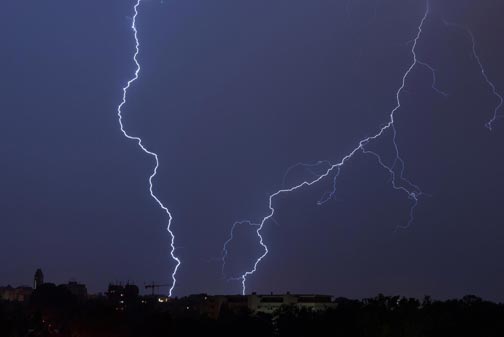
An EMP is essentially an intense burst of energy (for instance a lightning bolt, which is simply a highly concentrated EMP event that is very localized) that, depending on size and intensity, could potentially wipe out electrical and information systems across vast areas.

EMPs can occur naturally, as with lightning and a case we will explore later in this article, as well as through man-made sources such as nuclear or radio-frequency (non-nuclear) weapons. In order to properly prepare for such a phenomenon – whether to defend against Mother Nature or technological warfare – it is imperative to have a clear understanding of what exactly an EMP is in order to properly prepare yourself to defend against it.

faraday cages
Modern day reliance on the power grid leads many preppers to classify EMPs as a serious threat.

The following article will teach you the basics in understanding what an EMP is, how it can be caused, and the short and long term effects. This article also explores Faraday cages and how they can work to protect you against EMPs, discussing the features that are most important and various types you can purchase and build yourself.

What is an EMP and How is it Caused?

An EMP – whether natural or man-made – is a burst of energy with the power to knock out electrical power. The lasting effects of an EMP can range from minor inconvenience to potentially sending the world back to a pre-communications technology ‘dark age,’ so to speak.

Man-Made EMPs

The largest man-made EMP threat looms from nuclear weapon detonation. In what is referred to as the Compton effect (named after physicist Arthur Compton who first theorized of the effect), the theory follows that when a nuclear bomb explodes, the explosion releases electromagnetic energy which binds to molecules in the atmosphere and releases bonded electrons.

These free electrons then interact with Earth’s natural magnetic field creating a current that is powerful enough to decimate electrical currents over a large expanse of area.

faraday cages
As devastating as a nuclear explosion is, the resulting EMP can reach even further than the physical destruction of the blast.

In 1997, Gary Smith, then the director of Applied Physics Lab at John Hopkins University, testified in front of the House National Security Committee that a nuclear detonation at 300 miles above the surface of the Earth could carry enough impact to knock out electrical power to the United States as well as most of Canada and Mexico (click here for source article).

faraday cages
Lights out across the continental U.S.? A disturbing prospect.

However, nuclear weapons are not the only ones capable of generating an EMP; more localized sources of energy such as radio-frequency weapons or non-nuclear EMP devices can also wreak havoc.

Instead of drawing energy from a bomb explosion, these devices use concentrated microwave energy to cause disruptions in electronic equipment and destroy data. While these devices deliver a non-lethal pulse, the damage to electrical systems is no less devastating than with a nuclear detonation.

Naturally Occurring EMPs

faraday cages
The energy of lightning bolts is concentrated and terminates when it strikes the ground.

In addition to lightning, EMPs can also occur naturally as a result of geomagnetic storms. While these occurrences are infrequent, a geomagnetic storm in 1921 affected the United States as well as parts of Europe for two days, closing the New York City railroad system and burning telegraph lines in Sweden.

The cause was later attributed to a group of sunspots that were 1.9 billion square miles in size. Today, a storm of this size would affect over 100 million people and cause widespread panic and chaos due to society’s heavy reliance on electronic devices for everyday life.

faraday cages
Geomagnetic storms can produce an aurora borealis effect, or “northern lights.”

Despite the increased vulnerabilities present in modern times due to the prevalence of electronic devices in managing day-to-day activities, a future natural EMP event will likely come with advanced warning thanks to the benefit of space-monitoring stations.

A solar event would take hours, or even days, to reach Earth’s atmosphere, providing enough warning to safely stow electronics and turn off power systems (while shutting down power will not completely immunize systems against damage, it certainly can reduce the risk).

EMP Damage

EMPs, regardless the source, have the potential to inflict immediate and long-term damage. Depending on the intensity of the pulse, EMPs can start electrical fires, incapacitate power grids, and shut down power sources for refrigeration (causing loss of food and medical supplies), water and sewage services, security systems, and phone and Internet (this would affect financial institutions and ATMs as well as land, sea and air transportation).

faraday cages
Daily productivity would come to halt for many people in the aftermath of an EMP.

Additionally, any cars relying on high-tech computer systems (basically any model manufactured in the last 20 years) would be disabled and back-up generators could experience malfunctions or be ineffective if the existing equipment is damaged.

Recovery from an EMP is dependent on the size of the affected area and location, but could potentially take many years.

What is a Faraday Cage and Can it Protect Against EMPs?

The good news is, you can protect your electronic equipment from an EMP event. A popular method of EMP-proofing is to use a Faraday cage, a protective container equipped with a conductive outer layer that is typically made from aluminum.

A popular method of EMP-proofing is to use a Faraday cage, a protective container equipped with a conductive outer layer that is typically made from aluminum.

faraday cages
Simulators can be used to test the effectiveness of Faraday cages in diverting incoming energy.

These containers function as a shield, protecting the electronic devices inside from EMPs. The term ‘cage’ originates from the fine metal mesh often used as a protective wall; however, research indicates that using a solid sheet of metal may be more effective (more on building your own faraday cage later on).

A Faraday cage can be built to any size to accommodate myriad manner of objects; keep in mind that an EMP can cause a voltage spike powerful enough to fry all manner of electronic devices, including cell phones, computers, radios, and appliances. The only must-have in constructing a Faraday cage is that it needs to be thoroughly lined by a conductive material with no gaps.

faraday cages

How Does a Faraday Cage Work?

The manner in which a Faraday cage can protect against an EMP is by using the conductive layer to diffuse energy rays (this is why it is imperative to have no openings through which energy waves can pass). The process is referred to as field cancellation, with ions in the conductive material realigning themselves to cancel the incoming electric field.

faraday cages
The energy flows along the surface rather than through the cage. Image via Britt Selvitelle on Flickr.

How Can You Test If Your Faraday Cages Works?

There is a very simple way to test the effectiveness of a Faraday cage: place a working cell phone in the cage and try calling it. A properly functioning Faraday cage will block the signal and the call will not go through.

How To Build a Faraday Cage

The best way to prepare yourself and your loved ones for an EMP is to prepare for the aftermath by ensuring you have adequate stockpiles of food, water, and other essentials. In the event of widespread electricity loss, store shelves will quickly empty and essential resources will become scarce.

Not only will having the supplies ready beforehand ensure you have enough to last, but also, in a worst-case scenario, there may be civil unrest or upheaval that makes it dangerous or impossible for you to leave your home, necessitating having sufficient supplies on hand. CLICK HERE to read The Bug Out Bag Guide’s comprehensive article on prepping for power grid failure.

power grid failure

In addition to preparing for the aftermath, having a Faraday cage built and ready to go is a measure you may choose to take to protect your household devices in the case of an EMP.

Homemade Faraday Cages for Large Devices

To protect your larger devices – including computers, televisions, tablets and appliances – a large ‘shield room’ can be fashioned by lining a closet with heavy-duty aluminum foil. When constructing your shield room, be sure to pay careful attention to how your foil is placed around the door frame so that it provides a continuous shield.

Laying a piece of cardboard on the floor as you load items into the closet can help prevent damaging the foil. Additionally, check for any outlets in the closet and ensure nothing is plugged into them and that they are also covered with foil.

Self-Sufficient-intro2

If you don’t have a closet ready to go, or are prepping a location that is not in a home, you can build a freestanding Faraday cage by framing a box with 2x4s and then lining the outside with fine, conductive mesh. Remember, the openings on the mesh must be small enough to prevent energy waves from entering.

In place of mesh, you can also use sheets of aluminum or copper for your shielding material. Whatever material you choose, ensure its coverage is continuous over the entire exterior of your cage, or else its shielding effects will be rendered useless.

Homemade Faraday Cages for Small Devices

For smaller devices, something as simple as a shoe box lined with heavy-duty aluminum foil can do the trick. Alternatively, you can wrap your devices in several layers of foil, which also functions as an effective means of protection.

If you are considering building your own Faraday cage, make sure to check out this article and other resources with detailed building instructions.

faraday cages
Cell phones are very susceptible to the burst of energy from an EMP event.

Purchasing a Faraday Cage

You may already have a store bought Faraday cage ready to go and not even be aware of it – your microwave oven. While most people are familiar with their microwave’s ability to keep radiation in, few are aware that a microwave can also keep radiation out. To test your microwave’s effectiveness, unplug it (this is an essential first step, do NOT attempt this exercise while the microwave is plugged in) and run the cell phone test discussed in the previous section, How Can the Efficacy of Faraday Cages Be Tested?

There are also anti-static bags, available in a variety of sizes, that can protect against electrostatic discharge and are easy to store in your get home bag.

Protective ContainersBest For
Faraday Cage EMP/ESD Bags - 10 count
Cell phones
USB memory sticks
GPS devices
Radios
Tablets
Laptops
Chargers
Protektive Pak PPK-27534 5 Piece Storage Container and Lid Set
Cell phones
USB memory sticks
GPS devices
Radios
Tablets
Laptops
Chargers
Tech Protect Faraday/EMP Bag Size XXL 32" x 38"
LCD monitors
Televisions
Towers/hard drives

How Effective are Faraday Cages?

The effectiveness of your Faraday cage in protecting your devices against an EMP is dependent on a number of factors, including the origin of the EMP, how far your Faraday cage is from the EMP, and the type of rays emitted by the EMP.

High-frequency waves require smaller holes in the meshing while short-range EMPs contain gamma rays and X-rays that cannot be blocked by only a single layer of heavy-duty foil. To fully protect against EMPs from radiofrequency weapons, thick sheets of metal are required.

What You Need to Know About EMPs and Faraday Cages

In today’s technology-enabled world, it is easy to imagine the devastating consequences that could arise from a prolonged loss of power. A larger EMP that destroys power for several weeks, or even months, could easily lead to civil unrest and throw many first world residents into a survival situation.

faraday cages
The effects of a solar storm may take up to a day to reach Earth.

While Faraday cages provide an effective means of first-line defense against EMPs, remember there may be little to no warning before a strike and you may not have the opportunity to put your Faraday cage to use. The best way to prepare for an EMP event is to prep yourself and your family for the aftermath, ensuring your stockpile of supplies will be adequate to see you through a potentially long-term spell of power-free living.

Further Reading

Your Thoughts?

Are you fully prepared in the event of power grid failure? What must-have items have you stored away in case of power failure? Are Faraday cages part of your overall prepping strategy? Do you know of any other means to protect against EMPs? Share your thoughts in the Comments section below, thanks!

Read More

how to build a survival shelter

Learn To Build Shelter For Any Survival Situation

how to build a survival shelterSummer’s right around the corner, and for many people that means getting back to the great outdoors, whether it be for a day hike or a weekend camping trip. This summer, take advantage of your time outdoors to practice the invaluable skill of building survival shelter. That’s right, you need to step out of your comfort zone, leave your four-person tent and goose-down sleeping bag, and try to construct adequate shelter with only the items that would be available to you in a disaster scenario.

It’s the perfect time because if something does go wrong, you can always retreat back into your tent and try again the next night. The summer camping months provide the perfect opportunity to hone your survival shelter skills; however, keep in mind that when the need arises to bug out, you won’t have the luxury of choosing what time of year it is. Practice building survival shelters year-round, especially if you live in a four-season climate where summer and winter present drastically different survival scenarios.

Why Learn to Build a Survival Shelter

Food, water, shelter – the essential elements of survival. Shelter can protect you from the elements and wildlife, as well as keep you warm or dry; finding appropriate shelter can literally mean the difference between living and dying in a survival situation. No matter what your circumstances, you want to be sure you can prepare suitable survival shelter for you and your loved ones.

how to build a survival shelter
Your shelter doesn’t have to be fancy – it just needs to keep you warm and dry.

Possible situations that may require impromptu or planned shelter include bugging out, get-home scenarios, getting lost while hiking or exploring, tending to an injured person while hiking or exploring, or getting caught in a storm. Depending on your situation, your survival shelter needs may differ.

For instance, in a get-home scenario you may only need short-term shelter for a few hours or a night, whereas when bugging out you may be indefinitely on your own. The need for building a lean-to can arise when you least expect it, so learn how to build a survival shelter in a number of different locales and with different resources.

Choosing the Best Location for Your Survival Shelter

Choosing the best location for building your survival shelter will be dependent on how long you intend to be using it – needs for short-term shelter will differ from those required for long-term shelter.

how to build a survival shelter
Take advantage of the landscape when building a survival shelter.

When searching for immediate, short-term shelter, look for trees (especially fallen trees), rocky overhangs, and caves. Trees are an obvious source of shelter and have many useful parts for building shelter including the trunk – which can be used as a support, the branches – which can be used as framework, and foliage – which can be used as insulating material.

Rocky overhangs and caves make excellent areas to take cover but depending on your locale or the time of year, may not be an option. Don’t panic, whether you’re stranded in desert terrain or it’s the middle of winter, you can still put together an effective survival shelter.

In desert terrain with little to no trees, consider using the slope of the land to seek protection and the steep side of a dune for shelter – keep in mind that the gradual side indicates the direction the prevailing wind is coming from and therefore the steep side will provide natural refuge.

If it’s the middle of winter and all available building supplies are frozen or buried under snow, remember that snow will have the same insulating effect as a stick-built shelter. For more cold weather survival tips, CLICK HERE. Additionally, always seek out shelter where the ground is dry. If it is raining, waterways may overflow their banks and ravines, and washes may form.

If you’re in it for the long haul, you will need to consider substantially more factors than sheltering for the short-term. When searching for long-term shelter, look for areas in proximity to water and food sources as well as civilization (if applicable), and for an area that provides adequate visibility for you to see what’s happening around you and for others to see you. In some case, staying hidden may be more beneficial to your survival.

Types of Survival Shelters

Type# of OccupantsTime to BuildDifficultyRequired Resources
Simple Frame and Tarp Method1 to 2Less than 1 hourEasyTarp or poncho
3-4 long straight branches
Cordage to secure frame
Several rocks to anchor tarp
Knife or multitool to cut wood and cord
Simple Body Heat Shelter1 to 2Less than 1 hourEasyLeaves, twigs, dirt, or snow
Sticks to support the opening
Shovel to build mound
Open Shelter or Lean-To1 to 43-5 hoursModerateTree branch to use as ridgepole
10 long straight branches to form a grid
Cordage and/or zip ties
Leafy branches, grasses, bark for roofing
Knife or multitool to cut wood and cord
A-Frame Shelter1 to 33-5 hoursModerateTree trunk to use as support for ridgepole
8 pairs of straight branches to form the sides
Cordage and/or zip ties
Leafy branches, grasses, bark for roofing
Knife or multitool to cut wood and cord
Teepee Variations1 to 23-5 hoursModerateSlender trunk for support pole (optional)
10-15 long straight branches
Cordage for lashing
Leafy branches, grasses, bark for roofing
Knife or multitool to cut wood and cord
Subterranean Survival Shelter1 to 2

4 to 8
1 hour

Weeks to months
Easy

Difficult
Simple- mound of earth or snow, shovel

Complex- shipping container or other wall and floor materials, excavator, tools, plumbing and electrical supplies, power source
Long-Term Log Cabin1 to 4WeeksDifficultLong straight logs
Gravel for drainage and rocks for stilts
Tools for shaving bark and notching logs
Shovel to clear ground
Saw to cut down trees

Simple Frame and Tarp Method

If you happen to have the good fortune of having supplies with you (out backpacking or have bug-out gear) you may be in possession of a tarp that can be used in conjunction with a simple frame to create shelter for the night. To create a frame, lean poles against a lower branch or tree trunk in a manner that will fit under your tarp.

Make sure to remove any sharp edges from the wood or wrap leaves at the corners to ensure you don’t puncture the tarp. If you happen to be lucky enough to have cordage with you, tie it at an angle between two trees and drape your tarp over top, placing rocks on the sides to hold the tarp in place.

In an emergency, you can forgo the frame and simply wrap yourself and your gear in a poncho and huddle amongst the crook of a tree or other sheltered spot until morning.

how to build a survival shelter
A tarp makes an excellent short-term shelter but you may need to upgrade eventually.

Simple Body Heat Shelter

This shelter is fairly straight forward and easy to build – it is useful for short-term or unexpected situations and can comfortably accommodate one, possibly two, people.

To build a simple body heat shelter, use debris from the ground such as dirt, leaves, and twigs, to create a mound and use larger sticks to frame it. Clear a hole just big enough to crawl into and cover the opening to block air flow and limit the open space. Your body heat will be trapped inside the shelter, keeping you warm throughout the night.

If you are seeking shelter in the winter and the ground is covered in snow, use the snow to build your mound. Even though the snow is cold, it will still serve the purpose of insulating you from the elements outside and trapping your body heat.

how to build a survival shelter
Sheltering under the snow will insulate you from the cold and preserve your body heat.

Open Shelter or Lean-To

The benefits of an open shelter or lean-to are that it offers extra protection against the elements such as wind and rain, and can accommodate up to four people (for a typical lean-to, however they can be constructed as large as resources allow).

how to build a survival shelter
We built this lean-to using two tripods instead of trees for support. Zip ties made quick work of building the grid.

Depending on the supply of materials available, the construction can take anywhere from two to five hours. Start by looking for downed trees that have branches low enough to support the topmost point, known as the ridgepole. If you only locate one tree, use it as the ridgepole – lashing in place if necessary – but if you locate two downed trees near one another, lay a sturdy branch between them.

Gather approximately five to six poles to lean against the ridgepole at roughly a 45-60 degree angle, enough to create a comfortable space to fit your team and gear underneath. This will serve as your grid. To create the grid frame, attach 5 to 6 poles across the frame. Weave flexible boughs between poles at right angles and then use bark or leafy branches to thatch the roof, starting from the bottom and moving upwards.

how to build a survival shelter
Use the grid to weave foliage to create a weather barrier.

You can add additional walls for further protection using the same method. Should you be lucky enough to have a tarp or mylar survival blanket, you can hang it from the opening to act as a curtain.

A-Frame Shelter

The A-Frame shelter is constructed in much the same way as the lean-to, the only difference is that the ridgepole starts on the ground and extends up into tree, lashed at a height that allows enough space to sit underneath. In this way, two sides are constructed to create the A-frame shape, providing additional protection from weather or cold temperatures. For added warmth, locate your fire pit near the opening.

how to build a survival shelter
Square lashings are used throughout the A-frame shelter.
how to build a survival shelter
Side view of square lashing.

Teepee Variations

A teepee can stand alone or be built around the slender trunk of a tree. In some cases, it may be easier to use a slim tree as your center support, lashing poles around it to create a cone-shaped shelter, which will provide a sturdy frame, but also limit your interior space.

It’s up to you whether you choose to completely enclose the exterior and create an opening in the top for ventilation or keep the top secure from rain and leave an open doorway. Always make sure you account for ventilation, especially if you intend on building a small fire inside.

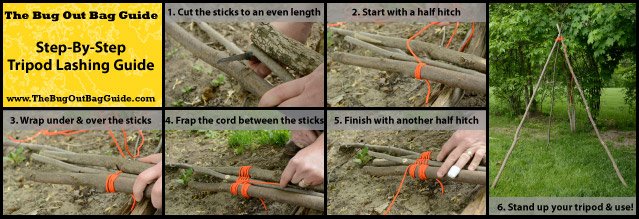
For stand alone teepees, start with three long straight poles and use a tripod lashing to join them. Try to locate a long pole with a Y-shaped joint at one end. This will provide the frame with stability as the next pole can rest within the Y-shape. To build the teepee, continually add pairs of similar sized poles and join them together at the top, leaving the base wide enough to curl up in and tall enough to sit comfortably.

how to build a survival shelter
This technique can be the framework for a teepee or provide ridgepole support for building a lean-to.

Once the frame is constructed, fill in the gaps using whatever materials are available to you including leafy branches, vines, mud and grass. Work your way up from the bottom – as you would with roofing tiles – so that the rain will drip down the overlapping layers instead of into your teepee.

Subterranean Survival Shelter

how to build a survival shelter
This fallen tree can provide adequate shelter – just watch out for critters!

For short-term shelter, a subterranean survival shelter can simply be hollowed out of a mound of earth, creating a warm place to sleep. An optimal location is the root base of fallen trees, as the roots provide structure and prevent caving in.

For a longer-term shelter, substantial planning and effort will be required. A long-term subterranean survival shelter is something you would build in preparation for when SHTF, as opposed to building in the aftermath while bugging out. Those who choose to build a long-term subterranean survival shelter either build one on their property or an offsite location. Designs can range from simple cellar-style rooms to complex homes that are fully outfitted with a power supply, furnished with necessities and comfort items, and have functioning defense systems.

Long-Term Log Cabin

If a crisis or disaster situation truly descends into chaos and it’s TEOTWAWKI (the end of the world as we know it), you may find yourself in the position where you need to build a solid and dependable home using only what the land provides. Obviously, this type of survival shelter requires a tremendous amount of time, resources and energy – therefore it’ll save you time and aggravation to learn the basics beforehand.

how to build a survival shelter
If you are permanently relocating, a log cabin may be the way to go.

A long-term log cabin is built using a similar method as Lincoln Logs you may have played with as a child; the general idea is to lay a frame of logs that interlock at the corners to form a rectangle. Before beginning, you will need to clear the ground of grass, level it, and top it with a layer of gravel for drainage. Locate large rocks that can serve as stilts to keep your cabin off the ground and place them at all four corners as well as every three to four feet.

After the rocks are placed, locate the base layer of logs, the sill logs, which will need to be larger than those used for the walls – about 12 inches in diameter. Once the sill logs are in place, you can add floorboards or skip ahead to building up the walls.

how to build a survival shelter
This notching pattern will help shed water away from the joints.

For the walls, look for trees that are seven to ten inches in diameter and cut them to fit the dimensions of your floor plan. To prepare the logs for the walls, flatten the top and bottom so that they sit flush and notch the ends to interlock them and form a sturdy corner – additionally, cutting a notch in the top log only will avoid pooling water in the joints while in wetter climates.

Once you reach your desired wall height, begin using logs in diminishing lengths on either end to create the peak. Notch and lay two long logs perpendicular across the length of the cabin to act as supports for the roof. Depending on the items you have available in terms of tools and lumber, you can construct your roof with split logs, cut shingles, or sod.

Survival Supplies Beneficial to Have on Hand

Undoubtedly, you’ve included tools and materials in both your bug-out and get-home bags that will lend themselves to building shelter; however, it’s important to consider what tools are must-haves if an unexpected need to shelter arises, such as during a hiking or backpacking expedition.

To ensure you have the proper tools, take inventory of the various tasks you will need to perform when building shelter such as cutting, de-branching, notching, lashing, digging, and weaving. Consider what tools could help with these tasks (and all the better if one tool can address several tasks) and make sure they are in your bug-out and get-home bags as well as on your person while you’re out exploring.

Here is our list of the top survival supplies that are crucial to have on-hand when building survival shelter:

ItemShelter Building Applications
Fixed Blade Knife
Cut cord, small branches
Remove bark from logs and branches from poles
Notch poles to fit snuggly before lashing
Multitool
Saw through small branches
File sharp corners to prevent tearing tarp
Remove splinters
Loosen knots in cord
Hatchet
Larger cutting and debranching jobs
Cut down trees for a log cabin
Prevents dulling your knife and expending excessive effort
Tri-Fold Shovel
Clear the ground for your shelter
Dig in dirt or snow to make a body heat shelter
Level the ground for support poles
Excavating large rocks for stilts
Lightweight Tarp
Use as roof or door for your shelter
Wrap around you for warmth and protection from weather
Make a sling to hang supplies out of reach of animals
Survival Blanket/Bivvy Sack
Use as roof or door for your shelter
Wrap around you for warmth and protection from weather
Make a sling to hang supplies out of reach of animals
Cordage
Lash poles for framework of shelter when building a lean-to, teepee, or a-frame
Make a line between 2 trees to hang a tarp shelter
Secure food supply in a tree to keep away from animals
Zip Ties
Attach smaller poles together, such as for the grid in a lean-to
Fasten roofing materials to make a rain barrier
Substitute for cord in light duty construction
Hang a lantern or flashlight in your shelter
Work Gloves
Protect your hands from injury while handling building materials and tools
Lighter
Melt ends of cord to prevent fraying
Click the images to see current prices on Amazon.com.

Survival Shelter Building Techniques

Knot Tying

how to build a survival shelter
Be sure to melt the cut ends of your paracord to prevent them from fraying.

Lashing


Building A Frame

Roofing

Wilderness Precautions

No matter where you choose to set up shelter, always be cognizant of what wildlife may be around. If you’ve found a great location, you are no doubt not the first to have discovered it, so make sure to survey the land for wildlife such as snakes in leaf piles or under fallen trees.

To stir up any creatures that may be hiding in brush or bushes, use a stick to prod the area before proceeding with your hands. Additionally, store any food you have tied up high in a tree to avoid attracting unwanted critters to your dwelling.

In terms of the wilderness itself, avoid any foliage that has a chalky white appearance as this is a mold that could spread through your shelter and impact your health. Also, if a tree contains a lot of ‘lacey’ leaves, that indicates it is probably infested with insects and best to be avoided. For more information on plants and foraging, CLICK HERE.bushcraft skills

Conclusion

Now that you have the basic skills necessary to plan and build your shelter, the next step is to get outside and get practicing! While techniques such as weaving and lashing can be practiced in your backyard, when it comes to building an effective survival shelter, there’s no substitute for the real deal. As you’re practicing, make sure to take note of pertinent factors such how long it takes you to gather materials and construct your shelter – knowing this timing can be life-saving in a real disaster scenario.

Be creative, be resourceful, and most of all – have fun!

Your Thoughts?

Have you ever been in a situation where you needed to build a temporary shelter?What did you build? What tools do you carry that are useful in building a survival shelter? Share you thoughts and experiences in the Comments section below, thanks!

Read More