Urban Prepping

10 Preparedness Tips From Living In NYC

bug out bag

There are many places we can look to learn the skills and knowledge we need to help ourselves and our loved ones survive.  Often times one of the best teachers is the world around us.  I experienced this over the 7 years that I lived in New York City.  Living there provided many practical and at times terrifying lessons in urban survival and disaster planning that I hold on to today.  This was caused by the pervasive impact of the 2001 attacks as well as multiple events that occurred while I was living there afterwards.  In this article I am going to share with you some of the life changing events that I experienced and show how to apply the lessons learned to your own preparedness journey.

In the beginning…

Growing up in the suburbs, New York City (or simply “The City” as we called it) was an entrancing place that children were taken to on field trips and whispered about by older siblings who managed to sneak down for a concert or night out.  It held great mystery and allure, there always seemed to be so much going on there.  It was common that a fair percentage of kids from my home town would end up there after (or instead of) college to pursue opportunities and adventure.  I myself took this path at the ripe age of 22, moving with a girlfriend (now wife) into a shoebox of an apartment as we both landed jobs in the financial sector.  I lived there for 7 years, from 2003-2010 and although I have since moved on a large part of me remains there and I loved the overwhelming majority of the experience.

The day of days

Anyone who is old enough to read these words will remember where they were on September 11, 2001.  I was as far away from the epicenter as I could have been, just 3 days into a 3 month exchange program in Australia.  I remember walking into the lounge room after a night out and seeing everyone glued to the TV.  It was early in the event and the newscasters were still calling it an accidental plane crash.  Then the other plane hit.  It flashed in my mind that I had an Aunt working in the WTC.  The distance from home could not have seemed greater as I ran to the phone and frantically dialed home.  My mother was in a panic and had not heard from her sister.  We spoke briefly as to not tie up the phone line.  We reassured each other that we were both OK and she promised to call as soon as she heard more news.  Hours later I got a phone call that my Aunt B had safely been evacuated from Tower 7, which later collapsed.  One small bright spot in an unspeakable day.  Growing up in the area I know many families that were not so fortunate.

prepping tips
The sunset from my NYC apartment

Lessons From Modern Day NYC

It has been over a decade since that terrible day and New Yorkers have done what they can to grow past the events of 2001.  Not moved on, but perhaps grown scar tissue over the wound.  People go about their lives without living in fear and accept changes such as seeing more police and national guardsman in public locations.  Perhaps more subtle are the new physical changes that have cropped up.  For an example, we can look at the iconic skyscrapers that give New York City its distinctive skyline.  Most skyscraper office buildings have a large glass atrium on the ground floor.  This will nowadays be invariably surrounded by a picket line of heavy concrete barriers to prevent a truck ramming in with bad news in the payload.  Great pains have been taken to disguise measures such as this by planting trees or flowers in the barricades and most people would walk by them without even noticing.  This is the epitome of modern day NYC.  Be safe but keep living your life.

Lessons Learned:

  1. Learn from and grow from any negative experience after grieving is over
  2. When possible make your preparing a part of every day life to make it less overbearing
  3. Live your life to the fullest

A Deadly False Alarm

At one point during my tenure in NYC I was working in midtown Manhattan right around the corner from Grand Central Terminal.  This train station is one of the busiest commuter and subway stations in the world and its beautiful architecture and design make it a popular tourist destination (Personal note: if you ever visit NYC, stop by Grand Central.  It is one of my favorite places there).  All these things also made it a widely acknowledged soft target for terrorism.

One warm summer evening in July 2007 I was leaving work and in the elevator with several colleagues.  We experienced a shudder and a brief power outage.  When the lights came back on seconds later the elevator had stopped.  To break the tension, I made a remark “Well, I have lived a good life”.  Nervous laughter escaped and the elevator started moving again, taking us to the ground floor.

What we were met with was chaos.  We could see people out in the street literally screaming and running northwards past the front of the building.  I have burned into my memory a woman in a business suit and high heels running past me with tears streaming down her face saying over and over, “Not again.  Not again.”

We had no idea what was going in. We looked out the front door to see what they were running from and saw a large black cloud erupting front the middle of the street about 2 blocks away.  We joined the crowd moving northwards, calling our loved ones around Manhattan telling them we had just seen an explosion and they needed to move NOW.  This actually took convincing as more than one person said, “No one here is freaking out and we haven’t heard anything about it on the news”.

When I eventually arrived home I flipped on the TV and began to pack supplies.  After a few minutes I learned that the explosion had been caused by an underground steam pipe from 1924 that had burst.  Although it had not been ruled out, terrorism was seen as unlikely.  It ended up a couple people did die and many were injured regardless of the cause (see here for more info on the event).

That was it, a steam pipe bursting and it had sent everyone in the area into a panicked frenzy.  Part of this was lack of information and the location (right next to Grand Central).  But the other part was the scars of 9/11 that people still bore.

Lessons Learned:

  1. Although it was a steam explosion, the next time it may be an intentional event.  I did the right thing by trusting my instincts to move away immediately.
  2. Reaching loved ones was difficult as the cell phone services were immediately jammed with EVERYONE trying to do the same thing – Have alternate means of communication.
  3. Once they were reached they required a conversation to get them going – Have a code word to cut through this.  Discuss this with whoever you need to and gain an understanding of when I call/email/text XXX it means GO!
  4. When I got home I wasted time packing a bug out bag – Have one ready at all times.  Or, if I had a get home bag ready at my office I could have gone back up and grabbed that.

urban prepping

A Threat From Afar

One beautiful August Sunday afternoon in 2004 I was barbecuing at a friend’s place, relaxing and generally having a great day.  We were watching the game and it was interrupted by a news flash.

It was reported that a laptop had been found in Pakistan that included detailed plans to attack several financial institutions in our fair city. One of the buildings specifically listed was the Citigroup Center.  I had been working for Citigroup for a couple of years at this point and frequently worked out of this exact building.

I was frozen in my tracks.  Why would someone that I had never met want to kill me because I worked in a particular building?  To this day it makes no sense to me.

The response from the national, state, and local government was overwhelming.  Laura Bush actually came to the Citigroup Center to have lunch to show support.

I showed up to my office building on Monday not knowing what to expect.  I knew some people were planning on not showing up to the office until more information came out.  When I arrived what I was met with was, as I said, overwhelming:

  • A line of police cruisers literally around the block
  • Armed National Guardsmen on the corners
  • Bomb sniffing dogs circling the building
  • Newly installed airport style metal detectors and x-ray machines that had to be passed through to get in the front door

The show of force helped inspire confidence in my fellow employees.  People could come to work knowing that others were working around the clock to keep them as safe a possible.  I never really got used to having to get my bag x-rayed and emptying my pockets before getting to my desk but it did help others reduce the spectre of violence from their everyday lives.  Once this was overcome people were compelled to outwardly show resolve and return normalcy to their everyday lives.

Lessons Learned

  1. Violence really can come from any place any where.  There is not much to do about this really other than prepare as best you can, keep your eyes peeled and most importantly keep on living your life.
  2. The people that would carry out these terrible acts against us cannot be reasoned with.  Or, if they can, their frame of reference is so alien to my own that constructive dialogue is impossible.
  3. We cannot live in fear.  Do everything you can to return a sense of normalcy to yourself and those around you.  Lead by example if you can.  Love or hate the Bush Presidency, I respect Laura’s attempt to show strength through her own example.

How Did I Take Action?

These events were a big a wake up call to me and my family members who either lived or worked in NYC.  We ended up putting together my first rudimentary bug out plan to be ready for whatever may come next.  To be honest, it wasn’t a very good plan but basic enough to work.  Thankfully we never needed it.  I will be going over this first bug out plan in another article in the near future, so keep an eye out for it for it!   I will highlight good points and areas for improvement in this original plan as well as show you how you can use my mistakes improve your own plan.

urban survival
A beautiful Autumn day in Central Park, life carries on

What to take away from it all?

There are some serious points and dark times discussed here.  However, I think it is important to say that in the 7 years that I lived in NYC, these never overwhelmed the amazing experiences and fantastic people that I met along the way.

This is what I think should be the big takeaway.  Although we are all a little more wary than we used to be and some things have changed we can NEVER allow this to run our lives.

By all means prepare yourself as best as possible and learn what skills you can to help you survive and protect your loved ones.  As I continue my own life’s journey I will certainly continue to do so.  But, I will also live, love, and learn a far greater amount of the time.  No matter what happens I will focus on the positives in my life such as my family and the friends I have made and adventures we have had rather than the dark moments.

Your Thoughts?

Have you had an experience that has taught you an important preparedness lesson?  Please share it with us in the Comments Section below, thanks!

Read More

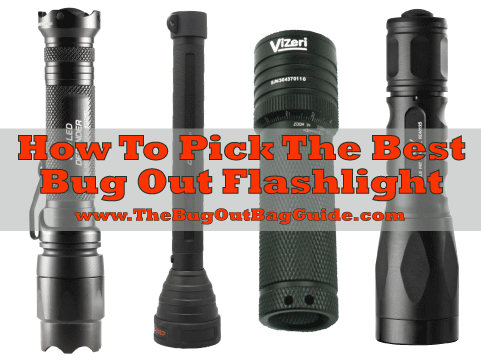
How To Choose The Best Survival Flashlight for Your Bug Out Bag

Best Survival Flashlight

Emergencies can happen in any place at any time, and it’s always better to be prepared in case the unexpected happens.

The last thing you want is to be left out in the dark.

Finding the best survival flashlight for your bug out bag is an important part of assembling your kit. There are a lot of options out there, and it can be difficult to find a good flashlight among all the noise.

In this guide, I will step you through the process of finding the best survival flashlight by looking at features, size, weight, battery type, and materials.

To save you time sorting through the huge variety of options out there I have made some recommendations to help you narrow down the best survival flashlights on the market.

FlashlightLumensLength/WeightFeaturesCost
Vizeri LED Flashlight

High: 2304.25"
3.68 oz
Includes a diffuser to convert the flashlight into a lantern. Flexible battery options.$
SureFire E2D Defender
High: 200
Low: 5
5.4"
3.68 oz
Crenellated front bezel & scalloped tailcap for self defense use. Switch has a "lock" mode to prevent accidental activation.$$$
Coast HP17TAC Flashlight

High: 615
Low: 64
13.12"
16 oz
Adjustable beam, a great mid-sized light that is well built.$$
Fenix PD35 Tactical Flashlight
High: 8505.47"
3 oz
Extremely bright flashlight. Very light weight. Flexible battery options.$$
Surefire P2X Fury

High: 500
Low: 15
5.4"
5.7 oz
Very high lumens for a small light. Switch has a "lock" mode to prevent accidental activation in a pocket or bag.$$$
Streamlight Survivor

High: 140
Low: 47
7.06"
13.1 oz
Designed to be used by firefighters in search & rescue. Rugged clip for attachment to your bag or person.$$
Coast HP21 Flashlight

High: 1317
Low: 207 lumens
15.5"
2.8lbs
Adjustable beam size from flood to spotlight.$$$$
Smith & Wesson Galaxy

High: 25
Low: 6.5
7"
6.08 oz
Lens contains 10 white LEDs and 3 red LEDs for multiple modes.$
Streamlight Protac Tactical Flashlight

High: 260
Low: 13
4.7"
4.8 oz
Comes with 3 modes but can be reprogrammed by the user. Great value.$

Our Picks For Best Survival Flashlight

Best Overall Bug Out Flashlight: Vizeri LED Flashlight

Best Survival Flashlight

The Vizeri LED Flashlight is a fantastic choice for a bug out bag flashlight.  It is a compact powerhouse that will not take up much room in your BOB, coming in at 4.25″ long and weighing less than 4 ounces.

This hand sized light still manages to pump out 230 lumens, more than enough to blind an attacker, light up a large area, or scare off an aggressive animal.

Additionally, it can take either AAA alkaline or 18650 Li-ion batteries to give you flexibility when trying to scavenge replacements in the field.

The Vizeri LED Flashlight proves its versatility again with its 5 output modes (high, mid, low, SOS, strobe), giving you the ability to signal for help, blast out a blazing light, or conserve energy.

On top of all this, the Vizeri LED Flashlight is weatherproof rated up to IPX-7, giving you confidence that it will illuminate your path in all conditions.

The features listed above are typically found in lights that are in the $150-200 range. The Vizeri LED Flashlight provides all this at a fraction of that.

Overall, a great survival flashlight at an amazing price.

Best Self-Defense Flashlight: SureFire E2D Defender

Best Self Defense Flashlight

The SureFire E2D Defender is an ideal self-defense flashlight that excels in both of its required tasks.

First off, the SureFire E2D Defender is a dual mode flashlight that can shine at a blazing 200 lumens for tactical situations or be toggled down to 5 lumens for discrete or energy efficient applications. The flashlight will shine for 1.9 continuous hours while in high mode and an astounding 76 hours in low mode.

The SureFire E2D Defender has also been smartly designed with a lock mode in the on its switch to prevent accidental activation while on the trail to keep your batteries saved for when you need them.

As for the self-defense potential of the SureFire E2D Defender, it has been thoughtfully crafted with your protection in mind.

The crenelated front bezel and scalloped tail are designed to intimidate on sight and magnify the force of a strike. There is no doubt that a blow from the SureFire E2D Defender will stop an aggressor in their tracks, whether animal or human.

Overall the SureFire E2D Defender is a fantastic multipurpose tool, providing outstanding illumination and effective self-defense options to any bug out bag or EDC kit.

Best Full-Size Flashlight: Coast HP17TAC Flashlight

Best survival flashlight

If you are looking for a full-size light for your BOB, the Coast HP17TAC Flashlight is an outstanding choice.

First off, it is extremely bright, pumping out a blinding 615 lumens in high mode and a respectable 64 in low.  The Coast Flashlight will effectively throw its beam a whopping 882 feet, just shy of 3 football fields.

The Coast Flashlight’s larger size allows for it to carry a larger battery supply. This translates into the best lifetime of any of the flashlights that we looked at. It will operate at its high setting for over 15 hours and coast along on low for more than 51 hours.

The other advantage of the larger size of this flashlight is that it can easily double as a blunt self-defense weapon. Measuring just over 13″ and weighing 1lb, you can swing this with confidence if your back is up against a wall.

The Coast HP17TAC Flashlight is powered by 3 D size alkaline batteries which make scavenging for replacements a relatively easy proposition in any populated area.

This is a great flashlight that is built well enough to light your way for years to come.

Flashlight Features and Considerations

Weight and Size

One problem that many people have when trying to figure out what to put in their bug out bag is dealing with the weight and volume constraints of their backpack.

Even small bags can get extremely heavy when they’re filled with survival gear.  Large bug out bags that become overly heavy can be far too difficult to carry and may even rip due to the weight.

To estimate the weight of your BOB, try our free bug out bag tool here.  Ideally, a bug out bag flashlight will weigh 16 ounces (1 lb) or less when fully loaded with batteries.

Another issue that is especially prominent in small bug out bags is the issue of space. A bug out bag is not very useful if a few large items are eating up all of the space. The key to dealing with this isn’t putting in fewer items, it’s finding smaller items that work just as well. Many people choose to buy small flashlights that fit easily in the palm of your hand such as mini-flashlights and keychain flashlights to have lightweight and effective lights that take up little space.

If you have plenty of room to spare, a rugged tactical flashlight can be a good choice. While being heavy is a benefit for flashlights that double as billy clubs, it’s best to avoid a bulky survival flashlight if you do not intend to use if for this purpose. Look for a light that is 8 inches or less in length to keep your BOB uncluttered, this should suit most survival needs.  If, however, you are looking for a flashlight that can double as a self-defense item you may want a larger model, as mentioned above.

Battery Type

When you use a flashlight as your everyday carry (EDC) flashlight, the type of battery you choose comes down to your own requirements and how you plan to use the flashlight (see the article on choosing the best EDC flashlight for your needs here). However, a flashlight that you plan to keep as part of your bug out bag will have a different set of requirements to consider when it comes to batteries.

An EDC flashlight, for example, is going to be used often and probably for relatively short periods of time, whereas a survival flashlight for your bug out bug will only be used in case of an emergency situation. In such a scenario, chances are that there will not be power available and you will need to use your flashlight for long periods of time. For this reason, alkaline batteries (AA, C, or D sized) would be the battery option I would recommend. And here is why – alkaline batteries are generally much more commonly available than high-end battery types such Li-ion batteries, while still providing enough power to your flashlight for an extended period of time.

When your battery power runs out, you can simply replace the batteries with new ones you have with you or that have been scavenged and carry on.

Alkaline batteries are not perfect, though. You need to keep in mind that alkaline batteries can lose power over an extended period of time and could leak battery acid when left in your survival flashlight for a long period of time, ruining your light. So if you do go the alkaline battery route, check the batteries regularly for corrosion or leakage. If you spot leakage, replace the batteries as soon as possible!

Bulb Type

When it comes to flashlights, you can’t get much better than LED bulbs. They’re brighter, clearer, last longer, are more energy efficient and far more durable than traditional incandescent light bulbs.

All these factors make LEDs a great choice for many uses including survival flashlights. LED bulbs are also a favorite for tactical flashlights as their intense brightness is good for blinding enemies.

Best Survival Flashlight

Flashlight Brightness

When it comes to buying a flashlight for your bug out bag, brighter is almost always better. Visibility is vital when it comes to survival situations. About 45 to 150 lumen is the preferred amount for many survival flashlights, but be warned that increased brightness means more strain on the batteries.

Note that if you are looking for a self-defense flashlight, a minimum of 100 lumens is needed for blinding aggressors.

Having a focused beam and a good reflector are also necessary for getting the most out of your light. Bigger bulbs and wider reflectors allow a larger area to be illuminated, which is good for lighting up eating areas, car interiors or small rooms. However, when the beam is wider the light doesn’t reach as far. Focused beams with narrow reflectors don’t illuminate as much, but the light extends much farther.

Having an adjustable beam will allow you to have the best of both worlds, look for this feature when finding the best survival flashlight for your bug out bag.

Best Survival Flashlight

Weatherproof Rating

It’s always a good idea to ensure that the flashlight will stand up to water, cold and hot weather, mud, ice and other adverse weather conditions as natural disasters are a common reason to need a bug out bag.  Weatherproof flashlights are especially beneficial to hunters, hikers and anyone who plans on using their BOB for wilderness use. Weatherproofing is typically expressed as an IPX rating from 1 to 8.

Look for a flashlight that is advertised as rated IPX-4 for basic water resistance and IPX-7 or 8 for a survival flashlight that can be submerged without damage.

Best Survival Flashlight

Construction Material

Anodized aluminum is a favorite of tactical flashlight users, but is it as useful for your bug out bag flashlight?

Most metal flashlights are sturdy, but some plastics can also be very strong and stand up well to various forms of damage. Metal conducts both cold, heat, and electricity while plastic doesn’t get very cold or hot in intense temperatures.

Metal can be quite heavy while plastic is fairly light. If you’re merely using the flashlight for illumination, plastic may be a better choice.

If you have the ability to use it as a self-defense flashlight, anodized aluminum will be a better choice.

Self-Defense Features

There are many survival flashlights that can be used as a billy club or kubotan as a means of self-defense against animals or other people. If you already have a reliable weapon such as a firearm, pepper spray, machete or EDC knife, you may not need a self-defense flashlight that acts in this way.

However, they’re still good to have as you can never have too many means of protection.

Additional Flashlight Features

Additional features can be useful when finding the best survival flashlight to meet your particular needs. For example, some flashlights have alternating colors for signaling, night-vision, tracking blood and more.

  • Multiple brightness settings can be useful for saving battery life or when you want to avoid drawing attention to yourself.
  • Brighter beam settings can are useful for signaling and potentially blinding enemies.
  • Clips for belts, lanyards, hats and more are great for convenience purposes. Having a headlamp or a hat clip for a flashlight can also allow for hands-free use in emergencies.

When looking at extra features for your survival flashlight make sure to find elements that are well suited to your individual needs.  This will help you effectively find the best survival flashlight to help YOU survive.

Conclusion

When looking for a survival flashlight for your bug out bag, the one that is the best choice is determined by the ultimate purpose of the light and the main application of your bug out bag.

The most critical factors to keep in mind are quality, brightness, battery life, and durability.

No matter if it’s a small light for a bug out bag that you keep in your car or a large tactical flashlight for a large bug out bag meant for longer term survival situations and outdoor use, those four factors should be the most important aspects to keep in mind for any bug out bag survival flashlight.

About The Author

This article was written by John Bee, who is the author of The Flashlight Guide.

Read More

bug out bag

Reader Case Study: Making Your Family More Self Reliant

Family Preparedness

I recently received an email from a reader with an inspiring and educational story about how he helps prepare his family. I thought it would make a great case study in applying the preparedness mindset to everyday life.

We live in upstate New York and just North of us are a series of 3 poorly maintained dams that have been in the news from time to time due to neglect and mismanagement problems. Most of us who live on the downhill side of these dams are always waiting for one to spring a leak in a big way. Since they are all in a row along the same river if the top one goes the others don’t stand a chance. Neither do those of us who live in the probable path.

Great work! Bill has looked around at his environment and assessed threats that are likely to affect him and his family. He can now plan how to mitigate these and prepare more effectively.

We have had bug out bags ready and stored in our front hall closet, right near the front door, for years now. We use PVC waterproof packs made for canoe and rafting trips. I make sure the gear is rotated several times a year with respect to seasons and since we have 3 kids, I need to make sure clothes still fit. I also stick in some playing cards and a book or 2 for each of us.

Bill has done a good job here helping his family prepare. He has:

  • Packed bug out bags for all members
  • He periodically checks and updates each kit for seasonal changes and growing kids
  • He has packed items to make an evacuation less traumatizing for his kids
  • He has packed the survival gear in a waterproof container to protect everything from the elements

At this point Bill shares a very personal anecdote of his preparedness journey with us as well as shares some practical tips for choosing and archiving important documents.

But what takes work and thought are the important documents and family photos that we would not want to lose. Call me a sentimental fool (my kids leave out the sentimental part) but childhood memories are important to me and can never be replaced. I looked into keeping family photo albums and important documents with a relative but decided against it. I also looked into a safety deposit box in a bank but that was expensive. The cheapest one I found was over $40.00 a month.

The solution I settled on was scanning each page of photos from all of the albums into our computer than burning them onto C.D.’s and flash drives and keeping a copy in each of the bug out packs. It was very time consuming and frustrating because I am not an expert at this. It really was in the truest sense of the word, a labor of love. We must have 6 thick photo albums made up of years of vacations, birthday parties, Halloween photos and much more. We even caught my son’s very first unassisted steps! I’d hate to lose this stuff. In addition to the photos, I have been writing letters to each of my children since months before they were even born.

I wrote about boring things mostly. How the garden was doing and what we planted. What the weather was like or what we were doing at work. But I also wrote about how we both looked forward to meeting them for the first time and hearing their first words. How we wanted to go hiking and canoeing with them, and how much we hoped they quickly found a job. (I think I’m funny). Before I even knew their gender, I did know I was going to cherish them everyday, and I have. I still do, even though my oldest son who just turned 15 is now 6 feet tall already.

So, after I figured out the technical details on how to scan things onto my PC, then burn them onto C.D.’s, the work started in earnest. Several long days it took me to do this and more than a little trial and error, with the emphasis on error. Still, I doggedly persevered. I scanned about 200 pages with photos on each page. Then I opened and scanned each letter I have written over the years.

Bill has put a lot of effort in to keep his family’s memories together. If things go badly and the dams he mentioned above break or there is another disaster his family can evacuate to safety knowing they will have their history and important memories with them. The story of how Bill writes letters to his children and wants to preserve these for them until they are old enough to appreciate them was particularly impactful for me. We often think of survival as a checklist of gear to buy or skills to master. I think this anecdote really shows the human side of surviving that is often overlooked. If a disaster does occur having these tidbits of their former lives will provide great strength and morale to Bill’s family.

On top of that I scanned things like health, life, homeowners and car insurance policies. Some of these need to be updated a few times a year, so I scanned them individually so when I need to put a more recent document in I didn’t have to scan 6 other things as well. I also included:
Wills
Health care proxies
Property surveys
Paperwork dealing with the purchase of the house
Birth certificates
Social security cards
Marriage license
Professional certificates
Resumes
Medical documentation
Blood types
Fingerprints
Recent family photos to assist searching for separated members

Bill has moved on to the practical stuff to archive here, things that will help his family rebuild in the aftermath of a disaster. He has a great tip in there as well of scanning documents that tend to be refreshed periodically as individual items that can be updated in a modular fashion, rather than having to re-scan the whole list just to update one page. This is practical advice from someone who has done the task themself. Thanks Bill, once again your efforts are an inspiration.

But even the most well stocked bags are not much good unless you have a plan your family knows about and maybe even practices. That is a critical part of being prepared. Anyone can throw some stuff in a bag but to be really ready you all need to be on the same page and know what to do and when to do it. That will make or break your survival sometimes. Knowing what skills your family members have and being able to rely on them to do what was agreed on ahead of time is a huge part of preparedness, at least to my way of thinking. It’s also the hard part. Not everyone will see your point of view or agree on the need to plan ahead. I face that all the time with my wife, but after a few tough situations over the years we have come to trust and rely on each other. That is also when you realize you have a great relationship that needs to be cherished and never taken for granted. Ever.

Bill has wisely looked beyond just buying a bunch of survival gear to get prepared. He recognizes the importance of having a simple, realistic plan to follow if disaster strikes. He has also involved his wife in the decision making process and gotten her buy in to the plan. Having the commitment of all the adults in your Bug Out Party is so critical as it allows you to work as a team. As Bill points out this can be a challenge if your spouse is not on the same page as you. Luckily he was able to persevere and gotten her on board.

It is a wonderful thing to have neighbors who look out for each other. Super Storm Sandy tore up our property and ripped over 10 large trees down, some on our roof. We bought a 650 gallon food grade water cistern years ago and had fresh water to share. Some shared gasoline (which was almost non existent) but just having someone to knock on your door to see how you were was a real blessing.

Preparing is great, but it is also vital to communicate your plans with family, friends and neighbors. I thought my neighbors would think me nuts for telling them our plans and suggesting they make plans of their own, but no one did. They were great and offered suggestions.

Bill is once again showing how a proactive mindset pays off in survival situations. In this anecdote he:

  1. Demonstrates the usefulness of proactively preparing his home by setting up a cistern. This can apply to many things, from upgrading your home like Bill did to going out and learning some additional survival skills. The quick win that will help you survive is adopting a PROACTIVE mindset rather than a REACTIVE one. Look around you right now, what can you change, adapt, or develop to make yourself better prepared?
  2. Bill talks about his relationships with his neighbors and how they looked out for each other in the recovery after Super Storm Sandy. If you have good relationships with the people around you, it can act as a force multiplier in your recovery or survival efforts. In this case Bill was able to share some of his water. Ask yourself, if there were a disaster in your area what would you be able to offer your community? Food? Firewood? Knowledge? Try to become an expert in something and you will have the ability to help others and in turn barter your skill/resource/advantage for whatever you need.

I hope this was of use to some folks. We had to learn most of the lessons the hard way, but learn we did. Not to share our lessons with others would be wrong. Be well my friends.

-Bill in New York.

Thanks for being so generous with your experiences and knowledge, Bill!

So, what can we take away from this case study?

  1. The fact that you read this blog is a strong indication that you already have a proactive mindset. If not, adapt to it as quickly as possible. Being proactive instead of reactive is one of the most fundamental aspects of survival. If you have to rely on yourself to survive waiting for things to happen will not get you very far.
  2. Help your family with prepping by doing things for them if need be. This may mean building bug out bags for everyone, scanning documents, and more as Bill has done.
  3. …But you can’t do it all yourself. Things like making your family’s Bug Out Plan simply cannot be done in a vacuum. Involve your spouse as early as you can. If you simply are not on the same page as far as the importance of preparedness consider doing as much as you can for them and then demonstrate the utility of your actions and how it helps the family.
  4. Involve your kids as well, teaching them skills will pay dividends for the rest of their lives. Additionally educating them about preparedness will make it less scary if you ever do need to actually rely on these skills as we mentioned in our article, Bugging Out With Kids.
  5. Communicate, communicate, communicate with your family. Let them know why you are preparing in addition to how to survive. Don’t get distant and do everything in isolation, show them that your actions come from the heart.

Reader Case Study Conclusion

I hope this case study was useful to you and gave you some ideas to help you along your preparedness journey. A big thank you again to Bill and his family for being so open and honest about the challenges and experiences they have faced so far.

If you have a story about your own path to preparedness or self-sufficiency please let us know in the Comments Section below or email Chris directly at info@thebugoutbagguide.com.

Always remember, chance favors the well prepared.

Read More

Map Reading Skills

Learn These Map Reading Skills To Never Get Lost Again

Map Reading Skills

If you’re navigating through unfamiliar terrain, a map is as valuable as gold dust. You may have planned your routes by them and will be relying on them throughout the course of your expedition or bug out. However, a map is next to worthless if you don’t know how to decipher it. Map reading and land navigation is are vital skills that can be applied to many survival situations.  This article will outline the basics to help you sharpen up your map reading skills.

Map Reading Skills: Using A Map’s Scale

First, your map should be at a scale which is useful. For instance, having a small-scale, detailed map will be of no use to you if you simply plan to drive through an area. In the same way, if you are on foot, then having a less detailed map can be next to useless. It is also important to understand the scale bar. This bar will show the size at which a kilometer or mile is shown on the map and is usually expressed as a ratio. For instance, 1:50,000 means that each measure on the map is 50,000 times smaller than the true distance. This will allow you to use the map to determine distances for land navigation.

Map Reading Skills

Map Reading Skills: Reading Contour Lines

A thorough understanding of reading contour lines is an extremely useful tool to add to your arsenal of map reading skills.  Because a map is 2D, different heights of terrain must be indicated using contour lines. These show the altitudes of the land and are recorded at regular intervals – usually 50ft (15m). Each point on a contour line’s ring is hypothetically at the same height, which is indicated with a number (in feet or meters). This tells you how high above sea level the terrain is. In general, contour lines which are closer together indicate a steeper gradient. However, it’s important to bear in mind the scale of your map so that you don’t over or underestimate the gradient.

Map Reading Skills

Map Reading Skills: Reading A Map’s Key

The key will explain what the symbols used on the map refer to. These will represent a range of manmade and natural structures, types of land (woodland, swaps or beaches, for example), rivers and water. There are some features which are not depicted to scale. For instance, roads, paths and waterways will often have a standard width which may not represent their exact measurements.

Map Reading Skills

Map Reading Skills: Understanding Map Grids

Maps will have horizontal and vertical grid lines which divide the map into squares. This division is either based on longitude and latitude or may be individual to the particular mapping authority. Grids will allow you to more quickly determine distances, since they are usually at a comprehensive scale (for example, the distance from left to right is often 1 kilometer). These grids will also allow you to explain to other exactly.

Map Reading Skills: Orientating Your Map

Important to remember is that the grids on a map do not necessarily indicate north and south, though they may provide a rough indication of this. You will need to also be aware that your compass does not point to true north, but to magnetic north. Most maps will also indicate magnetic north. The deviations between these can help you map-read your way across a landscape, as can taking note of your surroundings in relation to features on the map.

Map Reading Skills: Conclusion

Hopefully our crash course has helped you sharpen up your map reading skills.  If you ever have to execute your bug out plan or evacuate unexpectedly knowing how to use a map and compass will greatly increase your chances to make it to your rally point or bug out location.  As with any basic survival skill it is important to practice using your map reading and land navigation skills to find your way.  Master these and you will never be lost.

Author Bio

Roman is a former EMT living in NYC and co-founder of Ready To Go Survival. When he’s not working on the next big thing for preppers; he likes to go camping, shoot stuff at the range, archery, and ride his bicycle excruciating distances.

Read More

Emberlit Stove Review

Emberlit Stove Review

Emberlit Stove Review

In any survival situation, the ability to prepare food and boil water are crucial. You need to make sure your bug out plan accounts for this. There are a variety of stove types you can add to your bugout bag and picking one that meets your needs while making the right compromises is an important decision.  Many space-conscious preppers look for an ultralight stove to solve this problem.  We came across a great example of a well made, compact backpacking stove in the Emberlit Stainless Steel Collapsible Stove.  Mikhail at Emberlit was kind enough to send one over for us to put through the paces.  The Emberlit backpacking stove weighs 11.3 oz (316 g) and folds flat to fit in a pack or even a pocket.  It utilizes a rocket stove style design which allows it to burn nearly anything and conduct heat in a highly efficient manner.  Finding a rocket stove that could pack down to nearly nothing seemed too good to be true.  As we conducted our Emberlit Stove Review we were impressed with the functionality and versatility of their design.

Emberlit Stove Video Review

Click here if you have trouble viewing the embedded video

Emberlit Stove Review

The test I devised for our Emberlit stove review was pretty simple: make a cup of instant coffee-a trail favorite of mine. The Emberlit comes in a nice, reusable package with assembly instructions printed clearly on the front. I removed the Emberlit folding stove from its envelope, hastily ignoring the simple instructions and just assembling on the fly. The only real thing to note in assembly (pointed out in the instructions) is that the front (the side with the fuel feeder opening) goes on last. Beyond that, there’s basically only one way to put it together. This simplicity of design means you could put the stove together in a hurry, in a low light situation, or if your hands are numb from the cold or unsteady.

Emberlit Stove Review

Once I had the Emberlit assembled, I set about collecting fuel. As with any camp fire, you want to make sure you have all the fuel you’ll need set aside before you light your fire.  There are few things more demoralizing that getting some kindling lit and realizing you don’t have enough to keep it going. This is of particular importance in a crisis or bug out scenario.

Emberlit Folding Stove Review
The stove disassembled and laid flat after use

With my fuel gathered and set aside, I set about building my fire. I removed the grill section and added a couple of pieces of balled up paper, some of the smaller dry twigs on top to start.  I lit the tinder and commenced adding more small kindling. The rocket stove based design of the Emberlit makes getting your little fire going as easy as you could hope for. The walls protect the small fire and hold in heat, while the bottom vents draw in air creating a chimney effect. Once I’d gotten a good bed of coals, I replaced the grill and started feeding larger pieces of fuel through the Emberlit’s front opening. I set my canteen cup full of water on the grill and continued tending the fire. Since this is such a small fire, you do have to keep an eye on it and feed it as it consumes fuel. The grill section is flat and stable enough to accommodate a large pot or pan, should you need it.

After a few short minutes my cup had reached a rolling boil, and was ready for coffee. I extinguished the fire, allowed the Emberlit to cool and quickly wiped it down and packed it. The whole process was quick, easy and left hardly a trace of my passing.

Emberlit Stove Review
Coffee on the way

Emberlit Stove Review Pros:

  • Incredibly packable. You could fit this stove in your pants pocket.
  • Versatile fuel source. Use whatever is at hand: wood, moss, cardboard, paper, charcoal, dung, or any other biomass.
  • Easy to use. Simple, quick, and obvious assembly.
  • Rocket Stove design makes getting a good fire going easy.
  • Stability. The Emberlit is well built and stable enough to use in many cooking applications.
  • Solid build quality
  • No need to worry about carrying around bulky, unstable fuel canisters
  • The floor of the stove keeps your fire off the ground which is great in wet or snowy survival scenarios.

Emberlit Stove Review Cons:

  • Takes a little more time and care than a liquid or solid fuel stove to boil water.
  • Need to wait for it to cool before packing it up

Emberlit Stove Review

Emberlit Stove Review Conclusion:

Overall I would rate the Emberlit Stainless Steel Collapsible Stove very highly and recommend it as an addition to any camping kit or bugout bag.  Over the course of our Emberlit stove review it became obvious that its simplicity, durability and versatility make it an item you’ll use again and again.  It is worth noting that Emberlit’s stoves also come in a titanium version for those wanting a corrosion resistant collapsible stove.  Our testing showed that the Emberlit folding stove has a fairly easy learning curve to climb but as with any piece of survival kit, make sure you take it out and practice using it.  Mastering basic survival skills and tools BEFORE you need to use them is what preparedness is all about.

Your Thoughts?

What do you think of the Emberlit folding stove?  Is there anything else you would want to see as a part of our Emberlit stove review?  Please let us know in the Comments Section below, thanks!
About the Author

Oakley is an outdoor enthusiast and life skills student located in Northern New Jersey.

Read More